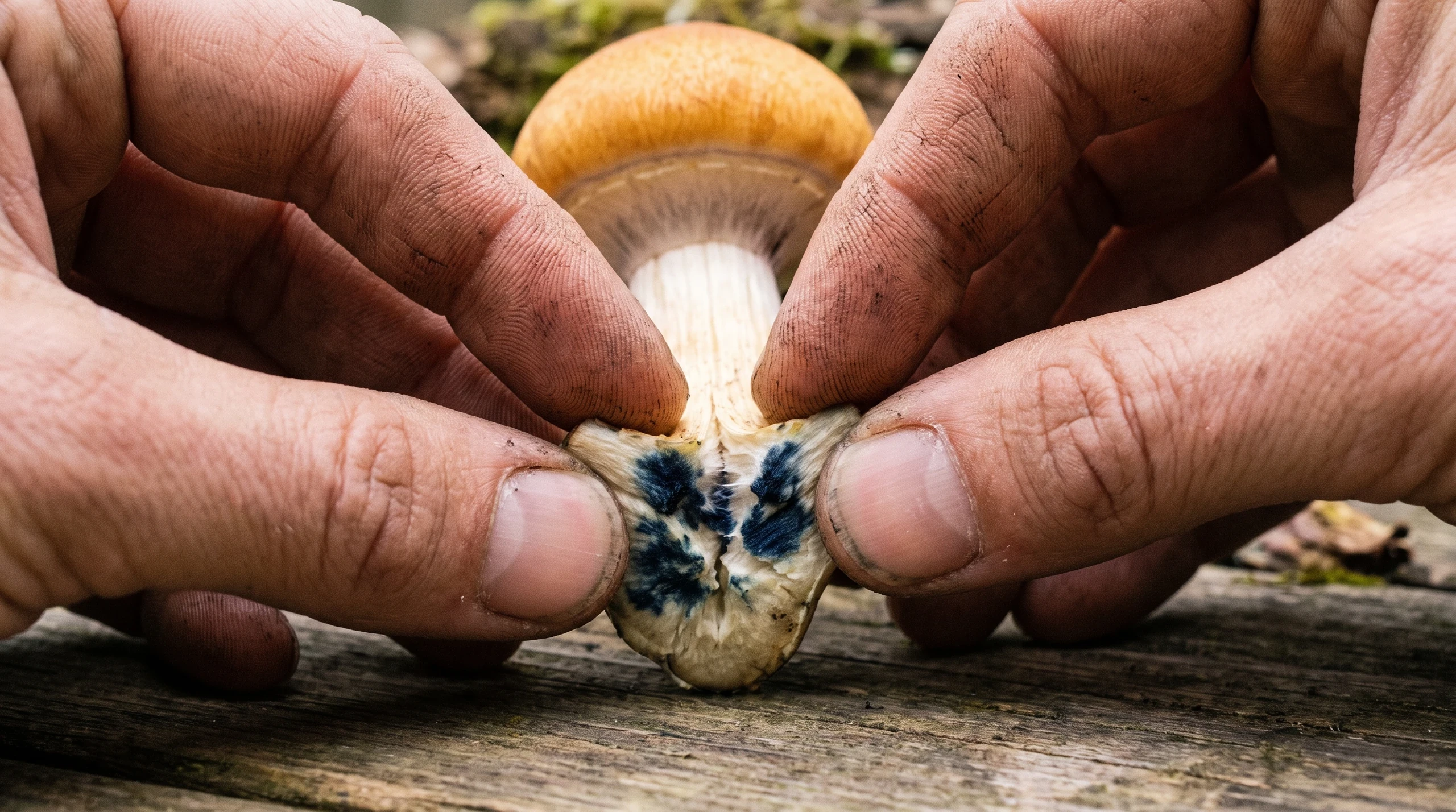
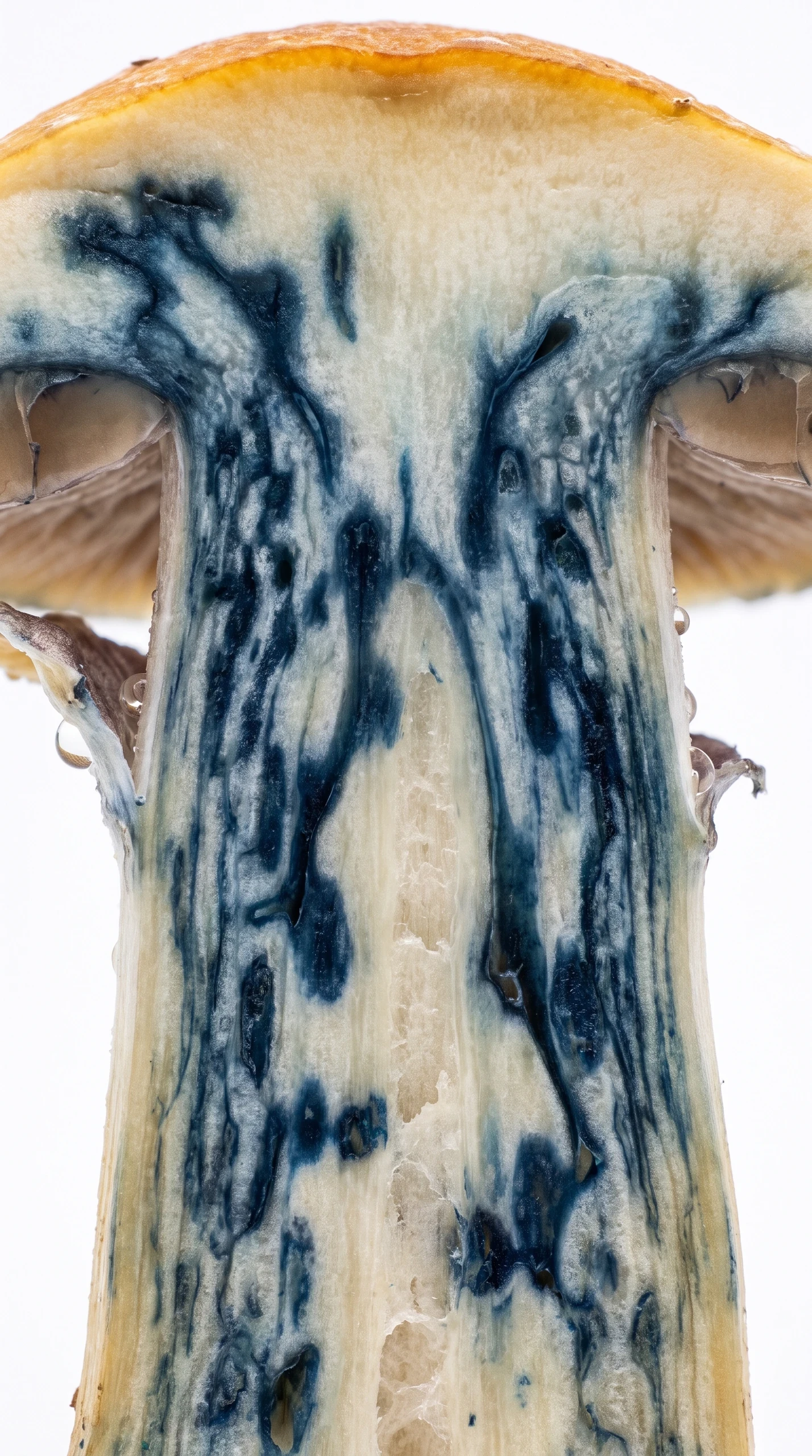
The first time you pinch the stem of a fresh Golden Teacher and watch an indigo smudge bloom under your thumb, it feels like a magic trick. Press harder and the blue deepens, spreads, turns the color of a three-day-old bruise on human skin. The mushroom looks injured because it is injured, and what you are watching is not decay or contamination or some aesthetic flourish but a chemical alarm system snapping into action the moment you broke the fungal tissue. The blue is a wound response, one that happens faster than you can blink and involves two dedicated enzymes, a cascade of free radicals, and the transformation of one molecule into a polymer so conjugated it reflects the short end of the visible spectrum back at your eye. This is not decay. This is biochemistry moving at the speed of panic.
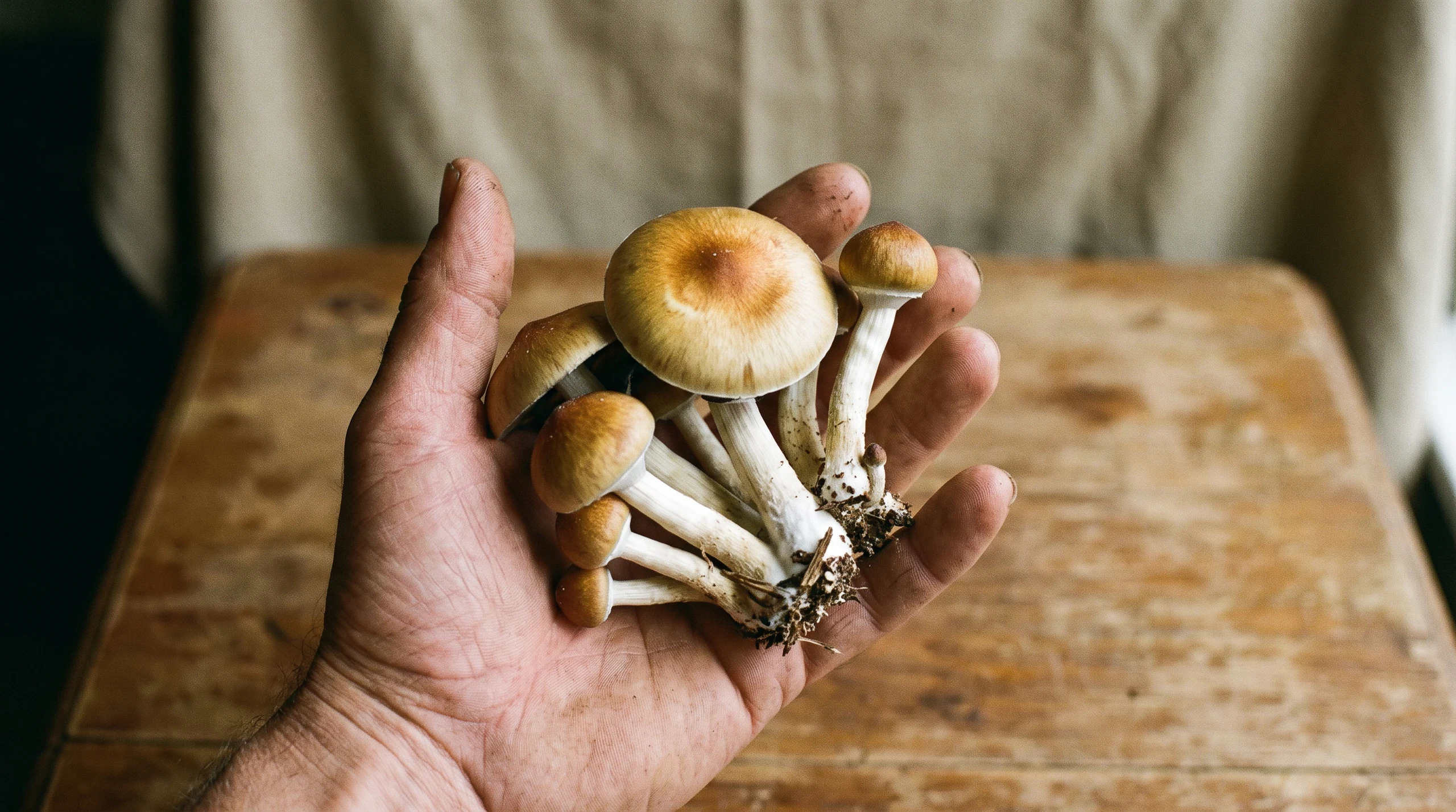
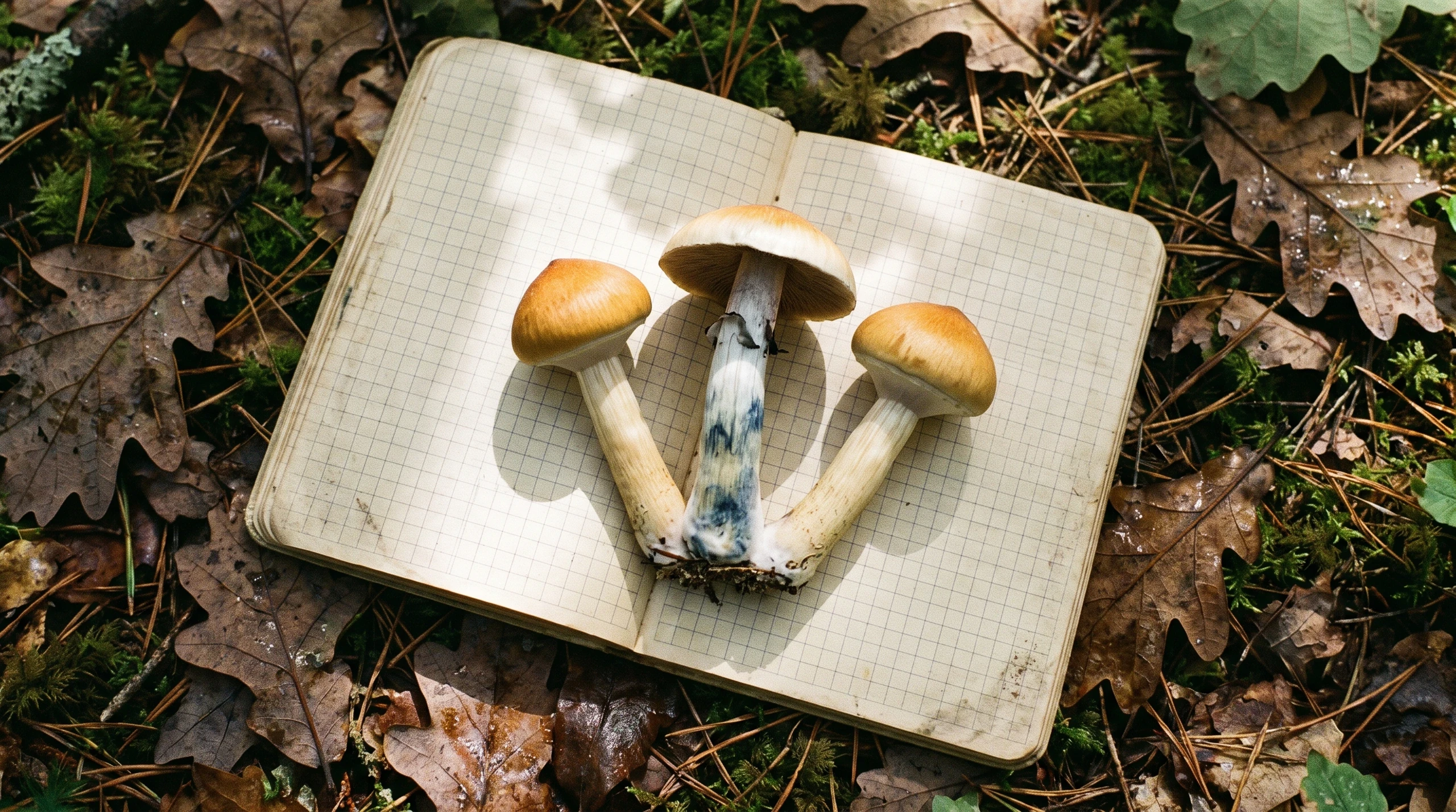
Golden Teacher earned its reputation as a beginner's cultivar partly because the bruising is so obvious. Where other Psilocybe cubensis varieties might show faint greenish marks or take minutes to darken, Golden Teacher stains fast and vivid, a blue so clean it looks painted on. That makes it easier to distinguish from toxic lookalikes that never bruise at all, which is useful when you are new to mushroom identification and every brown cap looks like a candidate for disaster. But the bruising also became shorthand for potency in grower forums, a visual proxy for psilocybin content, which is where the story gets messier. Blue does not mean strong, or at least not in the simple way people assume, and understanding why requires following the molecule through two enzymatic steps, an oxidation event, and a polymerization cascade that leaves the original compound unrecognizable.
The chemistry itself was a mystery until 2019. People knew that psilocybin mushrooms bruised blue, and they knew the color had something to do with psilocin, the dephosphorylated version of psilocybin that crosses the blood-brain barrier and binds to serotonin receptors. But nobody had identified the actual blue chromophore, the molecule responsible for the color, or confirmed the enzymatic pathway that built it. That changed when a team at Germany's Leibniz Institute isolated two enzymes from Psilocybe cubensis, tracked the reaction in real time, and published the mechanism in Angewandte Chemie. What they found was a cascade that starts with injury, moves through two tightly coupled enzymatic steps, and ends with a heterogeneous mix of psilocin dimers, trimers, and higher-order oligomers, some of which absorb red and yellow wavelengths and reflect blue.
The Enzymes That Turn Damage Into Color
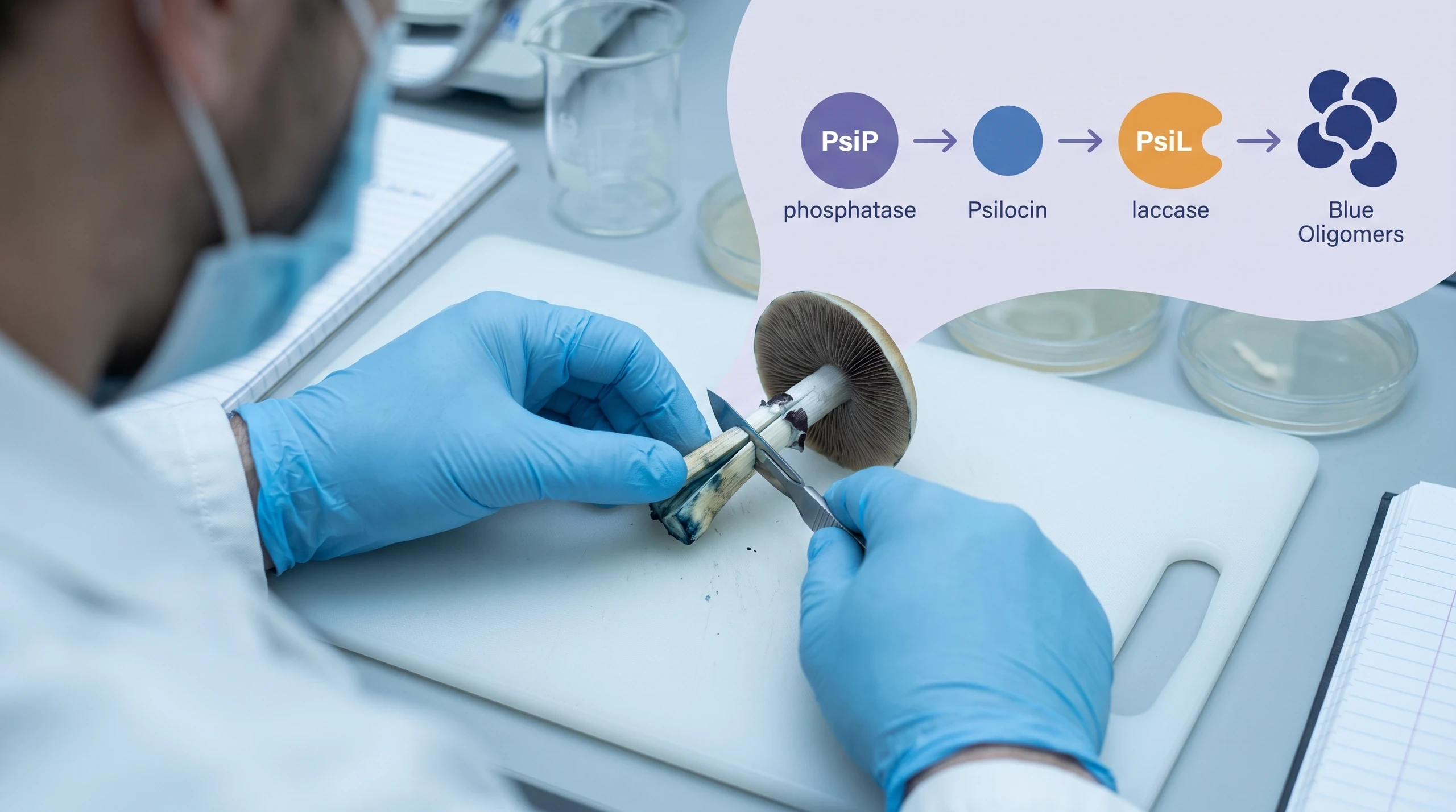
The blueing cascade in Golden Teacher relies on two enzymes working in sequence. The first, a phosphatase called PsiP, strips the phosphate group off psilocybin to produce psilocin. This is the same dephosphorylation that happens in your gut after you ingest the mushroom, except here it happens in the fungal tissue the moment you damage a cell. Psilocybin is stable. Psilocin is not. The second enzyme, a laccase called PsiL, oxidizes the phenolic hydroxyl group at the 4-position of psilocin, turning it into a reactive radical that immediately starts coupling with other psilocin radicals nearby. The result is a mix of dimers, most of them coupled at the C-5 or C-7 positions, and as those dimers collide with more radicals the chain grows into trimers, tetramers, all the way up to thirteen-unit oligomers that researchers identified in the 2020 study.
The reaction happens fast. Cut a fresh Golden Teacher cap with a scalpel and you will see blue staining within seconds. The Leibniz team clocked it as almost instantaneous, which makes sense when you consider that both enzymes are already present in the tissue, waiting. The phosphatase and the laccase do not need to be synthesized in response to injury. They are standing by, preloaded, which suggests the blueing reaction is not some accidental byproduct of psilocin instability but a dedicated system the fungus maintains at some metabolic cost. Why a mushroom would invest resources in an injury-triggered pigment cascade is a question that takes us into evolutionary speculation, but the fact that the system exists, that it involves two specialized enzymes working in tandem, and that it produces a vivid color change within seconds, all point toward function rather than accident.
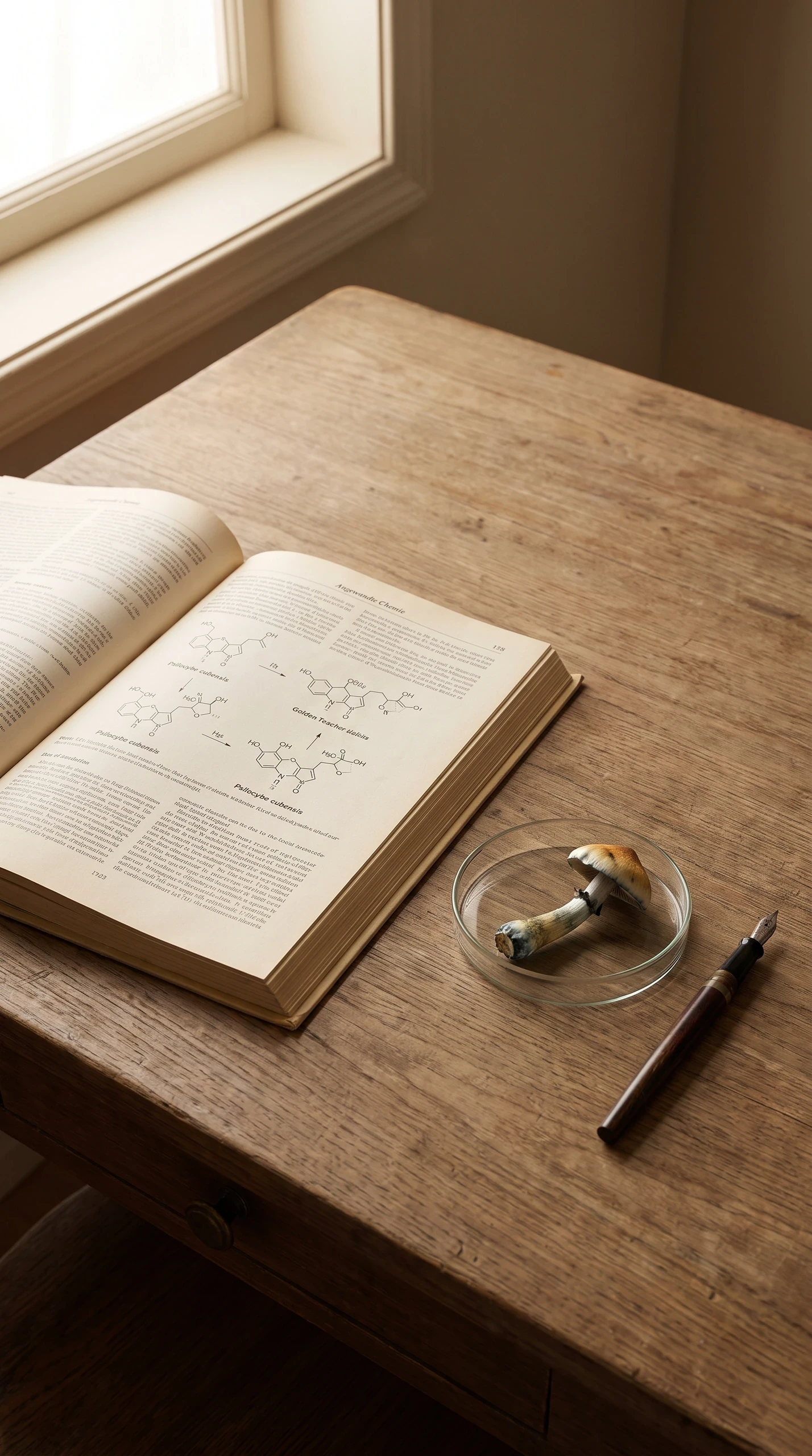
The blue chromophore itself is a mix. The major initial product is a quinoid dimer coupled at the 7,7' positions, which gives the cleanest blue. Dimers coupled at the 5,5' positions contribute a greenish tint, and as the oligomers grow longer the color shifts depending on how the monomers link up. The conjugated pi-electron system in these oligomers is what allows them to absorb specific wavelengths of visible light. Longer conjugation means the molecule can absorb lower-energy photons, which shifts the color toward red. Shorter conjugation absorbs higher-energy light, which shifts it toward blue. The oligomers Golden Teacher produces after injury are conjugated enough to absorb in the yellow-orange range, which is why the reflected light looks blue. This is not a pigment in the sense of a single stable molecule. It is a dynamic mix of radicals and oligomers, still reacting, still growing, which is why the blue deepens over time if you leave the damaged tissue exposed to air.
What Blueing Tells You About Potency, Or Doesn't
The myth that intense blueing means high psilocybin content has been circulating since before the Shroomery forums crystallized grower knowledge into FAQs. The logic seemed obvious: psilocin is the active metabolite, blueing happens when psilocin oxidizes, more blue means more psilocin to oxidize, therefore heavy bruising equals strong mushrooms. But the correlation is weak at best, and treating bruising as a potency assay is a good way to misjudge your harvest. Golden Teacher potency varies wildly cap to cap, even within the same flush from the same cake, and bruising intensity depends on factors that have nothing to do with alkaloid concentration.
Tissue damage is one variable. A mushroom that gets handled roughly, dropped, or squeezed will bruise more than one harvested cleanly and stored in a cushioned container. Moisture is another. Wet tissue bruises darker and faster than dry tissue, possibly because the enzymes work more efficiently in an aqueous environment. Age matters too. Older mushrooms with more developed cell walls seem to bruise less intensely than young ones, though whether that is due to lower enzyme activity or changes in psilocin distribution is not clear. Then there is genetic variation. Golden Teacher is a cultivar, not a wild-type strain, and different genetic lines within the cultivar may express PsiP and PsiL at different levels, or produce slightly different ratios of psilocybin to psilocin, all of which could shift how much blue you see per unit of damage.
The blueing reaction also consumes psilocin. That is the whole mechanism: psilocin radicals couple into oligomers, which means the psilocin is gone, transformed into a different molecule that no longer binds to serotonin receptors. A heavily bruised mushroom has converted some unknown fraction of its psilocin into inert blue polymers, which means aggressive handling might actually lower potency, not indicate it. The chemistry here is not reversible. Once psilocin polymerizes you cannot get it back, and while the total amount of psilocin lost to bruising in a typical harvest is probably small compared to the total alkaloid load, the fact remains that blue is evidence of psilocin destruction, not preservation. If you want an accurate potency estimate you need a spectrometer and a solvent extraction, not a color chart.
That said, the presence of blueing does confirm that the mushroom contains psilocin, or at least contained it before you smashed it. Non-psilocybin mushrooms do not bruise blue, with a few confusing exceptions involving other indole compounds or entirely unrelated pigment systems that happen to land in the same color range. Research on Golden Teacher is limited, but the blueing reaction is consistent enough across Psilocybe species that it serves as a rough field test, a way to rule out some deadly mimics at a glance. Rough is the key word. Blueing is necessary but not sufficient for identification, and relying on it alone is how people end up in the ER after eating a Galerina that showed faint greenish marks they mistook for psilocin oxidation.
Why A Mushroom Would Build A Blue Alarm
The evolutionary function of psilocybin in fungi remains mostly speculation. The standard hypothesis is that it deters predation, that insects or slugs which ingest psilocybin have a bad enough time that they learn to avoid mushrooms that taste like that. The evidence for this is thin. Psilocybin binds to insect serotonin receptors about as well as it binds to ours, which means bugs probably do trip when they eat a Golden Teacher, but whether a disoriented fruit fly avoids psychedelic mushrooms on subsequent encounters is not something anyone has tested rigorously. Studies on the evolutionary role of psilocybin suggest the biosynthetic gene cluster has been horizontally transferred between distantly related fungal lineages, which implies selective pressure strong enough to maintain the pathway across evolutionary time, but what that pressure is, and whether it has anything to do with predation, remains open.
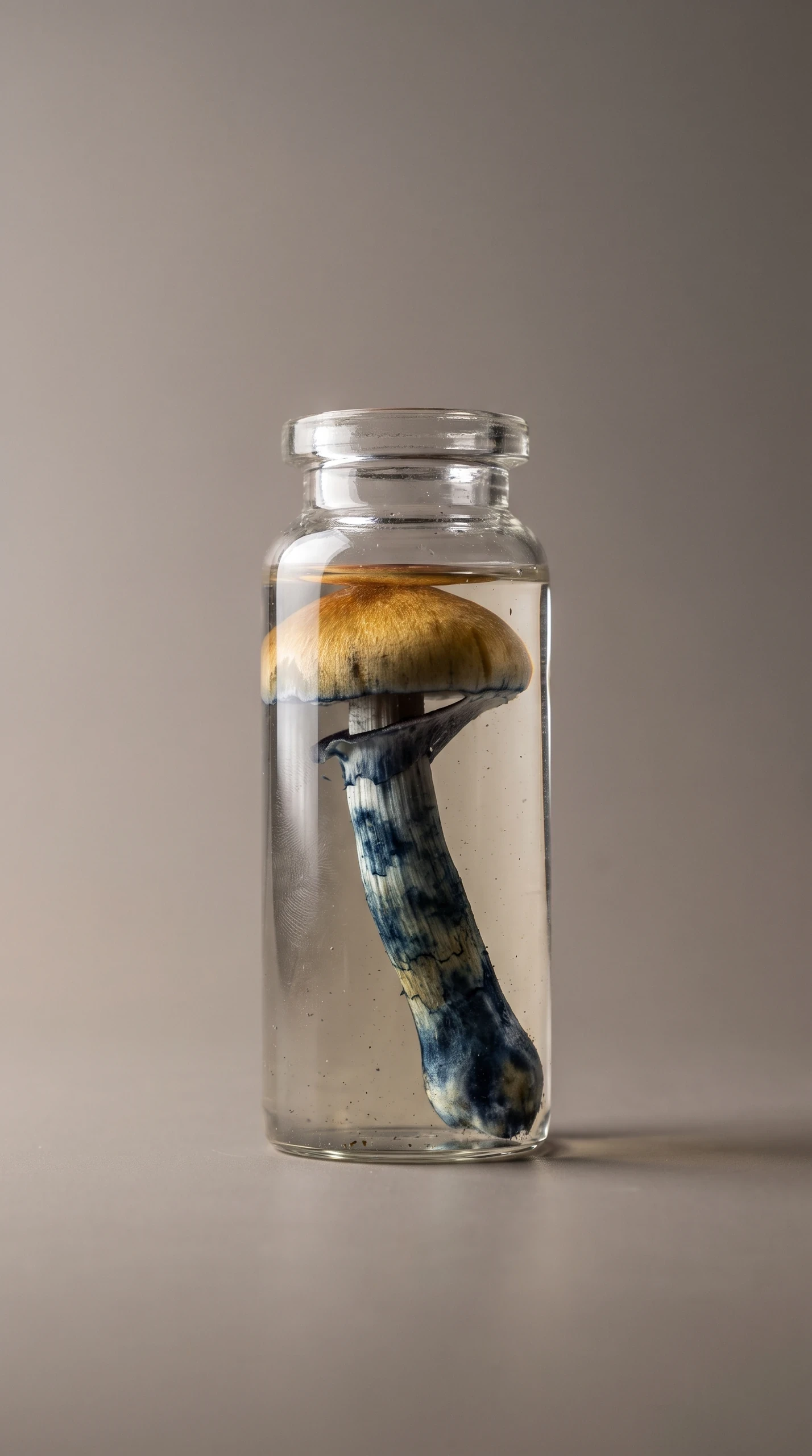
The blueing reaction adds another layer. If psilocybin deters predation, then a visible color change when the mushroom is damaged could amplify the deterrent. An insect bites a Golden Teacher, sees the tissue turn blue, and learns to associate that color with a subsequent neurological disturbance. This is aposematic signaling, the same strategy poison dart frogs use, except the warning comes after the bite rather than before. That seems backwards. A warning that appears only after you have already ingested the toxin is not much of a warning. But if the insect does not swallow, if it just bites and retreats, then the blue mark could still encode information: this mushroom fights back chemically, try something else. The problem is that most mushroom tissue damage comes from sources that do not care about aposematic signals. Slugs have terrible vision. Mycophagy beetles are not scared of color. Rain, hail, and freeze-thaw cycles do not learn.
An alternative explanation is that the blueing reaction serves an antimicrobial function. Oxidized psilocin oligomers might inhibit bacterial or fungal colonization of damaged tissue, sealing the wound with a chemical bandage that prevents rot from spreading through the fruiting body. The conjugated pi-systems in quinoid oligomers can be reactive, and reactive molecules sometimes have antimicrobial properties, but nobody has tested whether the blue chromophores from Golden Teacher actually inhibit microbial growth. If they do, that would make the blueing reaction a kind of immune response, a way to quarantine damaged tissue before pathogens move in. If they do not, then the blue is either a non-functional byproduct of psilocin instability or a deterrent signal aimed at predators with better vision than slugs, and we are back to guessing.
When Blueing Happens Without Damage, And Damage Without Blueing
Not all psilocybin mushrooms bruise with equal intensity, and some do not bruise blue at all despite containing high levels of psilocybin. Psilocybe semilanceata, the liberty cap, is notoriously faint in its bruising response, showing at most a slight greenish discoloration that takes minutes to appear. Psilocybe azurescens, one of the most potent species, bruises dark and fast, sometimes turning nearly black. Golden Teacher sits in the middle, vivid enough to be obvious but not so dark that it looks rotten. The variation suggests that different species, or different cultivars within the same species, express PsiP and PsiL at different levels, or produce different ratios of the enzymes, or have different baseline concentrations of psilocin in the tissue. All of those variables would affect how much blue you see per unit of damage.
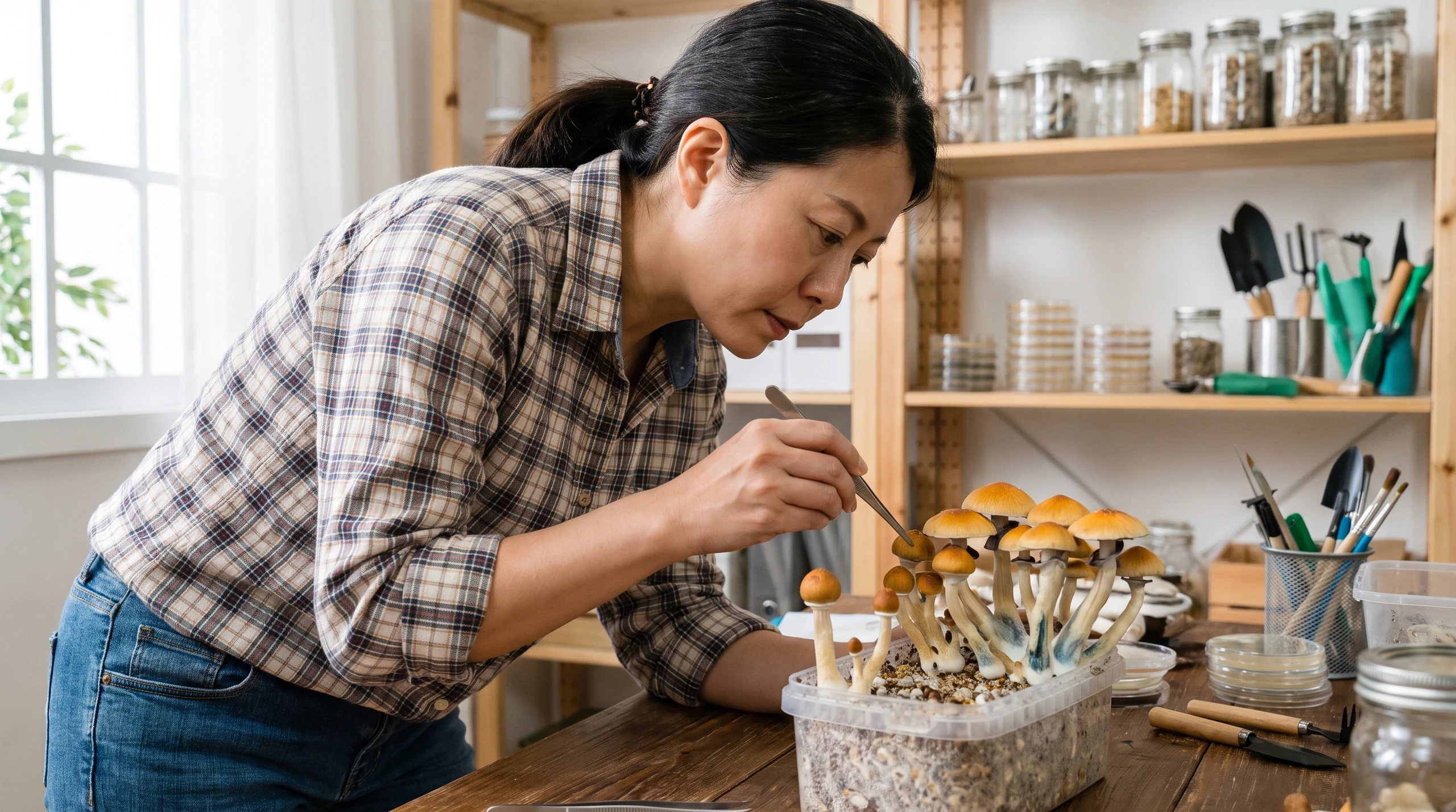
There are also cases where blueing appears without obvious damage. A Golden Teacher stored in the refrigerator might develop blue spots on the cap or stem after a few days, especially if moisture condensed on the surface and then evaporated. This is probably slow oxidation, a low-level version of the injury-triggered cascade, happening because cold storage slows enzyme degradation but does not stop it entirely. The psilocin in the tissue is still reactive, and if oxygen and moisture are present the laccase can still oxidize it, just more slowly. The result is patchy blue staining that looks like contamination but is not. Growers call this "ambient bruising," and it is common enough in harvested mushrooms that most people learn to ignore it unless the discoloration is green or black, which would indicate mold.
Then there are mushrooms that bruise colors other than blue. Some boletes turn red or orange when cut, others go black, and a few shift through multiple colors like a mood ring. Those reactions involve entirely different chemistries, usually the oxidation of different phenolic compounds or the breakdown of pigments that were already present in the tissue. The fact that bruising happens across so many mushroom families, using different molecules and producing different colors, suggests that rapid oxidation of tissue-borne compounds is a common evolutionary solution to the problem of how to respond to damage. Whether the response serves a protective function or is just an inevitable consequence of having reactive molecules in the cytoplasm depends on the species, and for Golden Teacher the answer is still unclear.
The Chemistry That Happens When You Pick It Wrong
Golden Teacher first showed up in grower circles in the mid-1980s, and by the early 2000s it had become one of the most widely cultivated Psilocybe cubensis varieties in North America. Part of its success as a cultivar is that it is hard to mishandle in a way that does not immediately show. Pinch the stem too hard and it blues. Drop it and it blues. Store it in a plastic bag without airflow and the contact points blue. This makes Golden Teacher more forgiving than varieties that show damage as browning or softening, both of which look like natural decay and might get ignored until the mushroom is too far gone to salvage. Blue is unambiguous. You know you messed up.
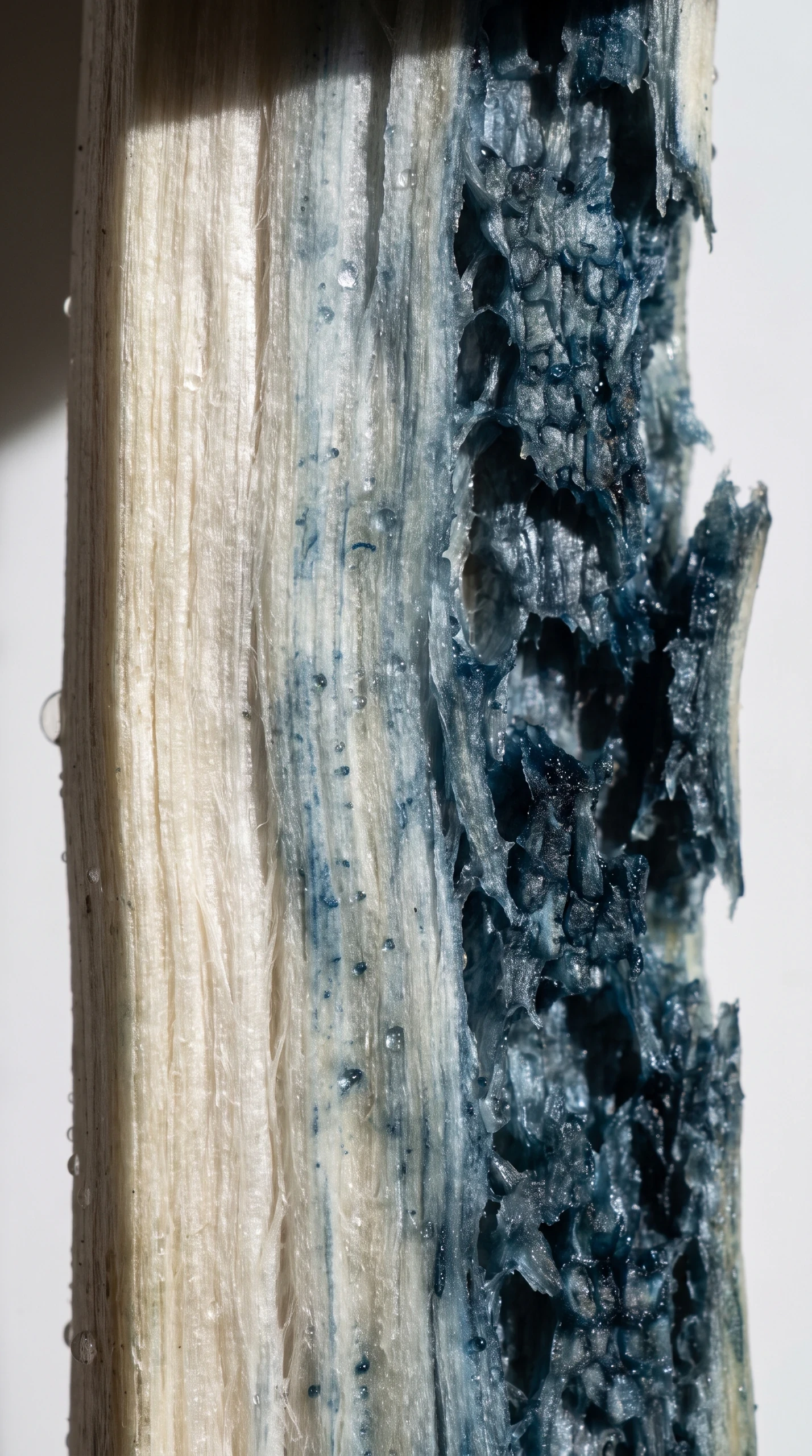
The enzymatic cascade does not require active metabolism. You can dry a Golden Teacher, store it for months, rehydrate the tissue, and it will still bruise blue when you crush it. That is because PsiP and PsiL are stable proteins that retain their catalytic activity even after desiccation, and the psilocybin substrate is still present in the dried tissue. Rehydration brings the enzyme, the substrate, and the oxygen back into proximity, and the reaction starts up again as if nothing happened. This is unusual. Most enzyme-driven color changes in mushrooms fade or disappear after drying, because the enzymes denature or the substrate breaks down. The fact that Golden Teacher can bruise post-drying suggests the enzymes are unusually robust, or the mushroom produces them in such high concentrations that even partial denaturation leaves enough activity to drive the reaction.
There is also the question of whether the blueing reaction continues inside the mushroom after ingestion, and whether that affects bioavailability. Psilocybin is dephosphorylated to psilocin by alkaline phosphatases in your intestines, the same chemical step that PsiP performs in the mushroom. If PsiL-like enzymes exist in human tissue, and if they can oxidize psilocin before it crosses into the bloodstream, then part of your dose could be lost to polymerization in the gut. Research on psilocybin pharmacokinetics does not mention this, probably because human laccases target different substrates and do not recognize psilocin as a substrate, but the possibility is strange enough to be worth noting. The blue you see on a bruised mushroom is the same chemistry that would theoretically happen in your intestines if the right enzymes were present, which they are not, probably.
The Blue That Teaches Nothing
Golden Teacher got its name from somewhere, though the origin story is contested, and part of the mythology involves the bruising as a kind of pedagogical feedback. The mushroom teaches you to handle it gently, to pay attention, to notice when you are applying too much force, because every mistake leaves a mark. This is good cultivator philosophy but dubious mycology. The mushroom is not trying to teach you anything. The mushroom is a fruiting body, a temporary reproductive structure optimized to spread spores before something eats it, and the blueing response is a biochemical reaction that happens whether or not anyone is watching. The fact that the blue looks striking to a human observer, that it reads as significant or meaningful or instructive, is an accident of how our visual system parses color, not evidence of intent on the part of the fungus.
That said, the blueing does encode information, even if the mushroom is not trying to communicate. A heavily bruised cap tells you the tissue was damaged recently, probably within the last few hours, because the blue darkens over time as the oligomers grow longer. A faint blue streak tells you the damage was light or the mushroom is old or the enzymes are less active in this particular specimen. No blue at all means either the mushroom does not produce psilocybin, or it produces it at such low levels that the oxidation products are invisible, or the enzymes are absent, or something else is wrong. All of that is information you can use, if you know how to read it, which is maybe the real teaching: not that the mushroom is a conscious agent trying to instruct you, but that biochemistry always leaves clues if you know what to look for.
The best writing on mushrooms lives in the gap between the chemical mechanism and the human interpretation, the place where the science is clear but the meaning is still open. Golden Teacher bruises blue because two enzymes oxidize psilocin into polymers that absorb yellow light. That is the mechanism. Why the mushroom maintains those enzymes, whether the blue serves a function or is a byproduct, whether the intensity correlates with potency or just handling, those are harder questions, the kind that do not resolve into a clean answer. The blue is real. The chemistry is real. What it means is still up for debate.

Frequently asked questions
Does intense blue bruising mean my Golden Teacher mushrooms are more potent?
Can Golden Teacher still bruise blue after it's been dried?
Why do some Psilocybe mushrooms barely bruise while others turn dark blue instantly?
Is the blue color from Golden Teacher bruising harmful or toxic?
What evolutionary purpose does the blue bruising reaction serve?
Ready to apply what you've learned?
Browse lab-tested magic mushrooms, edibles, microdose capsules and teas — shipped discreetly across the United States.