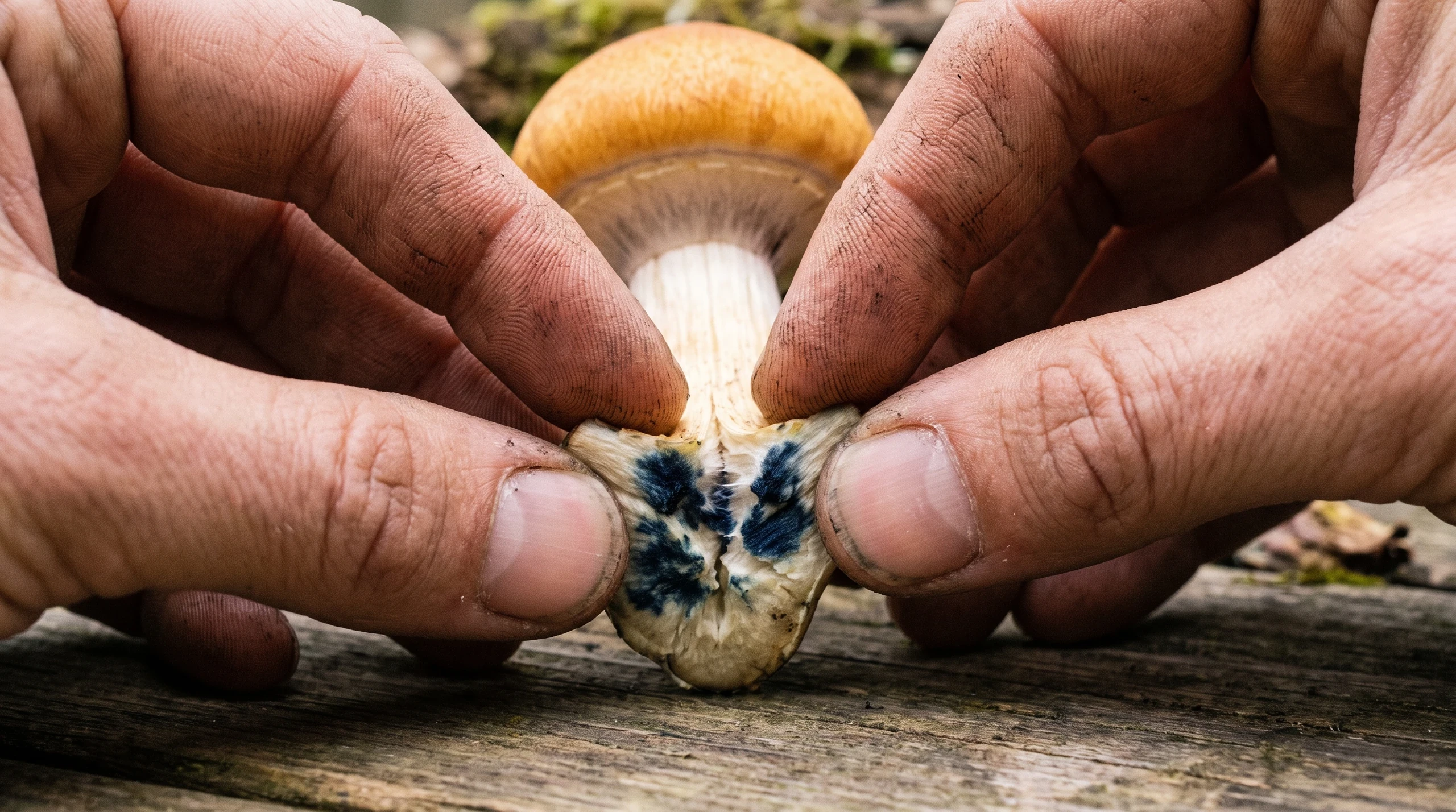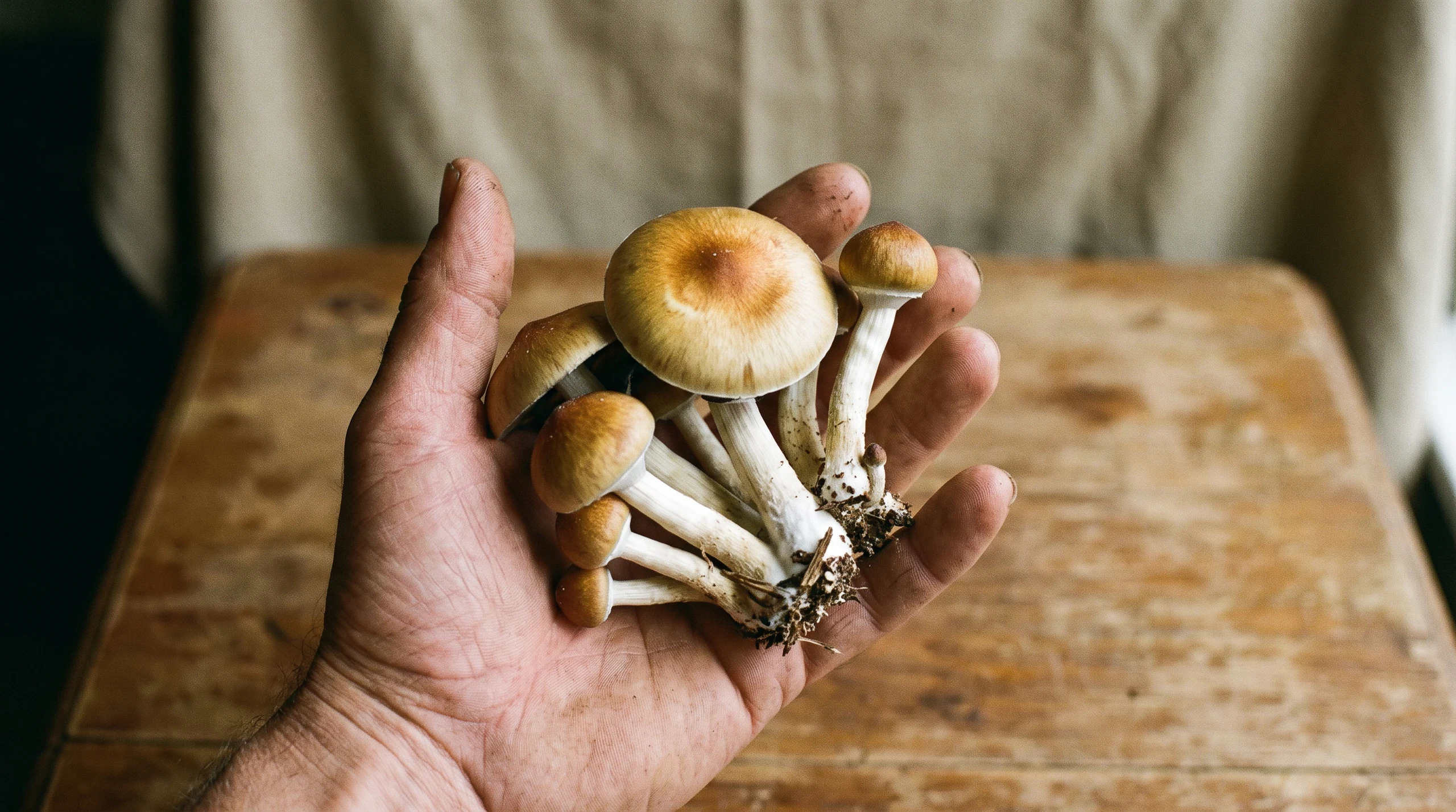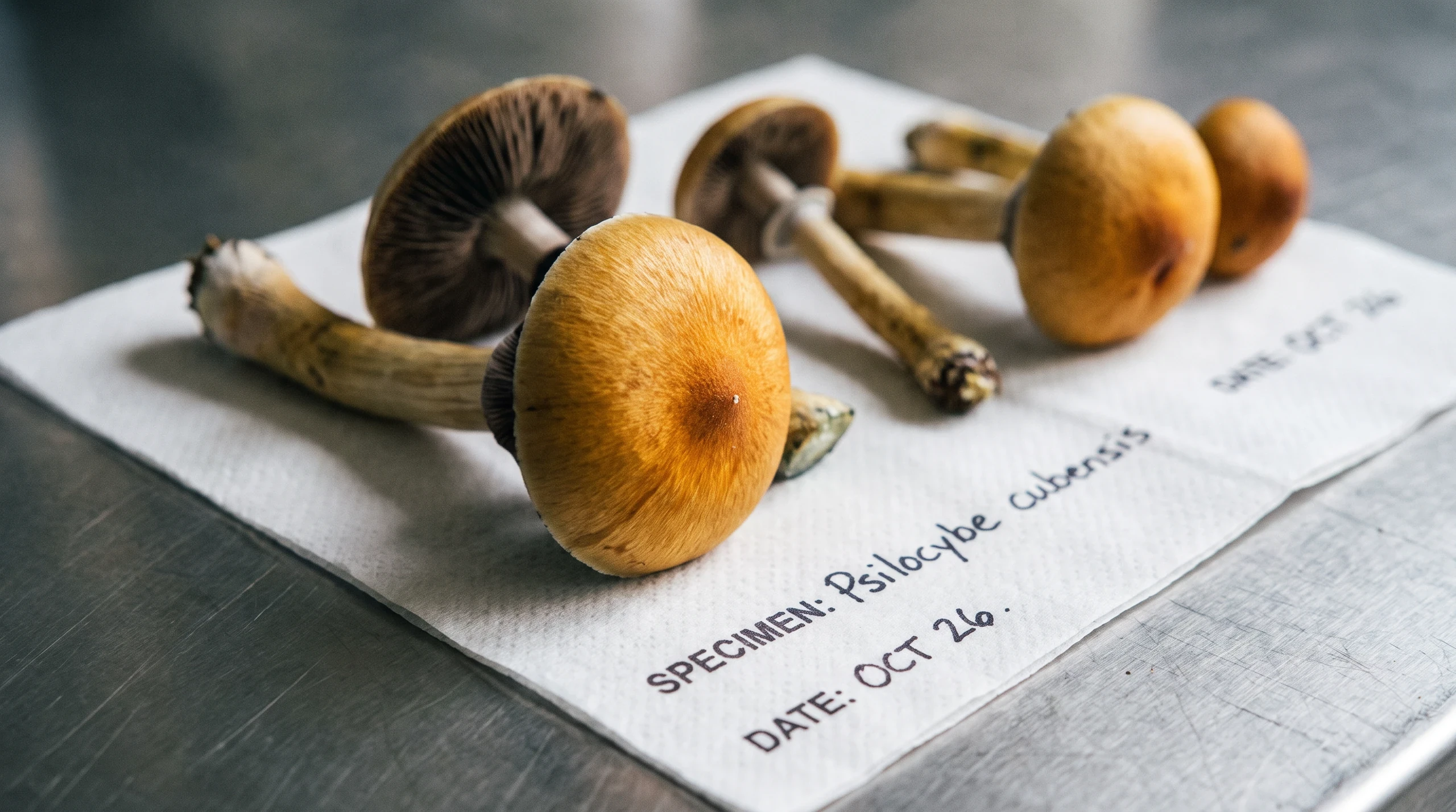
A Golden Teacher spore is not a seed. It is not a time capsule, though it can sleep through decades if the conditions demand it. It is not a message in a bottle, though it carries genetic instructions the organism cannot deliver any other way. The best analogy is an escape pod, the kind you see jettisoned from a doomed starship in old science fiction films. Everything about the spore's architecture suggests a single engineering mandate: get clear of the parent structure, survive the journey, wait for better conditions, then rebuild the entire organism from a single cell. No other part of the Golden Teacher mushroom has to do this much with this little.
Rung One: The Wall Is a Composite Armor
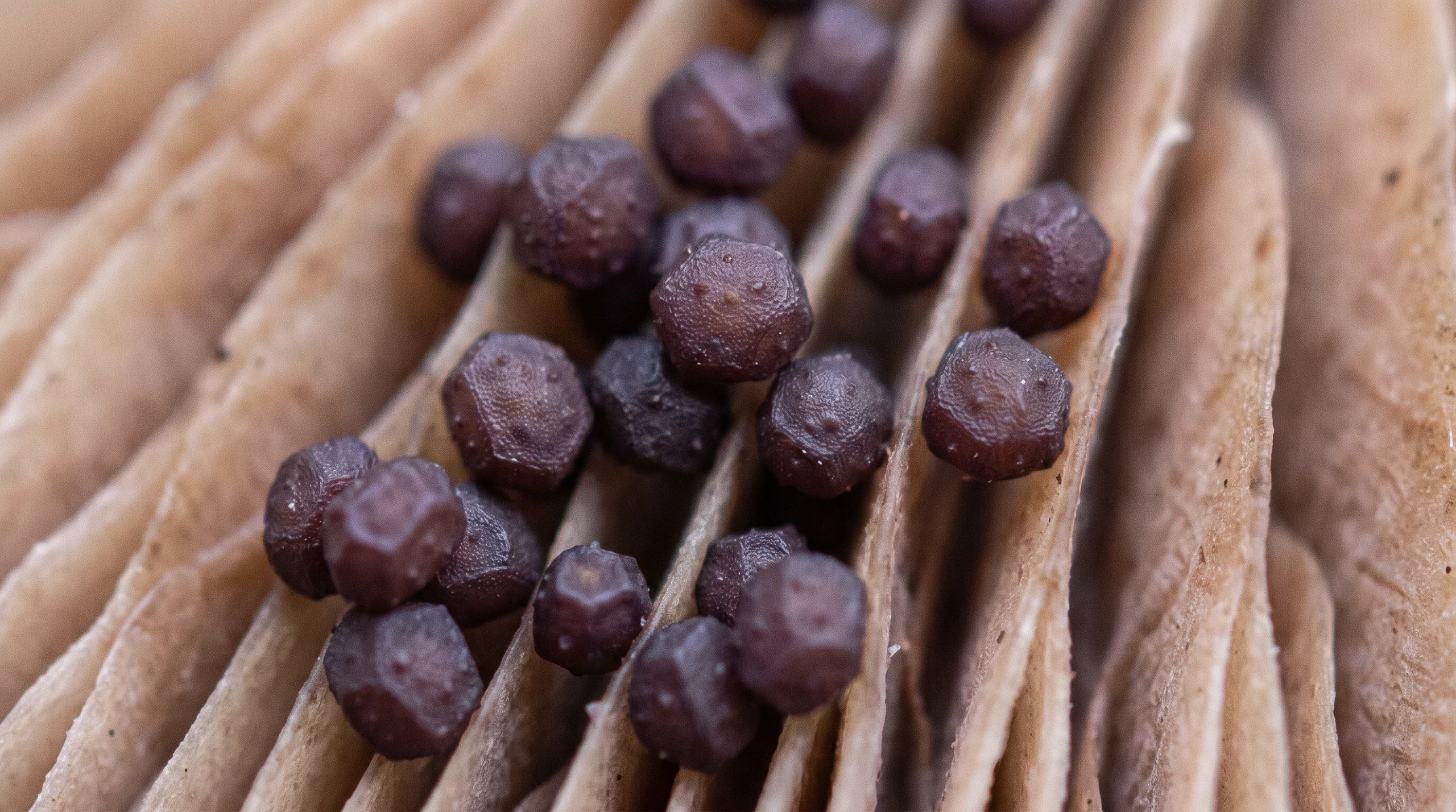
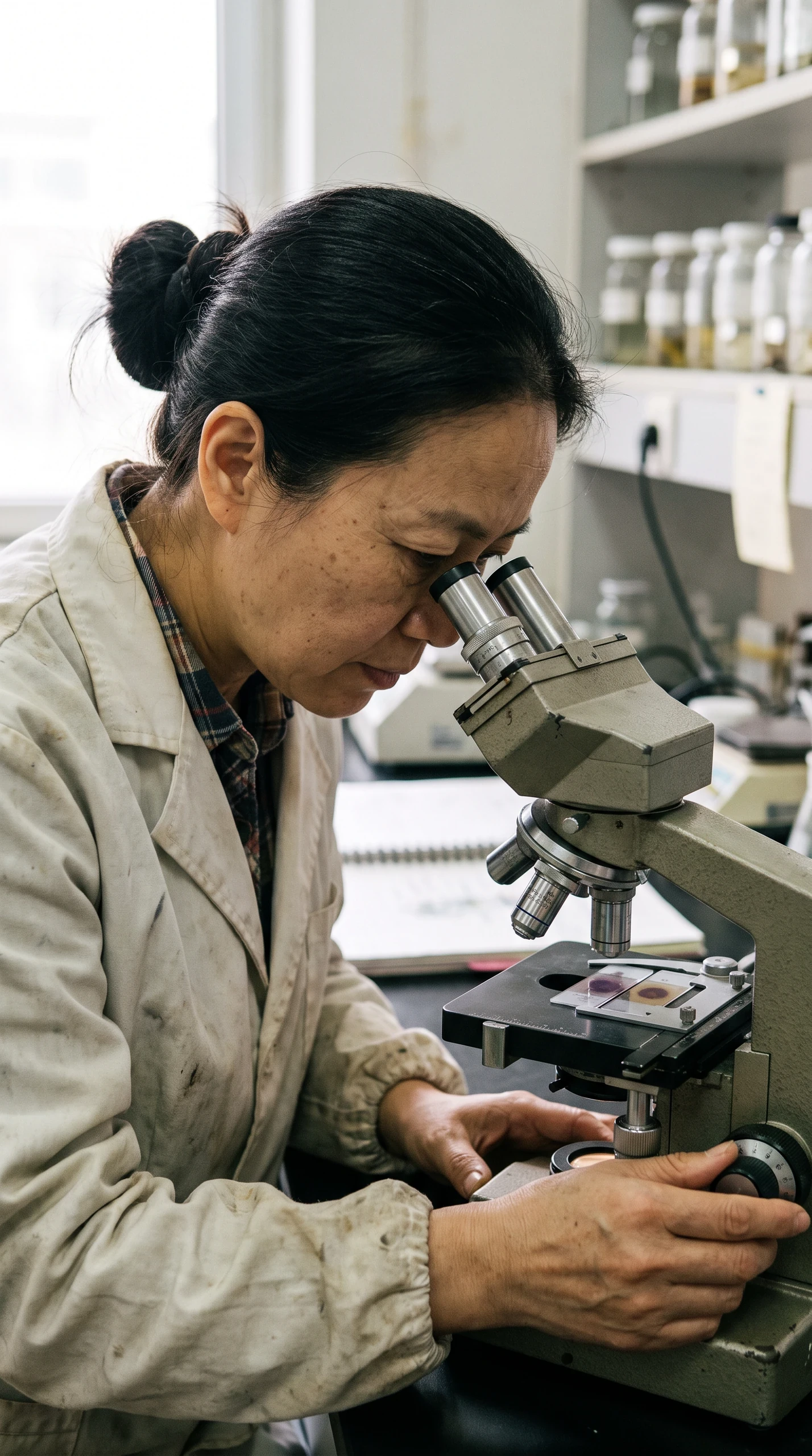
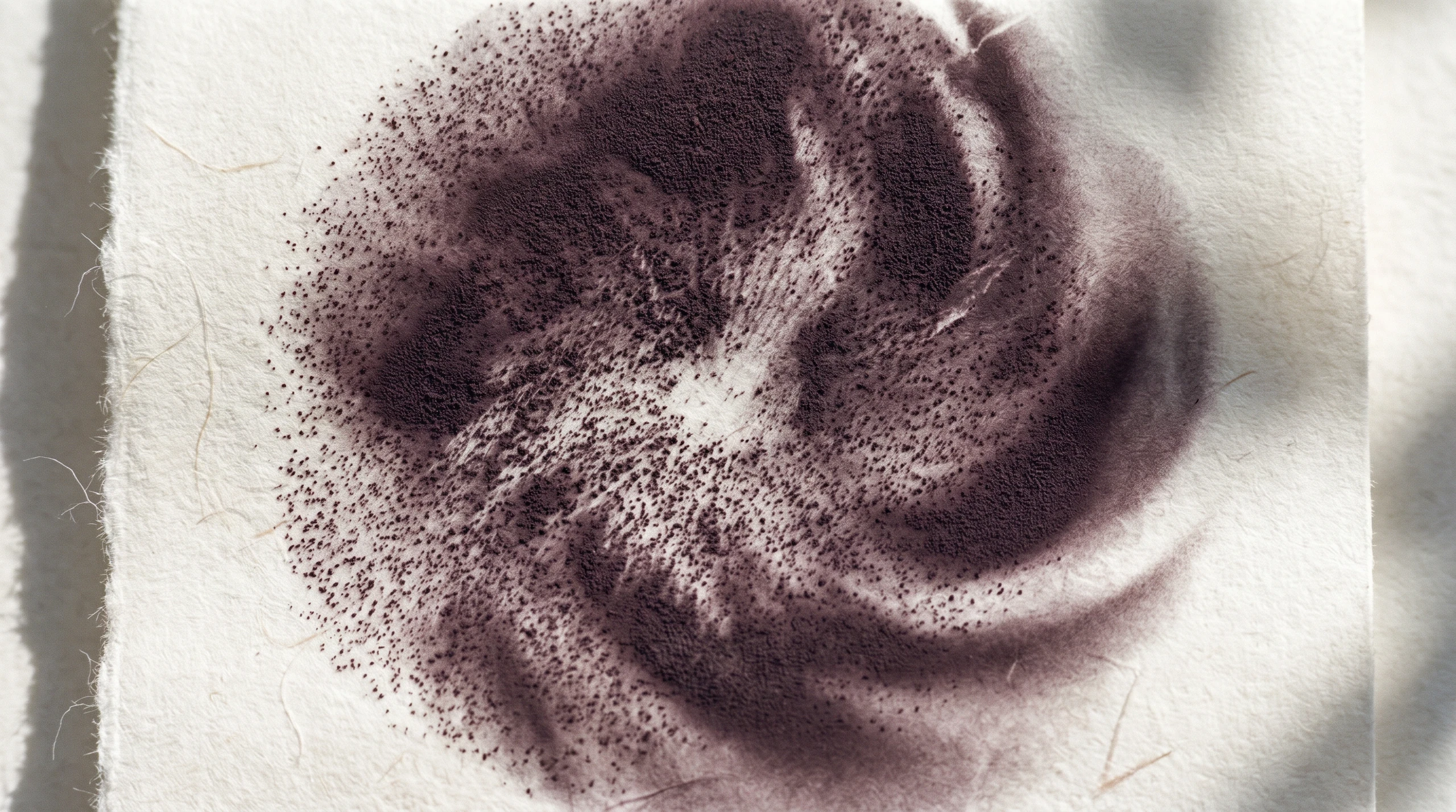
The outer envelope of a Golden Teacher basidiospore is not one layer but several, each with a distinct job. Researchers examining Psilocybe cubensis under microscopy report a hexagonal profile under light magnification, a geometry that emerges from the way three wall layers stack and interlock. The innermost layer, the endosporium, is thin and made of glucan polymers. The middle episporium is woven from chitin microfibrils, the same nitrogen-rich polysaccharide that stiffens insect exoskeletons and crab shells. The outermost ectosporium is thinner still, becomes sticky when wet, and in Golden Teacher spores carries the dark purple-brown pigment that makes a spore print look like a smudged thumbprint on white paper.
That pigment is melanin, the same molecule that tans human skin and blackens ink from cuttlefish. In fungal spores, melanin is not cosmetic but structural. It anchors to the chitin scaffold and crosslinks into a polyaromatic lattice that absorbs ultraviolet radiation, resists enzymatic breakdown, and makes the spore chemically inert to most of the things that would otherwise dissolve it. Wall thickness correlates with melanin content. The darker the spore, the longer it survives in hostile environments. A Golden Teacher spore is dark enough to last months in open air, years in cold storage, decades if you keep it dry and frozen. The chemistry that makes the human experience psychedelic, the psilocybin that varies cap to cap, is nowhere near the spore wall. It sits inside, a passenger in the escape pod, stable and inert until germination.
The spore measures between eleven and seventeen micrometers along its long axis, small enough that ten of them lined end to end would fit inside the width of a human hair. At that scale, air behaves more like honey than atmosphere. A spore falling through still air drops at a few centimeters per second, slow enough that any convection current, even the heat rising from a hand, can keep it aloft. This is not a design flaw. This is the point.
Rung Two: The Launch Is a Surface Tension Catapult
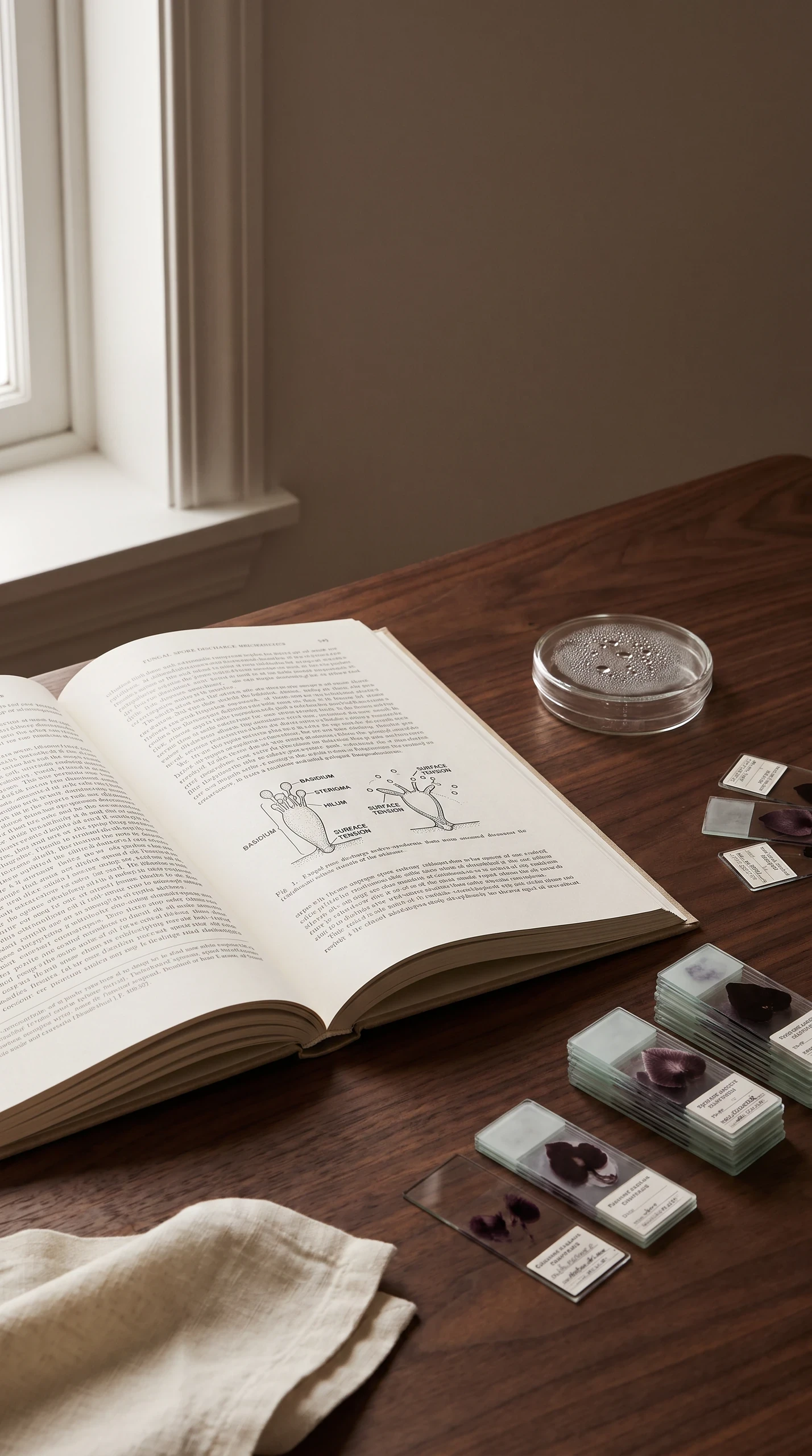
Golden Teacher does not scatter spores the way a puffball or earthstar does, by wind shear or raindrop impact. It uses ballistospory, a powered launch sequence so violent and so precise that mycologists spent most of the twentieth century arguing about how it worked. The mechanism was finally demonstrated in 2013 using high-speed video and force transducers. The sequence begins at the base of the spore, where it sits attached to the tip of a club-shaped cell called a basidium. A droplet of water condenses at a small projection called the hilar appendix. At the same instant, a film of water vapor condenses along the spore surface. The two reservoirs are separated by less than a micrometer. When they touch, they merge.
The fusion releases stored surface tension energy in a single pulse. The spore accelerates at over ten thousand times the force of gravity, hard enough to shear it free of the basidium and fling it horizontally into the space between gill surfaces. The entire event lasts a fraction of a millisecond. No ATP hydrolysis, no motor proteins, no muscular contraction. Just geometry and thermodynamics. The spore clears the gill by a few hundred micrometers, enough to escape the boundary layer of still air, then drops vertically under its own infinitesimal weight. Below the cap margin, convection currents generated by water evaporating from the gill surfaces create a slow upward airflow. The spore rides this thermal, a microscopic glider on a column of humid air, and drifts away from the parent fruiting body.
A mature Golden Teacher cap sheds sixteen thousand spores per second, per square millimeter of gill surface. Over a two-day window the total count reaches into the billions. Most will land within a few meters. A few will catch a breeze and travel kilometers. The organism does not care which ones make it. The strategy is volumetric. Saturate the local environment, let probability and wind do the rest.
Rung Three: Dormancy Is Not Sleep, It Is Stasis
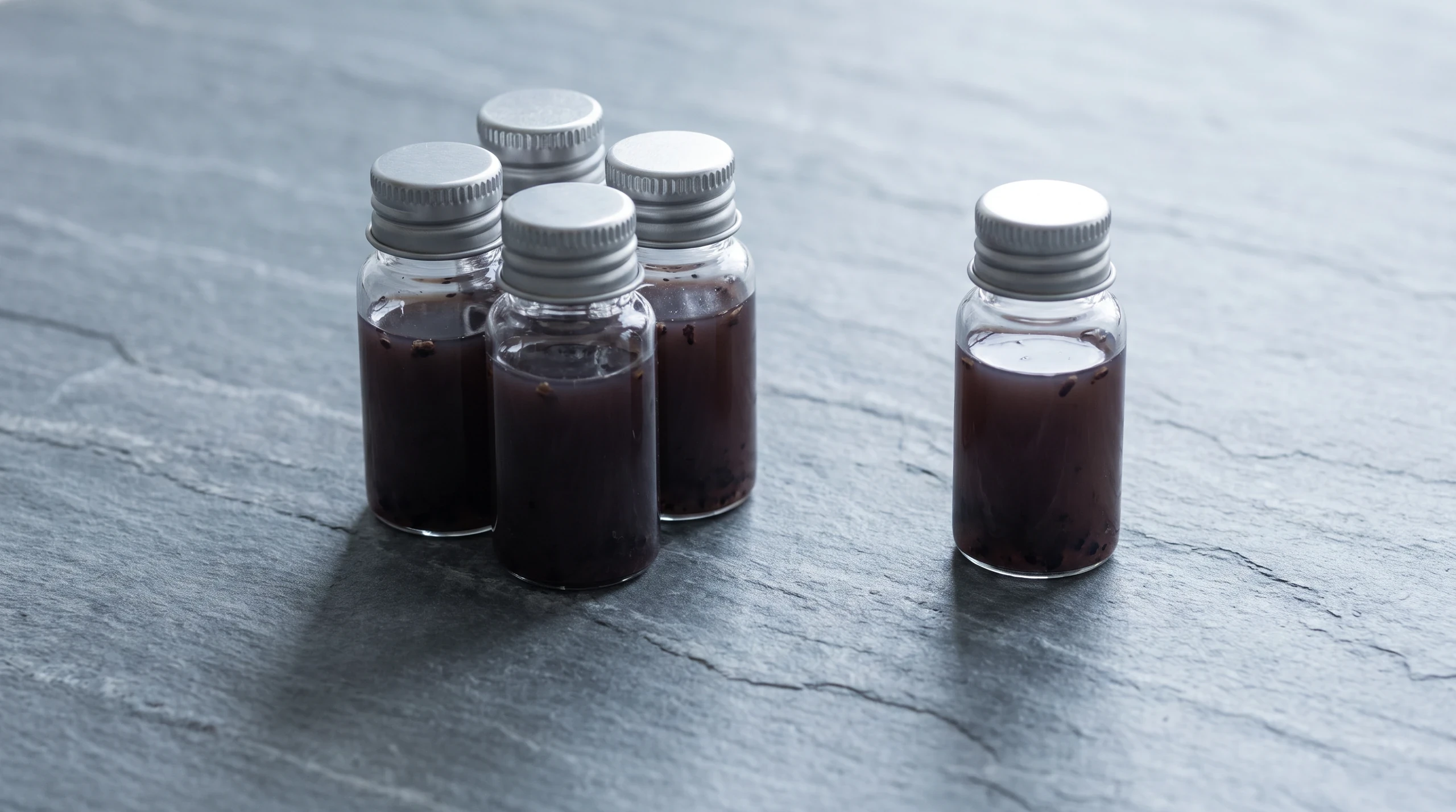
Once clear of the fruiting body, the spore enters a metabolic state so low it barely qualifies as alive. No respiration. No DNA replication. No protein synthesis. The cytoplasm inside has been desiccated to a glassy solid, and the few active molecules left are those involved in repair and maintenance of the cell's structural integrity. Trehalose, a disaccharide sugar, acts as a chemical chaperone, stabilizing proteins and membranes in the absence of water. When trehalose degrades, so does viability. Spores stored at room temperature lose their germination capacity after five months. Spores stored cold last years. Spores stored cold and dry, in the kind of environment a mycology enthusiast might prepare for long-term storage, can last longer than any controlled study has bothered to measure.
This is not because the spore is robust. It is because the spore is chemically static. Nothing reacts. Nothing decays. The organism has not paused its life cycle, it has exited it entirely, like a program written to disk and waiting for someone to load it back into memory. The DNA inside is a blueprint. The organelles are the construction equipment. The entire package is a dehydrated factory, ready to rehydrate and boot up the moment conditions permit.
What does the spore need? Water first. A substrate second, ideally something rich in nitrogen and carbon, like decomposing plant matter or, in the case of Psilocybe cubensis, the dung of grazing herbivores. Temperature matters but the window is generous, anything from fifteen to thirty-five degrees Celsius will do. Light is optional. The spore will germinate in total darkness if the other conditions align. There is no photoperiod requirement, no vernalization, no complex environmental cueing. The instructions are simple: if you are wet and warm and there is food nearby, grow.
Rung Four: Germination Is Reconstruction From a Single Cell
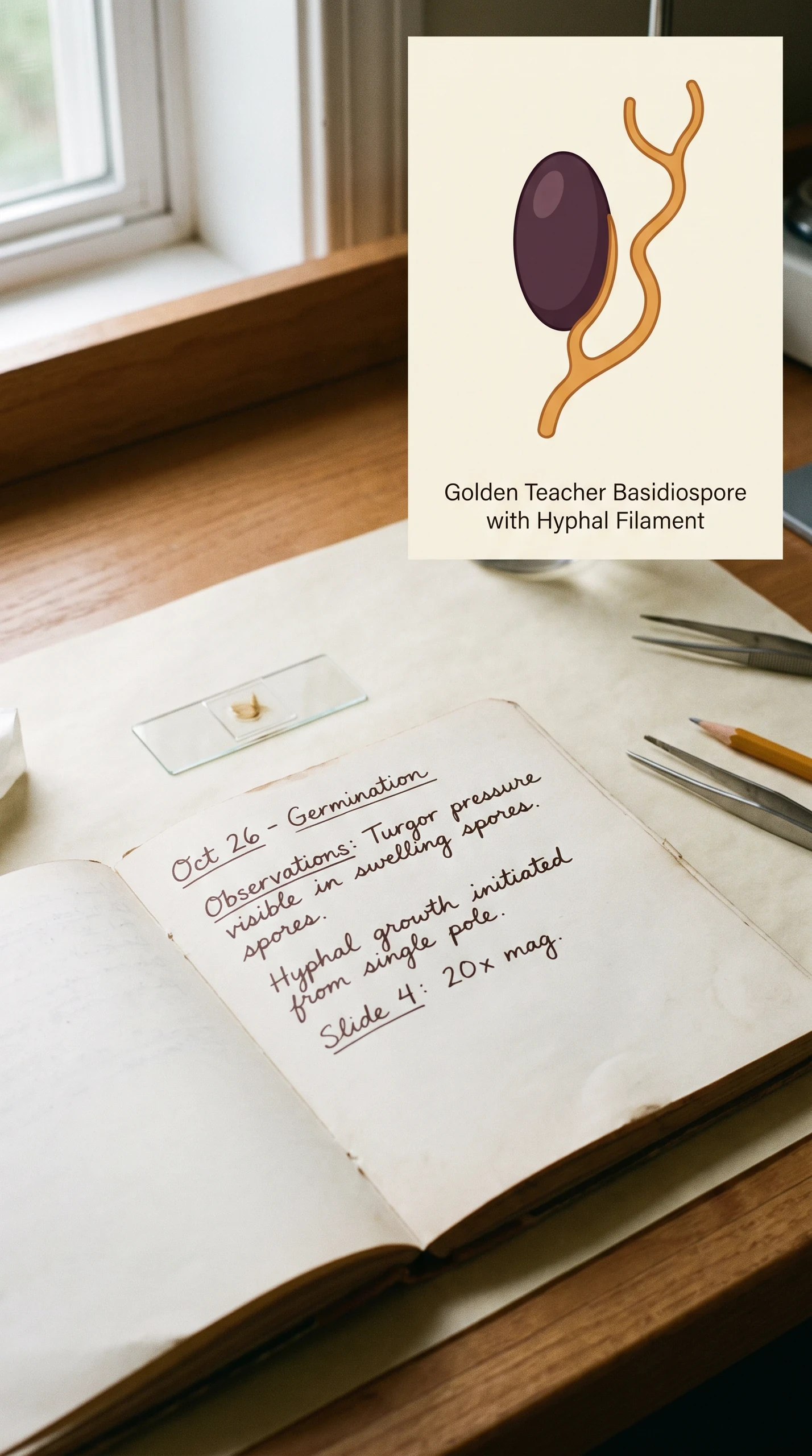
The germ pore sits at one end of the spore, a thinned region in the wall where the chitin weave is deliberately weak. When water penetrates the spore wall and rehydrates the cytoplasm, turgor pressure builds. The spore swells. At a threshold pressure, the germ pore ruptures and a hyphal tip extrudes, a narrow tube of cell wall and membrane that begins growing into the substrate. The hypha branches. The branches branch again. Within hours the spore has elaborated a network of filaments, each one exploring the local environment for nutrients and water. This is the vegetative body of the organism, the mycelium, and it is genetically identical to the mushroom that launched the spore. Everything the mushroom was, this mycelial thread can rebuild.
In laboratory conditions with malt extract and agar, ninety-five percent of Golden Teacher spores will germinate within four to five hours of rehydration. In the wild, rates are lower and slower. Competing organisms, hostile chemistry, the wrong temperature, all of these reduce the odds. Most spores never germinate. Most mycelia that do germinate never reach the size or the nutrient surplus required to fruit. The bottleneck is not launching spores, it is landing them in a place where the next chapter of the life cycle can begin. The escape pod does not guarantee survival. It guarantees dispersal. Survival is what happens after.
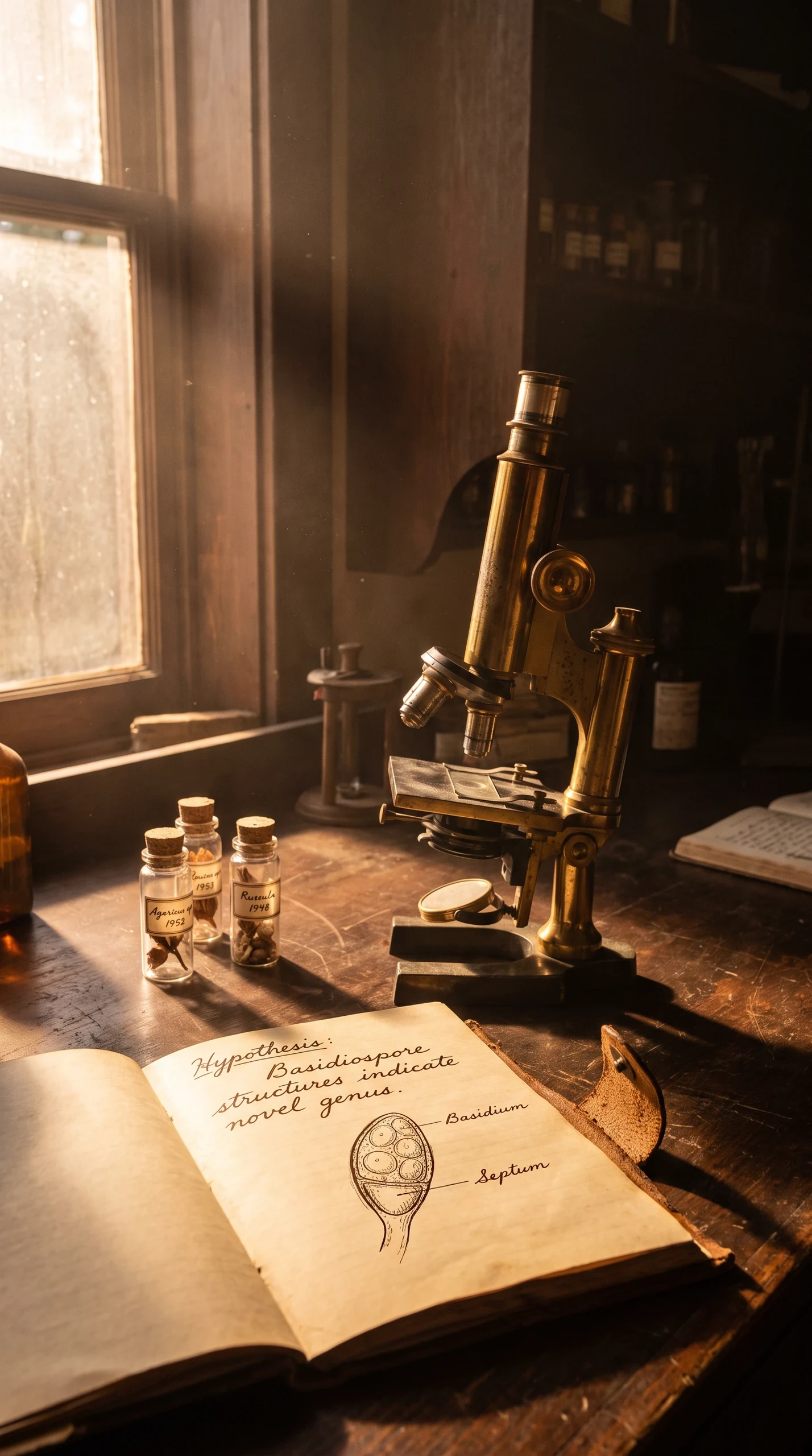
Where the Metaphor Turns Inside Out
Here is where the tidy engineering analogy collapses. An escape pod is a terminal piece of hardware. Once you use it, it is spent. You land, you disembark, you leave the pod behind. A spore does not work this way. The wall does not split open and release a preformed organism. The spore itself becomes the organism. The cytoplasm inside the wall is the first cell of the mycelium. The germ tube is an extension of that cell. The spore wall remains attached, a husk at the base of the first hypha, a piece of architecture that no longer serves a function but never fully disappears. You cannot separate the vehicle from the passenger because they were always the same thing.
The second failure of the metaphor is intentionality. An escape pod implies agency, a decision to abandon the parent vessel. The mushroom does not decide to sporulate. It sporulates because that is what the organism does when it reaches a certain size and nutrient state and environmental trigger. The Golden Teacher cap you might encounter in a pasture in Florida or a cultivation chamber in someone's closet is not trying to preserve itself. It is executing the second half of a two-phase life cycle, the sexual stage, and spores are the output of that stage. The organism is not escaping. It is reproducing. Those are not the same process, even if the mechanics look similar.
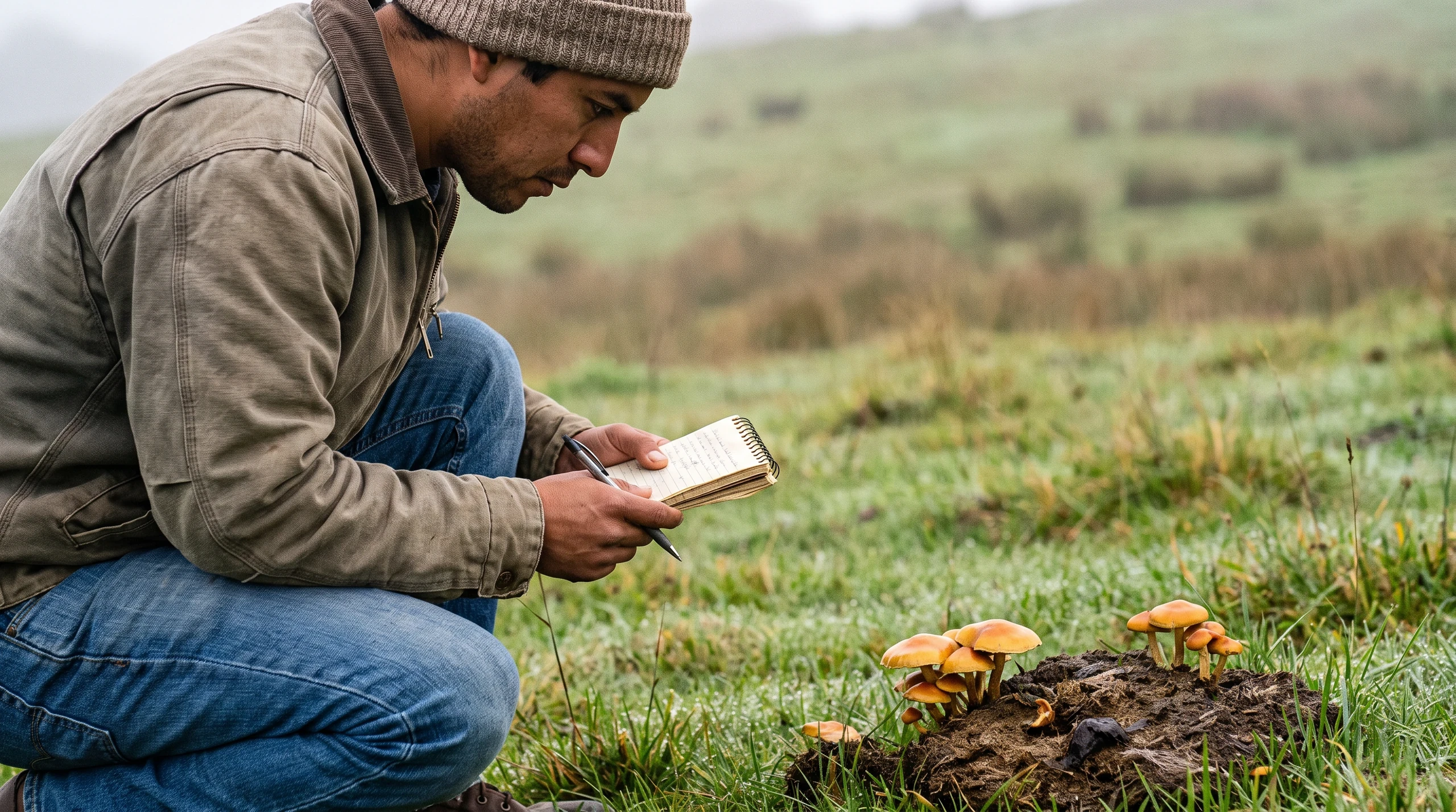
The third problem is that spores do not launch into a void. They launch into an environment already saturated with other spores, from Golden Teacher and from every other fungus in the vicinity. The air over a forest floor in spore season contains thousands of fungal spores per cubic meter. The air over a cow pasture, even more. Most of those spores are as robust, as melanized, as dormancy-capable as Golden Teacher. They are all hunting for the same substrates. The escape pod metaphor implies isolation, a lone capsule drifting through empty space. The reality is more like a cloud of pollen in a hurricane. The spore is one of billions, and the substrate it lands on, assuming it lands on anything at all, is a contested resource.
The Part That Does Not Fit the Analogy At All
The strangest feature of Golden Teacher spores is not their architecture but their social life. A single germinated spore produces a monokaryon, a mycelium whose cells contain one nucleus each. That mycelium cannot fruit. It can grow, it can colonize substrate, it can survive for years, but it will never make a mushroom. To fruit, the monokaryon must encounter a second monokaryon of compatible mating type. The two mycelia fuse, forming a dikaryon, a chimeric network whose cells now contain two genetically distinct nuclei, one from each parent. Only the dikaryon can produce mushrooms. Only the dikaryotic mycelium can form the basidia that will launch the next generation of spores.
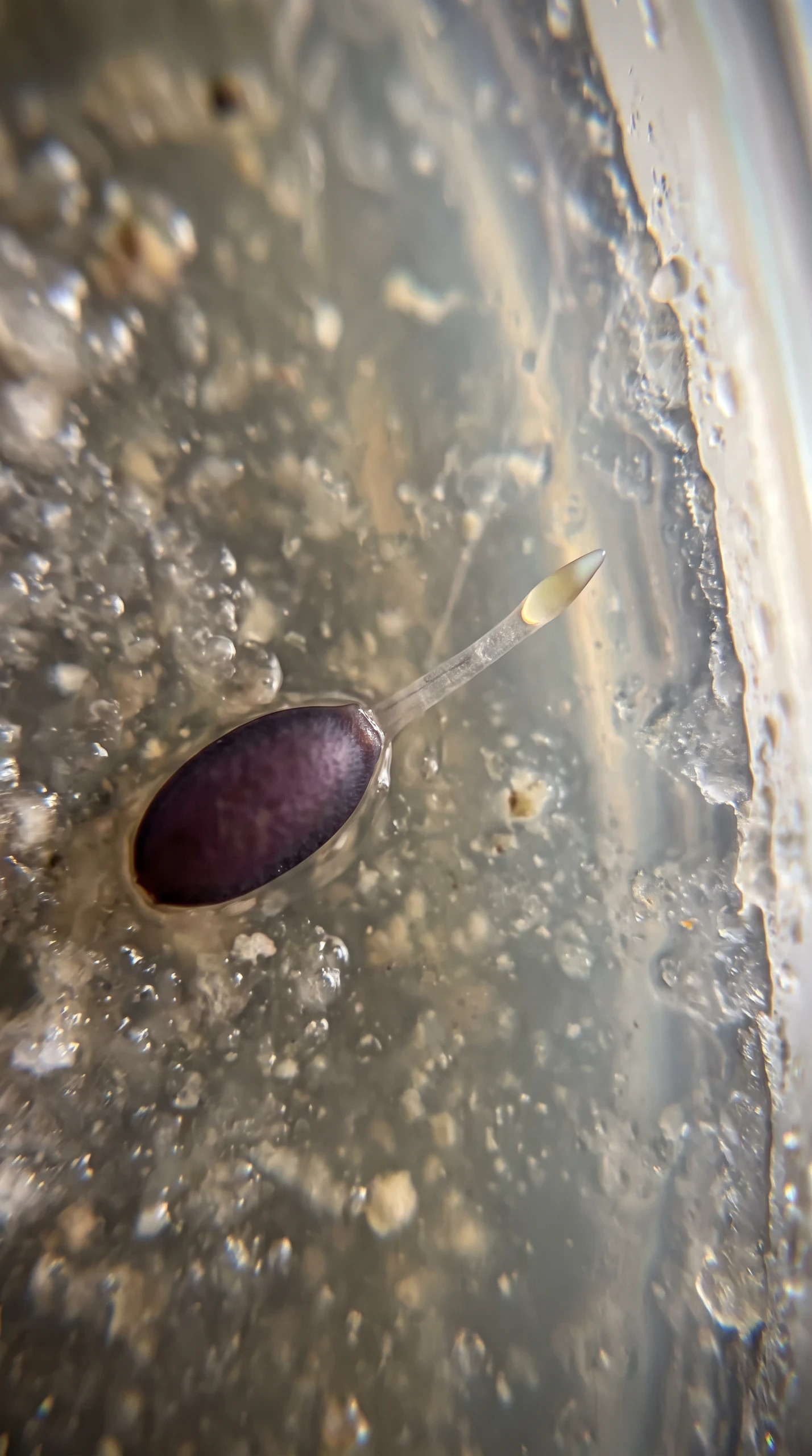
This means the escape pod is not self-sufficient. It is half of a reproductive equation, useless without the other half. The spore carries genes, not instructions for independent survival. It is a gamete with a hardened shell, a motile sex cell built to drift until it finds its complement. The entire dispersal apparatus, the melanized wall, the catapult launch, the dormancy chemistry, exists not to save the organism but to mix its genome with another. The spore is not fleeing the parent. It is hunting for a mate.
That is the part the escape-pod metaphor cannot hold. Spores do not carry refugees. They carry proposals. The wall is not armor. It is a delivery envelope. The contents are an offer: half a genome, waiting to recombine with someone else's half, in some other place, under better conditions. If that sounds less like engineering and more like a desperate evolutionary gamble, that is because it is. The fungus is not escaping danger. It is escaping sameness. The spore is how Golden Teacher stays genetically dynamic across time and distance, how it adapts to new environments, how it avoids the genetic uniformity that would make the whole lineage brittle. The architecture of the spore is not about survival. It is about sex. Everything else is secondary.
Frequently asked questions
How long can Golden Teacher spores remain viable?
Why are Golden Teacher spore prints dark purple-brown?
Do Golden Teacher spores contain psilocybin?
What triggers a Golden Teacher spore to germinate?
Can a single Golden Teacher spore grow into a mushroom on its own?
Ready to apply what you've learned?
Browse lab-tested magic mushrooms, edibles, microdose capsules and teas — shipped discreetly across the United States.