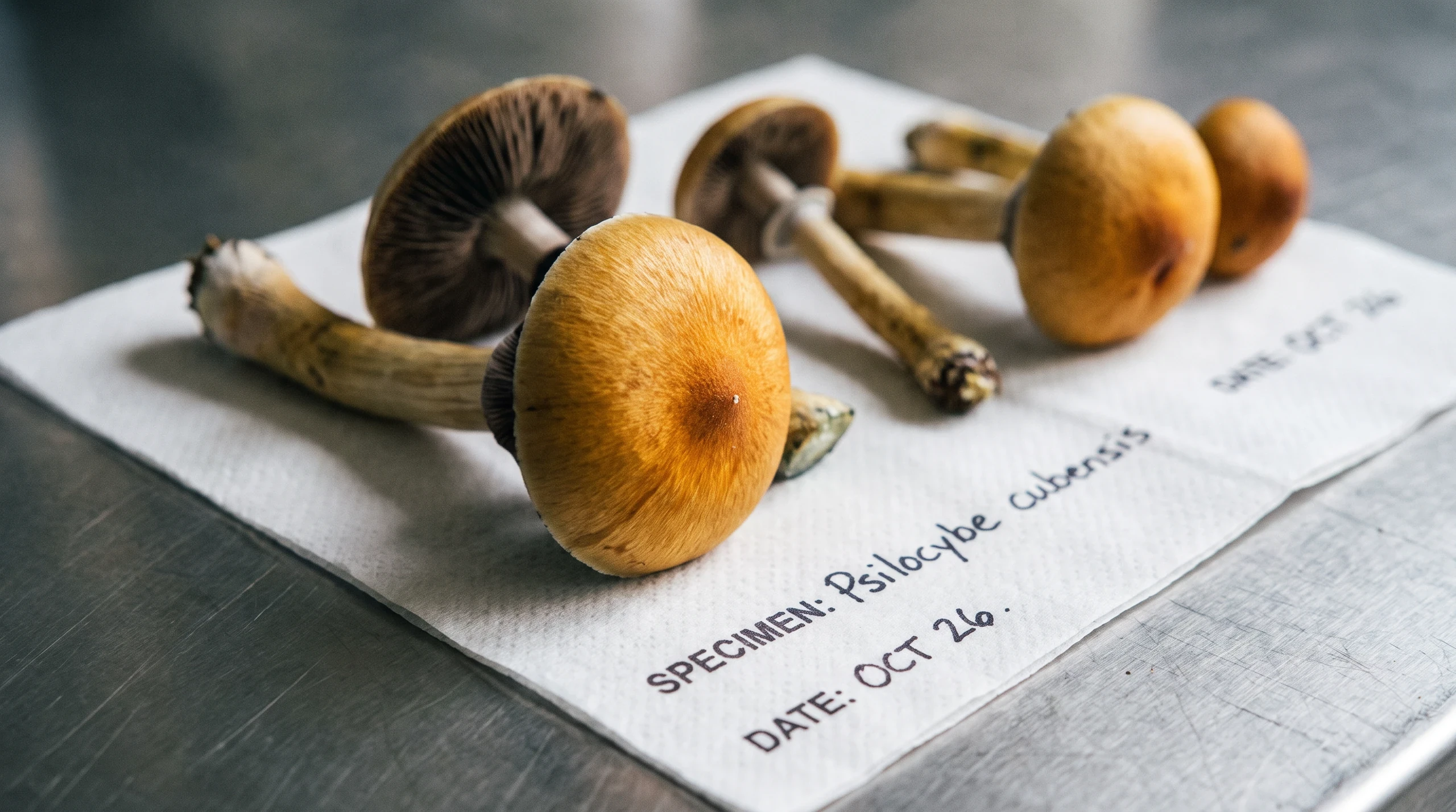
When Johns Hopkins published their landmark psilocybin depression trial in 2020, the results looked stunning. Participants showed dramatic symptom relief after just two doses. Media outlets called it a breakthrough. The paper made waves in psychiatry journals. What most headlines left out: there was no placebo group. Everyone in the trial knew they were getting Golden Teacher or another cubensis cultivar, everyone knew when, and everyone knew why. That makes it nearly impossible to separate the chemical effect of psilocybin from the effect of believing you just took a powerful psychedelic medicine. This is not a critique of that particular trial. It is a description of a method problem that haunts nearly every Golden Teacher study published to date, and it matters more than most casual readers realize.
Understanding why Golden Teacher research needs better placebo controls is not about dismissing the findings. It is about learning to read the science the way researchers themselves read it, with all the caveats and limitations that determine what a result actually demonstrates. Placebo methodology is not a formality. It is the tool that separates pharmacological effect from expectation, suggestion, ritual, and the dozen other variables that can change how someone feels after swallowing a mushroom cap. Without it, you are not studying Golden Teacher. You are studying the entire experience of taking something you believe to be Golden Teacher. Those are different experiments.
The Placebo Problem Nobody Wants to Talk About
A placebo control means giving one group the real intervention and another group something inert, then comparing outcomes without anyone knowing who got what. In a drug trial, this is Pharmacology 101. For Golden Teacher, it is nearly impossible to pull off. The mushroom produces intense perceptual and cognitive shifts that last four to six hours. If you are in the placebo group, you notice. If you are in the psilocybin group, you definitely notice. The blind breaks within an hour, often within thirty minutes. Once participants know which group they are in, expectancy effects flood back in.

This problem is specific and structural. You cannot fake a psilocybin experience with a sugar pill. Participants arrive at the trial knowing they might receive Golden Teacher, hoping they will, often believing it will help them. The moment they start to feel the come-up, or the moment they do not, the blind is compromised. Researchers acknowledge this in the limitations sections of their papers. What they do not always acknowledge is how thoroughly this compromises causal inference. You can measure whether people feel better after taking Golden Teacher under controlled conditions. You cannot say for certain that psilocybin, the molecule, is what made them feel better.
The expectation problem is not small. Meta-analyses of antidepressant trials show placebo responses routinely hit 30 to 40 percent. In psychedelic contexts, where participants often enter with strong positive beliefs about the substance, the placebo response may be even higher. Combine that with the ritual framing, the therapeutic support, the six-hour session in a carefully designed room, and you have a recipe for profound subjective change regardless of what molecule is in the capsule. Golden Teacher studies are studying a bundle. The bundle works. But we still do not know which part of the bundle is load-bearing.
What Blinding Actually Buys You
Blinding is shorthand for keeping participants, providers, and sometimes even analysts unaware of who received which intervention until after data collection is complete. It controls for bias. Without it, participants in the active group may report feeling better because they believe they should. Therapists may interpret the same behavior more favorably when they know someone received psilocybin rather than placebo. Analysts may find patterns in the data that align with their expectations. These are not accusations of misconduct. They are descriptions of how human cognition works under uncertainty.

A well-blinded trial removes expectation as a confound. It forces the intervention to demonstrate efficacy on its own, without the tailwind of belief. For Golden Teacher, this is especially important because belief is baked into the user experience from the start. The cultivar has an origin story. It has a reputation in psychedelic culture. People arrive at trials having read trip reports, having heard it described as gentle or introspective or therapeutic. That context is not noise. It is a variable that interacts with the pharmacology. You cannot measure the pharmacology cleanly without accounting for it.
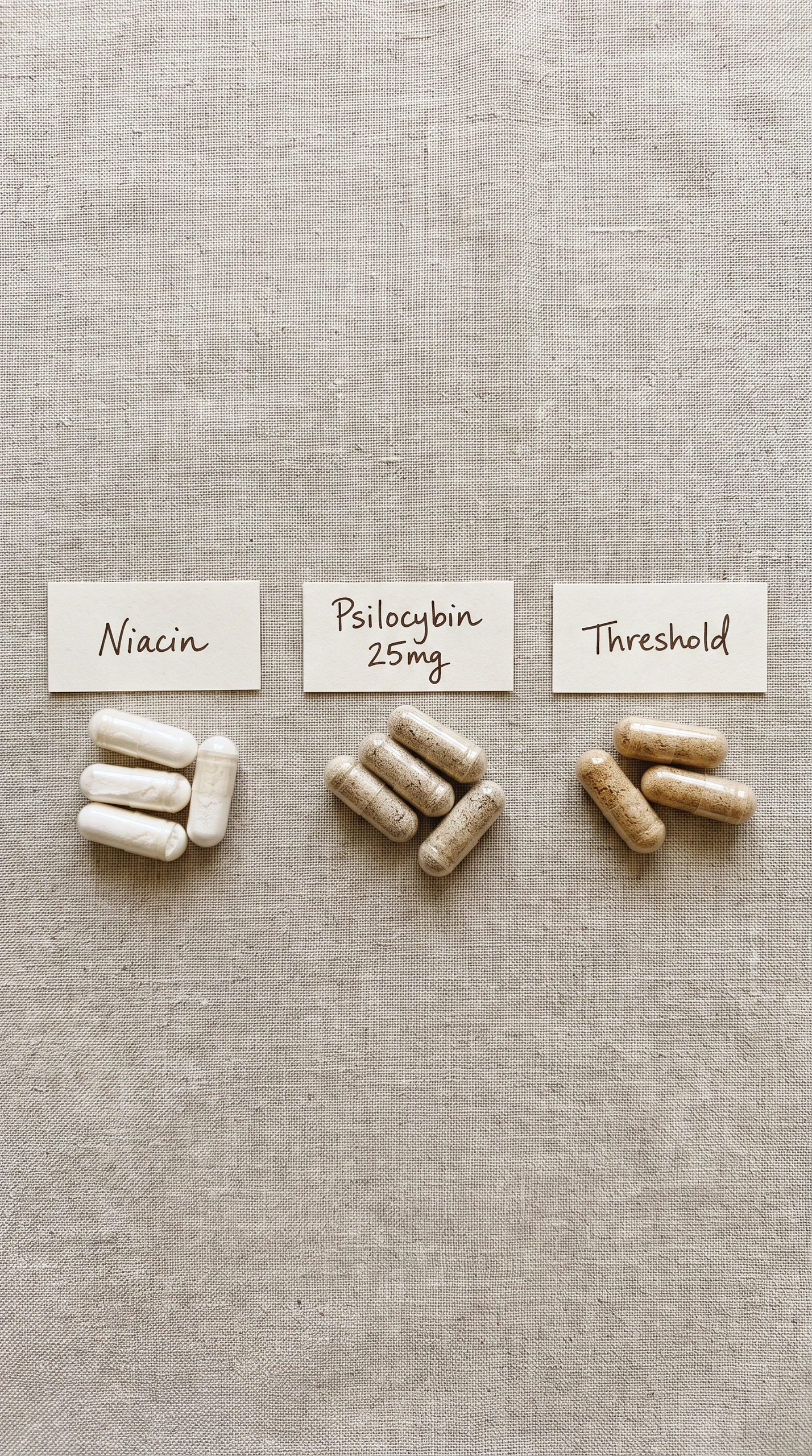
The catch is that blinding requires indistinguishability. The placebo has to feel like the real thing, or at least similar enough that participants cannot reliably guess their assignment. Drug trials often use active placebos, substances that produce noticeable side effects without the therapeutic mechanism. The classic example is niacin, which causes flushing and warmth. Some psilocybin trials have tried low-dose niacin as a comparator. It produces a body sensation, which might preserve the blind better than an inert capsule. Whether it actually works is another question.
The Active Placebo Gambit
An active placebo is a substance that mimics some perceptual or somatic features of the real drug without delivering the target effect. For Golden Teacher trials, researchers have experimented with low-dose niacin, methylphenidate, and even sub-threshold doses of psilocybin itself. The goal is to give the placebo group something noticeable, so they cannot immediately deduce they received the inactive condition. In principle, this should preserve the blind better than a sugar pill. In practice, the results are mixed.

Niacin produces flushing, warmth, and sometimes mild discomfort. It feels like something. But it does not feel like Golden Teacher. Participants who have any prior psilocybin experience, or who have read descriptions of what to expect, can usually tell the difference. Methylphenidate produces stimulation and some cognitive changes, which might be closer, but it still lacks the sensory and emotional textures of a psilocybin experience. Sub-threshold psilocybin, say 1 to 3 milligrams, produces subtle perceptual shifts without full-blown effects. This seems like the most promising comparator, but it introduces a new problem: now your placebo group is receiving a small dose of the active drug. You are no longer comparing psilocybin to nothing. You are comparing a high dose to a low dose. Different question.
The deeper issue is that no substance perfectly mimics Golden Teacher without being Golden Teacher. The perceptual signature is too specific. Trails, color saturation, the sense of space folding, the emotional openness, all of it adds up to something participants recognize if they were expecting it. The blind is a useful fiction in many drug trials. In psychedelic research, it is more like a speed bump. It slows down the expectancy effect but does not eliminate it. Researchers know this. They report blind integrity checks in some trials, asking participants to guess their group assignment after the session. The guesses are usually accurate. The blind, in the strict sense, has failed.
The Waiting-List Control Compromise
When true blinding is impractical, some trials use a waiting-list control design. Participants are randomized to receive Golden Teacher immediately or to wait several weeks or months while serving as a comparison group. The waiting group eventually gets the intervention, which makes recruitment easier and feels more ethically defensible. The trade-off is that you lose any pretense of blinding. Everyone knows their assignment from day one.

This design controls for the passage of time and for natural symptom fluctuation, which is useful. It does not control for expectancy. The immediate-treatment group knows they are about to receive psilocybin. The waiting group knows they are not receiving it yet. The difference in subjective expectation, hope, and engagement with the process is impossible to quantify. If the immediate group shows more improvement, is that because psilocybin works, or because they spent eight weeks believing relief was imminent while the waiting group spent eight weeks believing relief was postponed?
Waiting-list designs are common in psychotherapy research, where blinding is often impossible anyway. They answer a narrower question: does offering the intervention now produce better outcomes than offering it later? For Golden Teacher, this can still be valuable. It establishes that something about the intervention, in context, is associated with measurable change. It does not isolate the pharmacology. It does not rule out expectancy, ritual, or the nonspecific effects of receiving intensive therapeutic attention. The design is pragmatic, not ideal.
What Gets Lost Without a True Control
The absence of a proper placebo control does not mean the findings are false. It means the findings are underdetermined. They are consistent with psilocybin being the active ingredient. They are also consistent with psilocybin being part of a larger active system that includes expectation, setting, therapist alliance, and the cultural meaning participants attach to the experience. The data do not let you pull those variables apart. Researchers can point to dose-response relationships, where higher psilocybin doses produce stronger effects, as indirect evidence that the molecule matters. That helps. It does not close the case.
Consider a hypothetical Golden Teacher trial for depression. Participants receive two supervised doses three weeks apart, embedded in a protocol with preparation sessions, integration therapy, and ongoing check-ins. Outcome measures show a 60 percent response rate at four weeks post-treatment. Impressive number. Now ask: how much of that 60 percent is attributable to psilocybin, and how much to the therapeutic scaffold? Without a control group receiving the same scaffold minus the psilocybin, you cannot say. The trial demonstrates that the whole package works. It does not demonstrate which components are necessary.
This matters for translation. If the effect is mostly pharmacological, you might eventually develop psilocybin analogs that work without the hours-long session. If the effect depends heavily on context and expectation, then removing the ritual container might eliminate the benefit. If you do not know which, you do not know what you are scaling. The mechanistic ambiguity is not just an academic concern. It shapes how you design the next trial, how you train therapists, how you think about potency variation between caps, and what you tell patients about why this intervention might help them.
The Mechanism Question Underneath
Placebo controls do more than adjust for bias. They clarify mechanism. When a drug outperforms placebo, you have evidence that its specific pharmacological action contributes to the effect. When a drug does not outperform placebo, or barely does, you learn that nonspecific factors, like expectation or regression to the mean, may be doing most of the work. For Golden Teacher, this question is wide open.

Psilocybin is a serotonin 2A receptor agonist. It binds to specific sites in the brain and triggers downstream cascades that alter neural activity in the default mode network, the salience network, and other circuits implicated in mood and self-referential processing. This is pharmacology. It is measurable. It happens regardless of what the person believes. But the therapeutic outcome, the thing trials are trying to produce, is not the receptor binding itself. It is a change in symptoms, behavior, or subjective well-being. That change can occur through pharmacological routes, psychological routes, or both.
Expectancy is a psychological mechanism with physiological consequences. Believing you have taken a powerful medicine can alter neurotransmitter release, change pain thresholds, modulate immune function, and shift mood. These are not imaginary effects. They are mediated by the brain's predictive and regulatory systems. In a Golden Teacher trial, expectancy and pharmacology are both acting on overlapping circuits. The perceptual effects of psilocybin might amplify expectancy by providing subjective confirmation that something profound is happening. The two mechanisms could be additive, synergistic, or redundant. You cannot tell without a control that isolates one from the other.
Where Methodology Meets Mystique
Golden Teacher carries symbolic weight. Its origin story is hazy, which adds to the mythos. Its name suggests pedagogy, insight, wisdom imparted by the mushroom itself. For people entering a trial, this is not background trivia. It is part of the frame through which they interpret the experience. The mushroom teaches, the name says so, and the setting reinforces it. Therapists speak in terms of journeys and integration. The room is designed to feel safe and intentional. Music is chosen for emotional resonance. Every detail signals that something meaningful is about to happen.

This is good therapeutic design. It is terrible experimental design if your goal is causal clarity. The problem is not that context matters. The problem is that context matters so much in psychedelic experiences that it becomes impossible to separate from the drug effect without a control condition that preserves the context while removing the drug. Some researchers have proposed sham dosing sessions, where participants go through the full protocol but receive a placebo, with the expectation managed carefully so they still believe they might be getting psilocybin. This is ethically complicated and still does not solve the blinding problem if participants can tell they are not tripping.
Another approach is to compare Golden Teacher to another psychoactive substance with a different mechanism, like MDMA or a dissociative. If both produce similar outcomes despite different pharmacology, that suggests the shared elements, therapy and setting and expectation, might be doing more work than the specific molecule. If outcomes diverge, that points toward molecule-specific effects. These comparator trials are expensive and logistically difficult, but they provide better mechanistic leverage than waiting-list designs.
Reading the Science Without the Hype
The point of understanding placebo methodology is not to dismiss Golden Teacher research. It is to read the papers the way researchers read them, with full awareness of what the design can and cannot establish. When a trial reports that 70 percent of participants showed improvement after psilocybin-assisted therapy, that number is real. The improvement happened. What the design cannot tell you is how much of that improvement would have occurred with the therapy alone, or with the ritual and expectation alone, or with any psychoactive comparator that preserved the blind.
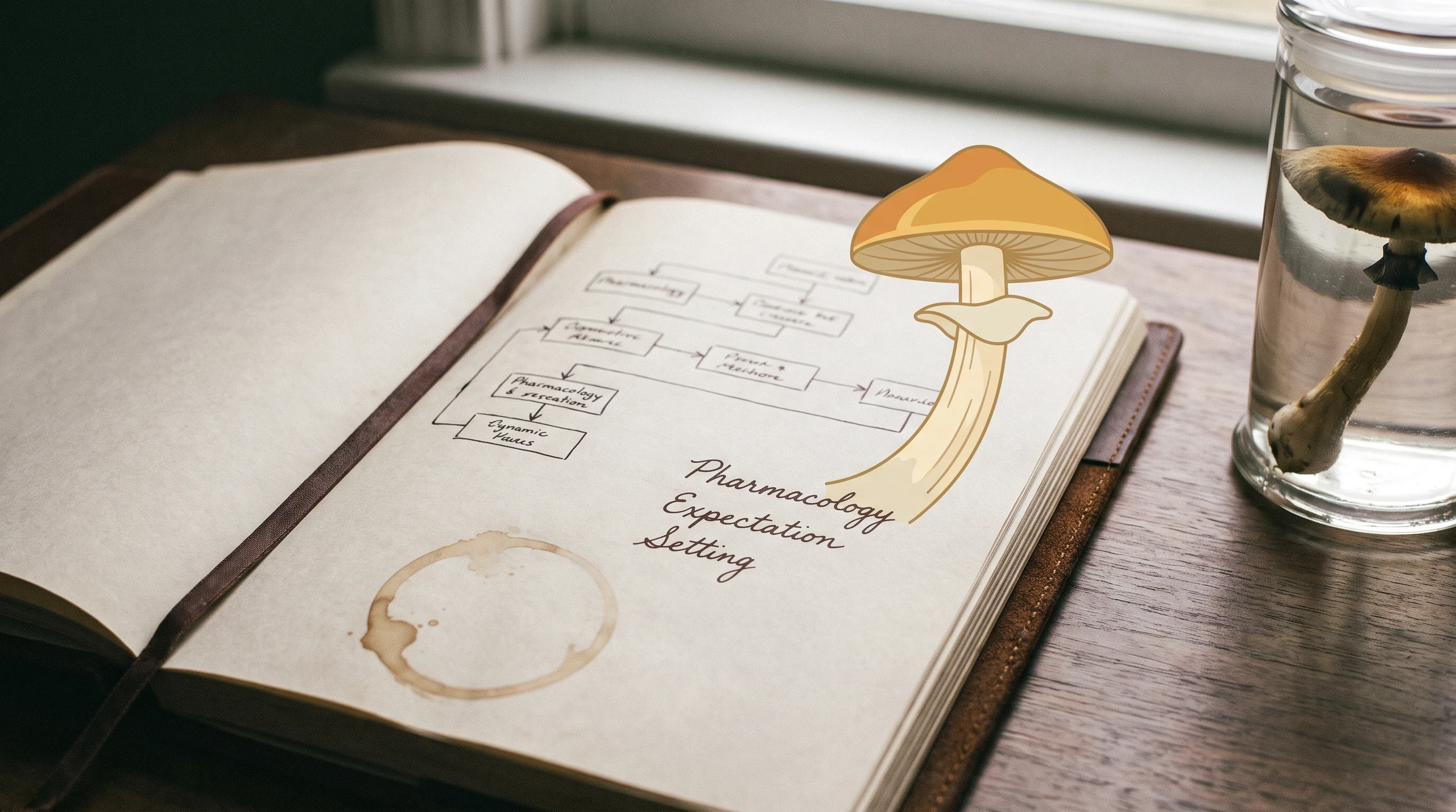
This is not a flaw unique to Golden Teacher studies. It is a challenge across psychedelic science. The substances are too recognizable. The experiences are too distinctive. The cultural context is too loaded. Blinding fails, and with it, the cleanest path to causal inference. Researchers adapt by using active placebos, waiting-list controls, dose comparisons, and mechanistic endpoints like brain imaging that are less vulnerable to expectancy effects. These are workarounds. They yield useful information. They do not replace a true placebo-controlled trial, because no such trial is currently feasible.
The reader's job is to hold two ideas at once. Golden Teacher produces measurable, meaningful outcomes in controlled research settings. And, the methodological constraints mean we do not yet know, with the precision we would like, how much of those outcomes to attribute to psilocybin as opposed to everything else the intervention includes. Both statements are true. The science is real and also limited by the tools available to study it. That tension is what makes this field interesting and also what makes it frustrating for anyone hoping for simple answers.
What Comes Next in the Method
The next generation of Golden Teacher trials will not solve the placebo problem outright, but they can edge toward better controls. Dose-response studies, where participants receive a range of doses including very low or inactive comparators, help establish that higher psilocybin exposure is associated with stronger effects. Brain imaging studies provide objective endpoints, like changes in network connectivity, that do not depend on participants reporting how they feel. Longitudinal designs that track outcomes over months or years can show whether initial changes persist, which helps distinguish durable therapeutic effects from transient placebo responses that fade quickly.

Researchers are also exploring expectancy management strategies. Pre-trial education that sets realistic, neutral expectations rather than hyping the intervention might reduce placebo inflation. Blinding checks built into the protocol, where participants rate their confidence in their group assignment at multiple time points, let researchers quantify how badly the blind has broken and adjust their interpretation accordingly. None of these fixes the core problem, but together they add methodological rigor that strengthens confidence in the findings.
The larger shift is cultural. As Golden Teacher and other psilocybin research moves closer to regulatory approval, the standards for evidence will tighten. Phase III trials required for FDA authorization demand robust controls, larger sample sizes, and reproducibility across sites. The early open-label studies and small pilots served their purpose. They demonstrated feasibility and safety, and they generated enough signal to justify bigger investments. The next wave has to meet a higher bar. That means grappling directly with the placebo problem rather than deferring it to the limitations section.
Frequently asked questions
Why can't researchers just use a sugar pill as the placebo?
Does the lack of a placebo mean the research findings are wrong?
What is an active placebo and why does it help?
Can brain imaging replace placebo controls in psilocybin research?
Why does expectation matter so much in psychedelic trials?
Ready to apply what you've learned?
Browse lab-tested magic mushrooms, edibles, microdose capsules and teas — shipped discreetly across the United States.