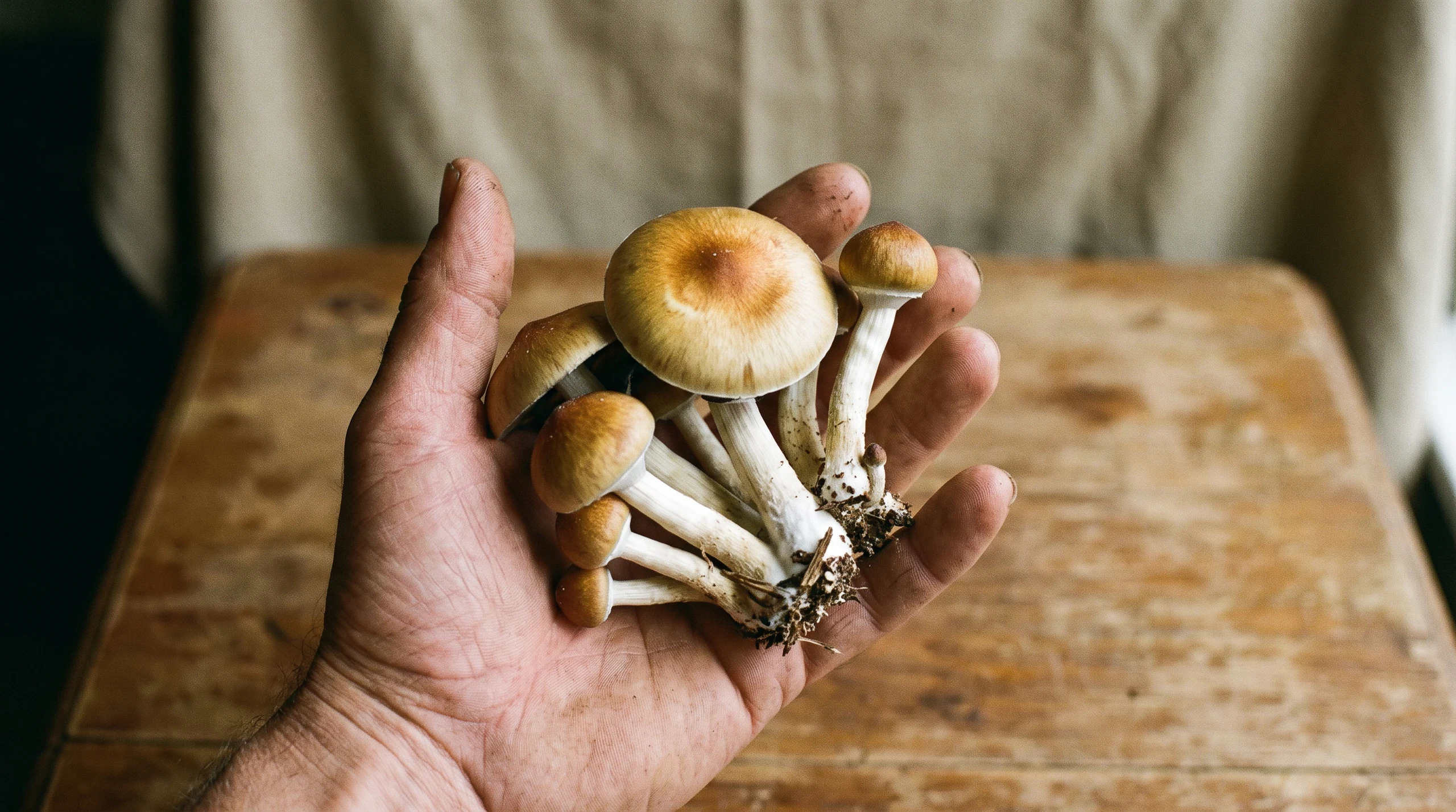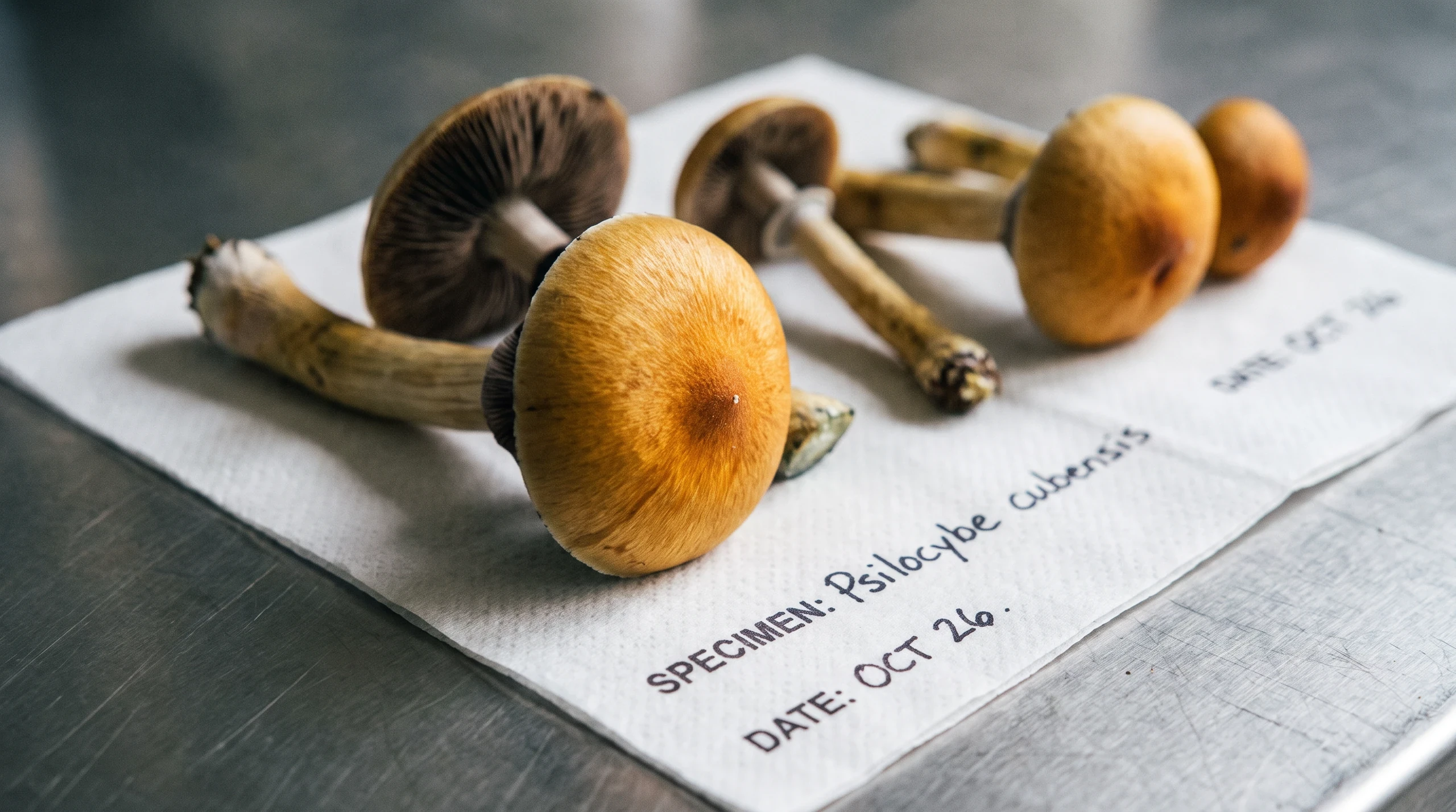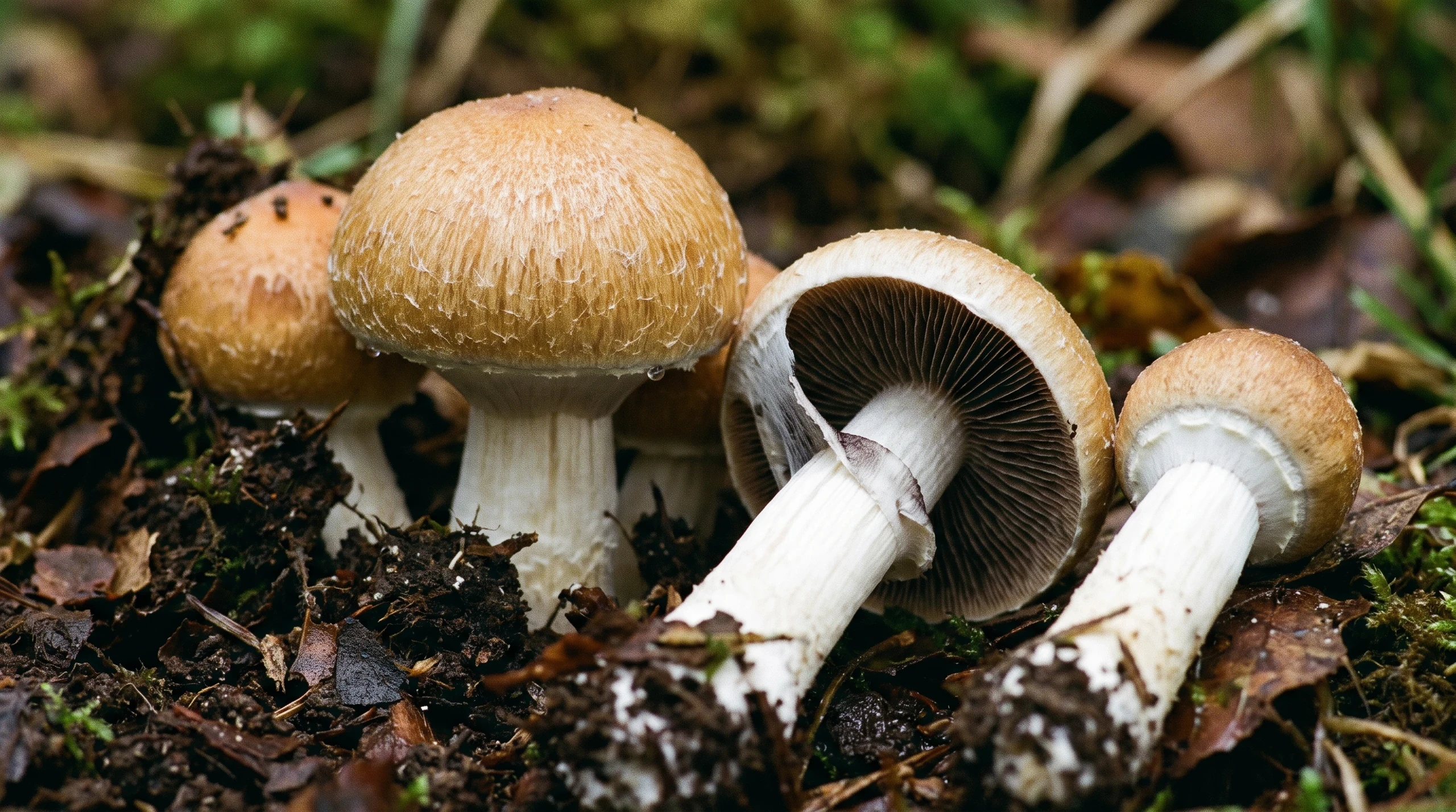
People use psilocybin mushrooms, and pretending otherwise helps no one. The Golden Teacher cultivar, with its distinctive caramel caps and thick stems, remains one of the most widely circulated Psilocybe cubensis strains in underground networks and decriminalized spaces alike. It shows up in trip reports, spore prints traded online, and increasingly in conversations about medicinal use. This piece is not a how-to, it is a what-to-know-if-you're-going-to-anyway. The goal is risk reduction anchored to one specific mushroom, the cultivar known across psychedelic culture for its moderate potency and forgiving nature, or at least the reputation for both.
Golden Teacher is not benign simply because it is a fungus, or natural, or sold with a friendly name. Psilocybin and psilocin, the active compounds in this and every cubensis strain, are Schedule I controlled substances under federal law in the United States. That classification carries real legal consequences, and the fact that Oregon and Colorado have carved out exceptions does not change the federal picture or the laws in forty-eight other states. Risk begins before ingestion.
The harm-reduction framework accepts that prohibition does not eliminate use. It shifts the question from "should people do this" to "how do we keep people safer when they do." That means discussing contraindications, psychological vulnerabilities, drug interactions, environmental factors, support structures, and what to do when an experience turns sideways. The approach is non-judgmental, evidence-informed where evidence exists, and pragmatic about the limits of what any guide can promise. Golden Teacher may be gentler than some psilocybin mushrooms in anecdotal reports, but gentle is not safe, and anecdotal is not clinical.
The Legal Reality: What Federal Prohibition Actually Means
Psilocybin remains a Schedule I substance under the Controlled Substances Act, a classification that defines it as having no accepted medical use and high abuse potential. Possession, sale, or cultivation can result in federal felony charges, fines, and prison time. State laws vary. Oregon and Colorado have legalized supervised psilocybin services and decriminalized personal possession respectively, and a handful of cities, including Denver, Oakland, and Washington D.C., have deprioritized enforcement. Everywhere else, the risk is prosecution.
That risk is not theoretical. Arrests happen. Convictions carry consequences that extend beyond sentencing, affecting employment, housing, student aid eligibility, and immigration status. The legal landscape is shifting, with the FDA granting psilocybin breakthrough therapy designation for depression research and the DEA quietly increasing production quotas in 2026, but those changes do not protect individuals outside clinical trials. If you are holding Golden Teacher mushrooms, dried or fresh, you are holding contraband in most jurisdictions.
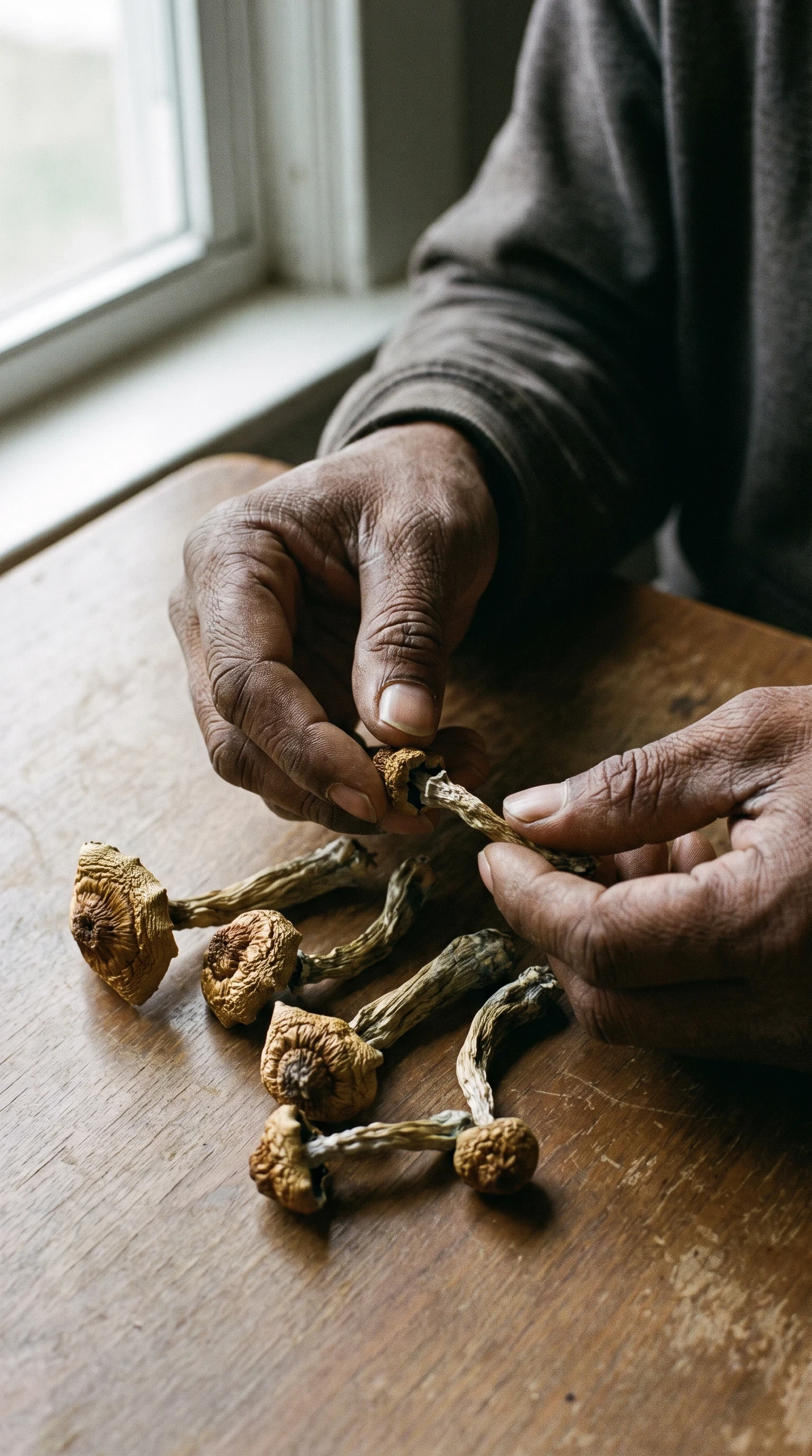
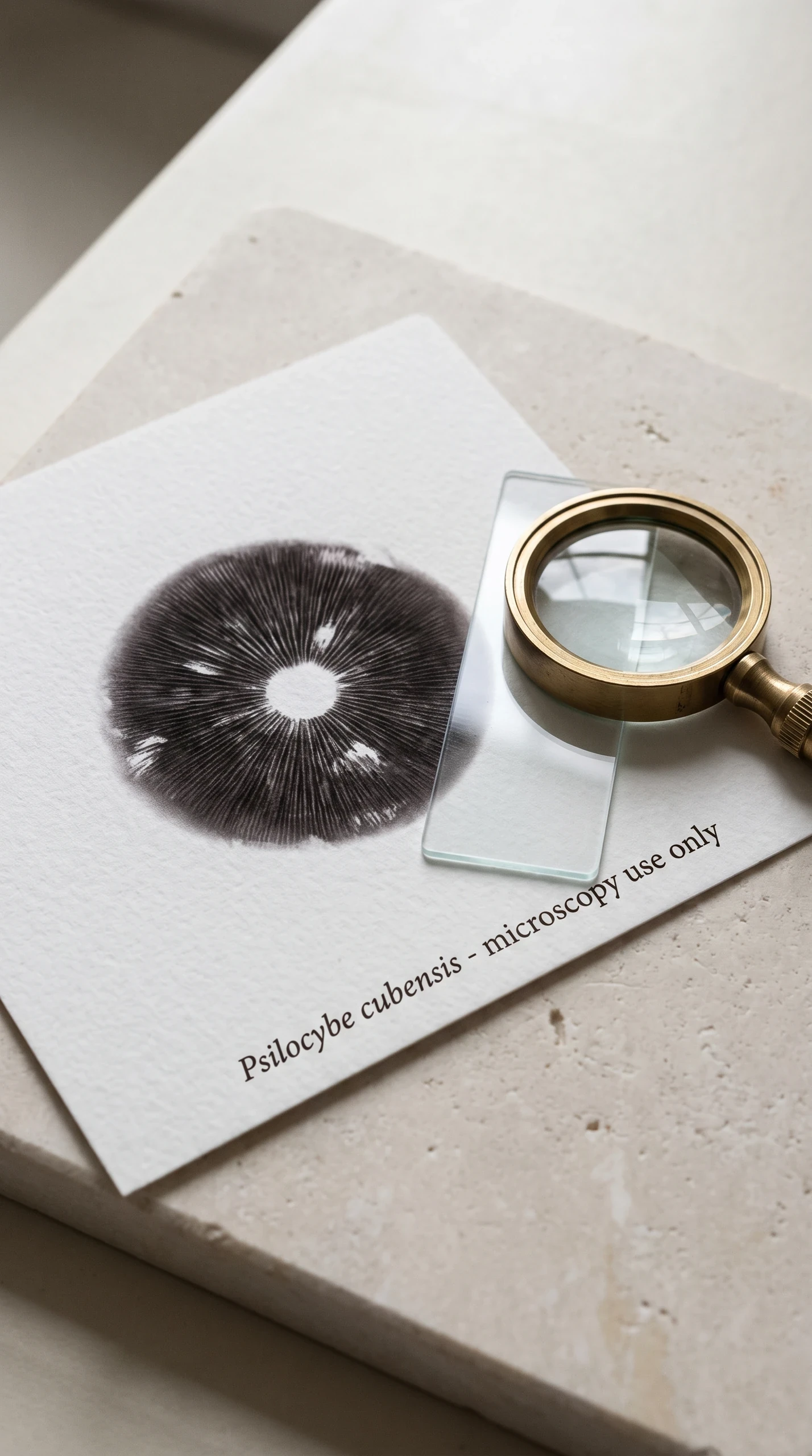
The spore legal loophole is real but narrow. Psilocybe cubensis spores contain no psilocybin and are legal to purchase for microscopy in most states, but germinating them crosses the line into cultivation, a felony. The ambiguity creates a gray market that feels safer than it is. People assume small personal amounts offer insulation from enforcement. Sometimes they do, sometimes they don't. The discretion lies with individual officers, prosecutors, and judges, none of whom are obligated to look the other way.
Decriminalization is not legalization. It typically means law enforcement will not prioritize arrests for personal possession, but it does not erase the underlying statute or prevent prosecution if an officer or DA decides otherwise. The supervised psilocybin programs in Oregon operate under strict licensing, trained facilitators, and medical screening. They are not a free pass to forage or cultivate. Conflating the two creates false security.
Set and Setting: The Weight of Context
The phrase "set and setting" is repeated so often in psychedelic circles that it risks becoming a platitude, but the Johns Hopkins psilocybin research gives it teeth. Their safety guidelines for human hallucinogen studies make clear that mindset and environment are not ambient details, they are active variables that shape whether a session becomes therapeutic, neutral, or traumatic. In clinical contexts, participants undergo preparation sessions, meet guides beforehand to build trust, and dose in calm, supervised rooms with soft furnishings and no sharp edges. These precautions reduce, but do not eliminate, difficult experiences.
Golden Teacher sessions outside those controls carry different odds. Set and setting still matter, possibly more. Set, the internal landscape, includes current mood, expectations, unresolved fears, and why you are taking the mushroom in the first place. Dosing while angry, grieving, or in active crisis does not guarantee a bad trip, but it stacks the deck. The substance amplifies what is already there. If what is already there is desperation or unprocessed trauma, psilocybin will not file it away neatly. It will hand it back, louder.

Setting, the external environment, covers physical safety and social context. A trusted friend's living room with a sober sitter present is one thing. A chaotic party with strangers, loud music, and no exit plan is another. The latter is where people end up in emergency rooms or police custody, not because Golden Teacher itself is acutely toxic, it is not, but because disorientation, paranoia, or panic in an uncontrolled environment leads to dangerous decisions. People walk into traffic, injure themselves trying to escape imagined threats, or become combative when others try to calm them. Psilocybin does not create violence, but confusion under its influence can look like aggression to bystanders or authorities.
Preparation is not mystical, it is practical. Know the dose, or know that you can't know it precisely, since Golden Teacher potency varies cap to cap. Have a cleared schedule with no obligations for at least eight hours. Arrange a sober sitter if possible. Choose a space that feels safe, where you will not be interrupted by landlords, family, or anyone who might panic and call 911. Turn off your phone or hand it to someone else. These are not guarantees, they are load-bearing precautions.
Drug Interactions: What Not to Mix
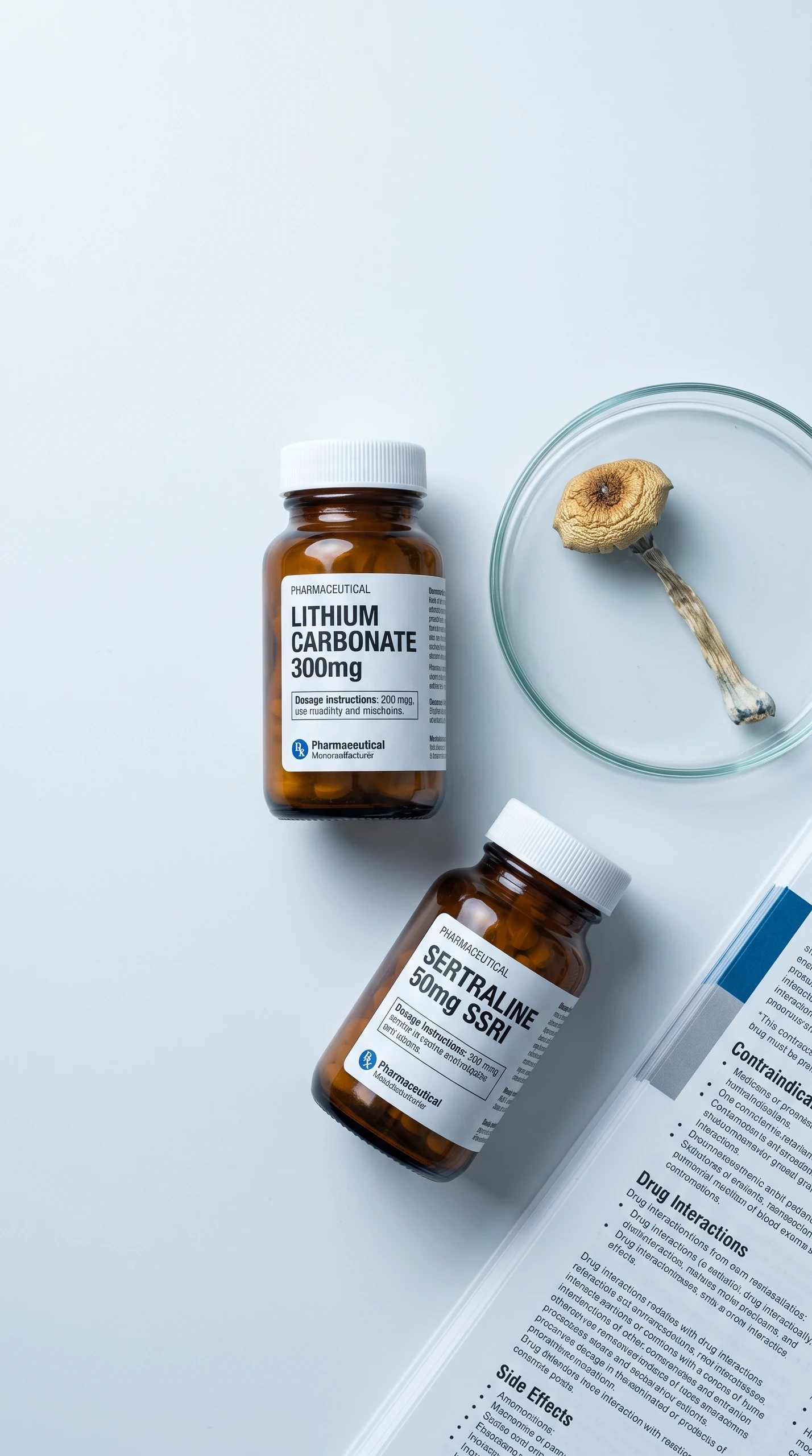
Psilocybin interacts with other substances, and some of those interactions are dangerous. Lithium, a mood stabilizer prescribed for bipolar disorder, tops the list. Case reports and clinical guidelines document severe reactions, including seizures and delirium, when psilocybin and lithium are combined. The mechanism is not fully understood, which makes the risk harder to predict and impossible to dose around. If you take lithium, psilocybin is contraindicated. Not cautioned against. Contraindicated.
Selective serotonin reuptake inhibitors, the SSRIs prescribed for depression and anxiety, interact differently. They do not typically cause medical crises when mixed with Golden Teacher, but they blunt the effects. SSRIs occupy serotonin receptors, and psilocybin needs access to those same receptors, particularly 5-HT2A, to produce its characteristic effects. People on SSRIs report muted or absent psychedelic experiences even at doses that would reliably affect others. Stopping an SSRI to take psilocybin is not a harmless workaround. Abrupt discontinuation can cause withdrawal symptoms, mood destabilization, and rebound depression. Tapering requires weeks under medical supervision, and doing it for a single trip is a risk trade most clinicians would not endorse.
Monoamine oxidase inhibitors, or MAOIs, add serotonin syndrome risk. Psilocybin increases serotonin activity, and MAOIs prevent serotonin breakdown. Together they can push serotonin levels dangerously high, leading to agitation, muscle rigidity, hyperthermia, and in severe cases, seizures or death. MAOIs are less commonly prescribed now but still used for treatment-resistant depression. They also appear in ayahuasca brews, where the MAOI is the whole point, making psilocybin orally active. Mixing Golden Teacher with an MAOI-containing substance or prescription is a medical emergency waiting to happen.
Antipsychotic medications like risperidone or olanzapine block the same 5-HT2A receptors psilocybin targets. Clinically, they can abort a psilocybin experience, which is why some researchers keep them on hand during trials. For someone taking antipsychotics daily, this means Golden Teacher will likely do nothing, or very little. More concerning, using psilocybin while managing a psychotic disorder undermines the medication's protective function and risks destabilization. The same logic applies to mood stabilizers beyond lithium, like lamotrigine or valproate, though the interaction profile is less understood.
Alcohol and stimulants like cocaine or MDMA are common polysubstance pairings at parties and festivals. Alcohol dulls cognition and coordination, compounding psilocybin's disorienting effects. Stimulants create cardiovascular strain, psilocybin raises heart rate and blood pressure modestly, and stacking the two increases that load. There are no good studies quantifying the risk, which means you are running an experiment with your heart as the variable. Festival culture normalizes these combinations. Harm reduction means naming the risk plainly even when it is culturally smoothed over.
Who Should Not Use Golden Teacher
Certain populations face elevated risk, and no amount of set, setting, or supervision changes that calculus enough. People with a personal or family history of schizophrenia or other psychotic disorders should not take psilocybin mushrooms. The evidence here is consistent and concerning. Psilocybin can precipitate psychotic breaks in vulnerable individuals, and while most resolve, some do not. The first episode of schizophrenia often appears in late adolescence or early adulthood, and psilocybin use during that window may trigger onset in people genetically predisposed. Family history matters because psychotic disorders have heritable components. If a first-degree relative has schizophrenia, your baseline risk is higher, and adding a psychedelic multiplies it unpredictably.

Bipolar disorder occupies a similar category. Psilocybin can induce mania, even in people with well-controlled bipolar who have never experienced a manic episode on their current medication. Mania is not euphoria. It is impulsivity, grandiosity, risky behavior, and sometimes aggression or paranoia. A manic episode can destroy relationships, finances, and safety in days. The research on psilocybin for treatment-resistant depression is promising, but those trials exclude people with bipolar for this exact reason. Taking Golden Teacher with a bipolar diagnosis is borrowing against a future you may not be able to afford.
Severe depression actively worsening, particularly with suicidal ideation, is not a good candidate for unsupervised psilocybin use. The clinical trials showing benefit for depression involve weeks of preparation, psychological support, and integration therapy afterward. They are not taking a mushroom alone in your apartment and hoping the sadness lifts. Psilocybin intensifies emotional states. If you are already in crisis, intensification is a vector toward self-harm, not healing. The Johns Hopkins studies screen out participants with active suicidal intent for this reason.
Cardiovascular conditions add physiological risk. Psilocybin increases heart rate and blood pressure modestly in most people, but modestly can be too much if you have uncontrolled hypertension, a recent heart attack, arrhythmias, or structural heart defects. The increase is not extreme, but it is real and sustained for hours. If your cardiovascular system is already compromised, that duration matters. This does not mean everyone with a heart murmur or high blood pressure will have a cardiac event on Golden Teacher, but the risk is non-zero, and there is no emergency reversal agent.
Pregnancy and breastfeeding are obvious exclusions. There are no studies, because there should not be studies, on psilocybin's effects on fetal or infant development. The absence of evidence is not evidence of safety. The same logic extends to adolescents, whose brains are still developing and whose mental health trajectories are harder to predict. The romanticization of teenage psychedelic exploration is cultural nostalgia, not neuroscience.
Physical Safety and Medical Emergencies
Golden Teacher is not acutely toxic in the way that alcohol or opioids are. There is no established lethal dose of psilocybin in humans, and fatal overdoses from mushrooms alone are vanishingly rare in the medical literature. Death from psilocybin mushroom ingestion almost always involves misidentification, where a toxic species was consumed instead, not an overdose of the psychoactive compound itself. That fact is reassuring until it isn't. People do not die from psilocybin poisoning, but they do die from actions taken while under its influence.
The most common medical emergency is psychological, not physiological. Panic attacks, paranoia, and acute distress send people to emergency rooms, where they are typically given benzodiazepines to calm them and monitored until the effects wear off. These interventions work, but they are traumatic, expensive, and create a medical record. The panic itself, while it feels life-threatening, is not. What kills people is the behavioral response. Running into traffic, jumping from heights, attempting to "escape" an imagined threat, these are documented causes of psilocybin-related deaths. The mushroom does not make you jump. The conviction that you must jump does.
Vomiting and nausea are common, especially in the first hour after ingestion. Psilocybin mushrooms irritate the stomach, and Golden Teacher is no exception. For most people this is unpleasant but manageable. Dehydration becomes a concern if vomiting is prolonged, particularly if you are not drinking water or if the setting, a hot room, a festival in summer, increases fluid loss through sweat. Severe dehydration compounds confusion and raises the risk of fainting or injury.
Serotonin syndrome, already mentioned in the drug interaction section, warrants repeating because it is one of the few true medical emergencies psilocybin can contribute to. Symptoms include agitation, confusion, rapid heart rate, dilated pupils, muscle rigidity, and fever. Severe cases progress to seizures, loss of consciousness, and death. If someone on Golden Teacher shows these signs, especially if they are on other serotonergic drugs, that is a 911 call, not a ride-it-out situation.

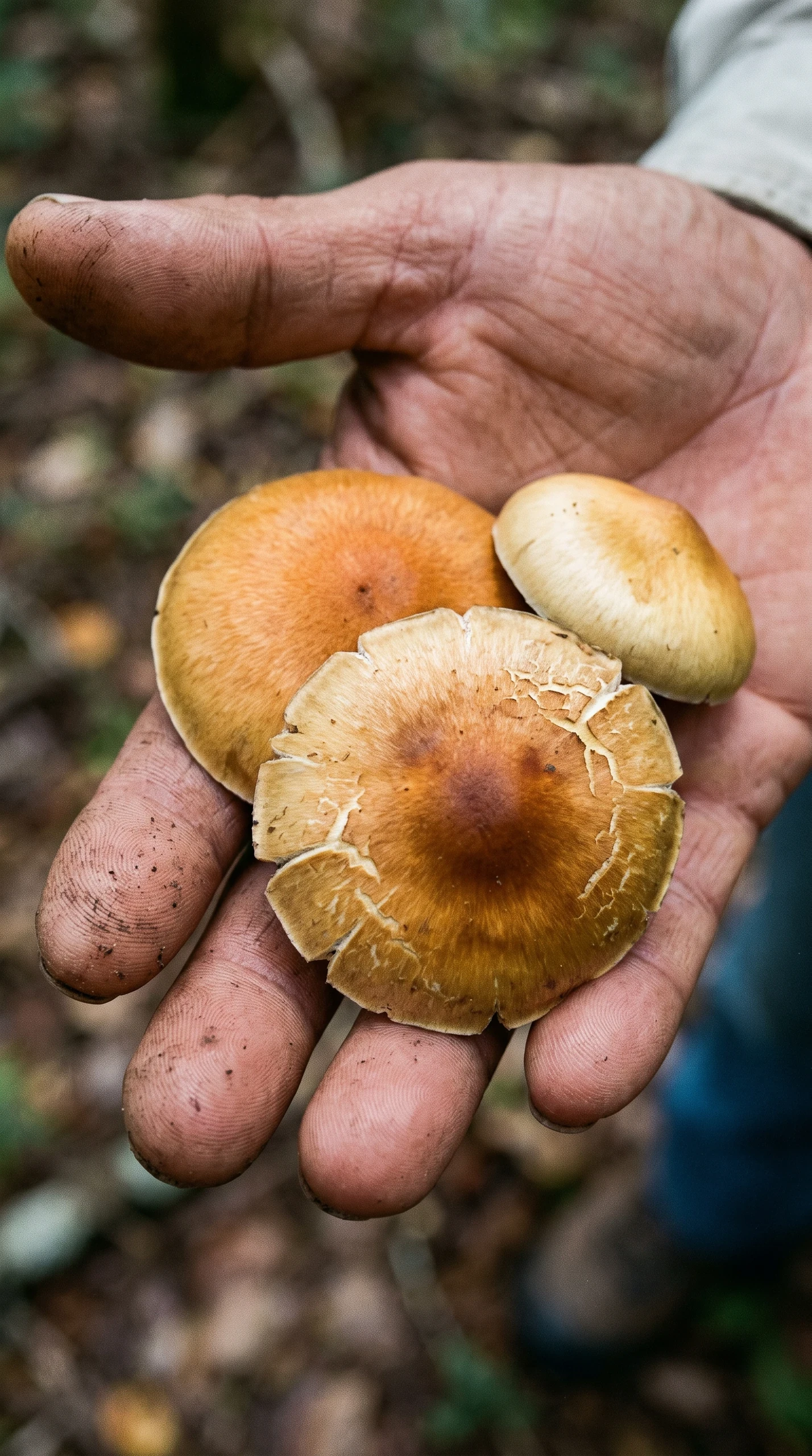
Misidentification of mushrooms is the other lethal risk. Golden Teacher is cultivated, so most people encounter it dried or in controlled grows, but foragers looking for wild Psilocybe species sometimes pick deadly Galerina or Amanita mushrooms by mistake. Those contain amatoxins, which destroy the liver. Symptoms appear hours after ingestion, long after the window for activated charcoal has closed. By the time liver failure becomes obvious, the damage is irreversible. This has nothing to do with psilocybin and everything to do with fungal taxonomy, but it is a harm-reduction issue because the two contexts, cultivation and foraging, blur in some communities.
What to Do When an Experience Turns Difficult
Most difficult psilocybin experiences resolve without intervention if the person is in a physically safe environment and supported by calm, non-reactive people. The phrase "bad trip" flattens a wide range of states. Anxiety, fear, confusion, despair, ego dissolution, confrontation with repressed memories, these can all feel unbearable in the moment and still lead to meaningful integration afterward. The line between difficult and dangerous is whether the person is at risk of harming themselves or others.
If someone on Golden Teacher is panicking, the first move is verbal reassurance. Remind them they took a substance, that what they are feeling is temporary, and that they are physically safe. Use a calm, slow voice. Do not argue with their perceptions, it never works, but do not validate them as real either. "I know this feels overwhelming. You are going to be okay. I am here." Repetition helps. Their short-term memory is compromised, so they may need to hear it dozens of times.
Move them to a quieter, dimmer space if possible. Overstimulation, noise, bright lights, too many people talking, worsens disorientation. Offer water. Suggest slow breathing, not as a cure but as an anchor. Do not restrain them unless they are actively trying to hurt themselves or others. Restraint escalates panic. If they want to move, walk with them in a safe, enclosed area.
The Fireside Project operates a free peer support line at 62-FIRESIDE (623-473-7433), available 11 a.m. to 11 p.m. Pacific. The volunteers are trained in psychedelic harm reduction, and they will talk someone through a difficult experience without judgment or law enforcement involvement. This is a real, non-hypothetical resource, and having the number saved before a session is basic preparation. They do not provide medical advice, but they can help de-escalate psychological distress remotely.
When to call 911 is a harder calculus. If someone is having a seizure, losing consciousness, showing signs of serotonin syndrome, or is imminently about to hurt themselves or someone else, emergency services are necessary. The legal risk of that call is real. Paramedics and police often arrive together, and possession charges can follow. Some jurisdictions have Good Samaritan laws that provide limited immunity for people calling for help during a drug overdose, but those laws do not uniformly cover psilocybin and they do not prevent arrest of the person who used. Harm reduction means weighing that risk against the immediate danger. If the choice is between a felony charge and death, you call.
Integration, the processing that happens after the experience ends, is where difficult trips either become useful or calcify into trauma. Talking through what happened, ideally with someone trained in psychedelic integration therapy or at minimum a trusted, non-judgmental friend, helps contextualize frightening material. Without that processing, people are sometimes left with free-floating anxiety or derealization that lingers for weeks. The clinical trials build integration into the protocol for this reason. Unsupervised use skips that step, and some people pay for it afterward.
Harm Reduction's Limits
Harm reduction is not a guarantee. It is a framework for lowering risk in contexts where risk cannot be eliminated. Following every guideline in this article will not make Golden Teacher safe, it will make it safer, and the gap between those two words is where people still get hurt. Research on psilocybin happens in controlled settings with screened participants, medical oversight, and exclusion criteria that eliminate the most vulnerable. Real-world use includes all the people those trials turn away, and the outcomes reflect that.

The variability problem is structural. Psilocybin content in mushrooms of the same strain grown in the same batch can differ by a factor of two or more. Drying and storage degrade potency unpredictably. Dosing is educated guessing at best. A "moderate" dose on paper can be overwhelming if that particular mushroom ran high, or underwhelming if it ran low. Harm reduction tells you to start low, but it cannot tell you what low actually is in the bag you are holding.
Psychological risk cannot be fully assessed beforehand. People hide symptoms, deny family history, or do not know it. Someone may have no diagnosable condition and still be in a vulnerable psychological state that makes psilocybin destabilizing. The research shows that even in carefully screened populations, a small percentage of participants have adverse outcomes. Outside those controls, the percentage is higher, though no one knows by how much because the data does not exist.
Legal risk is binary. You either get caught or you don't. Harm reduction can advise on discretion, small quantities, and avoiding high-risk behaviors like driving or carrying mushrooms through airports, but it cannot eliminate the possibility of a traffic stop, a roommate conflict that brings police, or a festival sweep. The consequences of that roll are life-altering, and no amount of preparation changes the odds to zero.
The long-term effects of repeated psilocybin use are understudied. The clinical trials involve one to three sessions over months, not weekly or daily use. Anecdotal reports of benefit from microdosing Golden Teacher or other cubensis strains are widespread, but anecdotes are not evidence, and the studies that do exist show mixed results. Chronic use may carry risks we do not yet understand, particularly for adolescents or people with latent vulnerabilities. Harm reduction acknowledges those gaps and counsels caution without pretending to know what the gaps hide.

Support Systems and Sitter Guidelines
A sober sitter is not a legal requirement or a moral imperative, but their presence reduces risk substantially. The role is simple in theory and harder in practice. A good sitter stays calm, does not impose their own agenda on the experience, and intervenes only when safety is at risk. They are a lifeguard, not a lifeguard who keeps jumping in the pool to teach swimming.
Choose someone you trust before the session, not someone who happens to be around. Trust here means you believe they will not panic, call 911 prematurely, or mock you later for what you said or did. It also means they will not take advantage of your vulnerability. Sexual or financial exploitation during a psilocybin session is a documented harm, and it happens most often when the sitter was not chosen carefully or when power dynamics were already uneven.
The sitter should be fully sober. Not "only had a couple beers" sober. Not "microdosing too, so we're vibing together" sober. Actually sober. Alcohol, cannabis, or other substances compromise judgment and reaction time, and the sitter's job is to maintain both. If you are taking Golden Teacher in a group and everyone is dosing, you do not have a sitter, you have a group trip. Those can be meaningful, but the risk calculus changes.
Boundaries should be discussed beforehand. What does the person want the sitter to do if they become afraid, cry, ask to be left alone, or ask to go outside? What is the plan if things escalate? These conversations feel awkward when everyone is sober and optimistic, but they are easier than making decisions in the moment when someone is in distress and you have no shared reference point.
The Zendo Project's manual, developed by MAPS, teaches a model called "sitting, not guiding." The sitter's role is to be present, not to interpret the experience or steer it toward any particular insight. If the person is lying down with their eyes closed, the sitter sits quietly nearby. If they want to talk, the sitter listens without judgment. If they are in distress, the sitter offers calm reassurance, physical comfort if welcomed, and practical help like water or a blanket.
Touch is context-dependent. Some people find hand-holding or a hug grounding during a difficult moment. Others experience any touch as intrusive or threatening while under psilocybin's influence. Ask before touching, and accept no as final. What felt comforting an hour ago may feel unbearable now. The sitter adapts.
After the session ends, usually six to eight hours after ingestion, the sitter's job continues for a while. The person may still be disoriented, emotionally raw, or physically exhausted. They should not drive, make major decisions, or be left alone if they are still unstable. The sitter makes sure they eat something, drink water, and have a plan for the next day. Integration begins here, not in a therapist's office weeks later.
The Cultural Context
Golden Teacher occupies a strange position in the psychedelic landscape. It is not the most potent cubensis cultivar, but it is one of the most recognizable, its name and appearance fixed in mushroom lore through decades of spore trades, grow forums, and trip reports. The name itself does ideological work. "Teacher" implies intention, wisdom, guidance, a benevolent force offering lessons. That framing is cultural, not chemical. Psilocybin does not have a pedagogy. What it offers is altered perception, and what you do with that is interpretation, not revelation.
The branding matters because it shapes expectations, and expectations shape experiences. People approach Golden Teacher assuming it will be gentle, forgiving, insightful. Sometimes it is. Sometimes it is none of those things, and the mismatch between expectation and reality turns a manageable experience difficult. This is not the mushroom lying, it is the user importing cultural narratives into a neurochemical event. Harm reduction includes recognizing that separation.
The legal gray markets, the decriminalization movements, the clinical trials repositioning psilocybin as medicine, all of these create a veneer of legitimacy that can obscure the remaining risks. Golden Teacher is still illegal in most places. It still interacts with medications. It still carries psychological hazards for vulnerable populations. The fact that it might be legal in five years, or that Johns Hopkins published positive findings, does not retroactively make today's unsupervised use safe. Progress in drug policy is real, but it does not protect individuals navigating the gap between prohibition and reform.
Harm Reduction Is Ongoing Work
This guide is not complete because completeness is not possible. New research will clarify some risks and reveal others. Legal contexts will shift. The mushrooms themselves will remain unpredictable in potency and effect. Harm reduction adapts, it does not solve. If you are reading this because you are considering taking Golden Teacher, or because someone you care about already has, the best move is to keep reading. Not just this article, but the primary research, the harm reduction manuals from organizations like MAPS, the honest trip reports that include fear and confusion alongside the mysticism.
Know what you are risking, and know that you do not know all of it. That is not a reason to panic, but it is a reason to proceed carefully, with humility about the limits of preparation, and with the understanding that no mushroom, however golden its reputation, is teaching anything. It is producing an altered state. What you learn from that state depends on what you bring to it, what support you have during it, and what you do with it afterward. The substance is a catalyst, not a curriculum.
Frequently asked questions
Is Golden Teacher safer than other psilocybin mushrooms?
Can I take Golden Teacher if I'm on antidepressants?
What should I do if someone is having a panic attack on Golden Teacher?
How long do the effects of Golden Teacher last?
Is it legal to grow Golden Teacher at home?
Ready to apply what you've learned?
Browse lab-tested magic mushrooms, edibles, microdose capsules and teas — shipped discreetly across the United States.