Ask anyone in a cultivation forum which Psilocybe cubensis strain a beginner should start with and the answer comes back, again and again, like an incantation: Golden Teacher. Not B+, not Amazonian, not Ecuador. Golden Teacher. The name alone does half the marketing work. It suggests wisdom, restraint, a mushroom that will guide rather than flatten you. It evokes the aesthetic of enlightenment, a benevolent fungal guru offering lessons instead of mere chemistry. The odd part is that no one can say for certain who named it, when the name first appeared in print, or whether the metaphor came before or after the reputation. What survives is the name itself, now the most recognized cultivar in psychedelia's visual lexicon, and a tangle of origin stories that mycologists still argue over in threads that run hundreds of posts deep.
The name breaks cleanly into two claims. Golden: a promise about appearance, specifically the caps, which in prime specimens show a caramel to honey wash that catches light in a way the gray-brown of wild cubensis does not. Teacher: a metaphor borrowed from ethnobotany, the idea that psilocybin mushrooms do not merely alter perception but instruct, that the experience has a curriculum. Both halves carry cultural weight. Both are, in different ways, true and not true. The caps are golden until they are not. The experience teaches until it just scares you. The gap between the name and the organism is where the interesting work happens, where marketing folklore meets actual mycology and the result gets called a strain.
The Golden Part
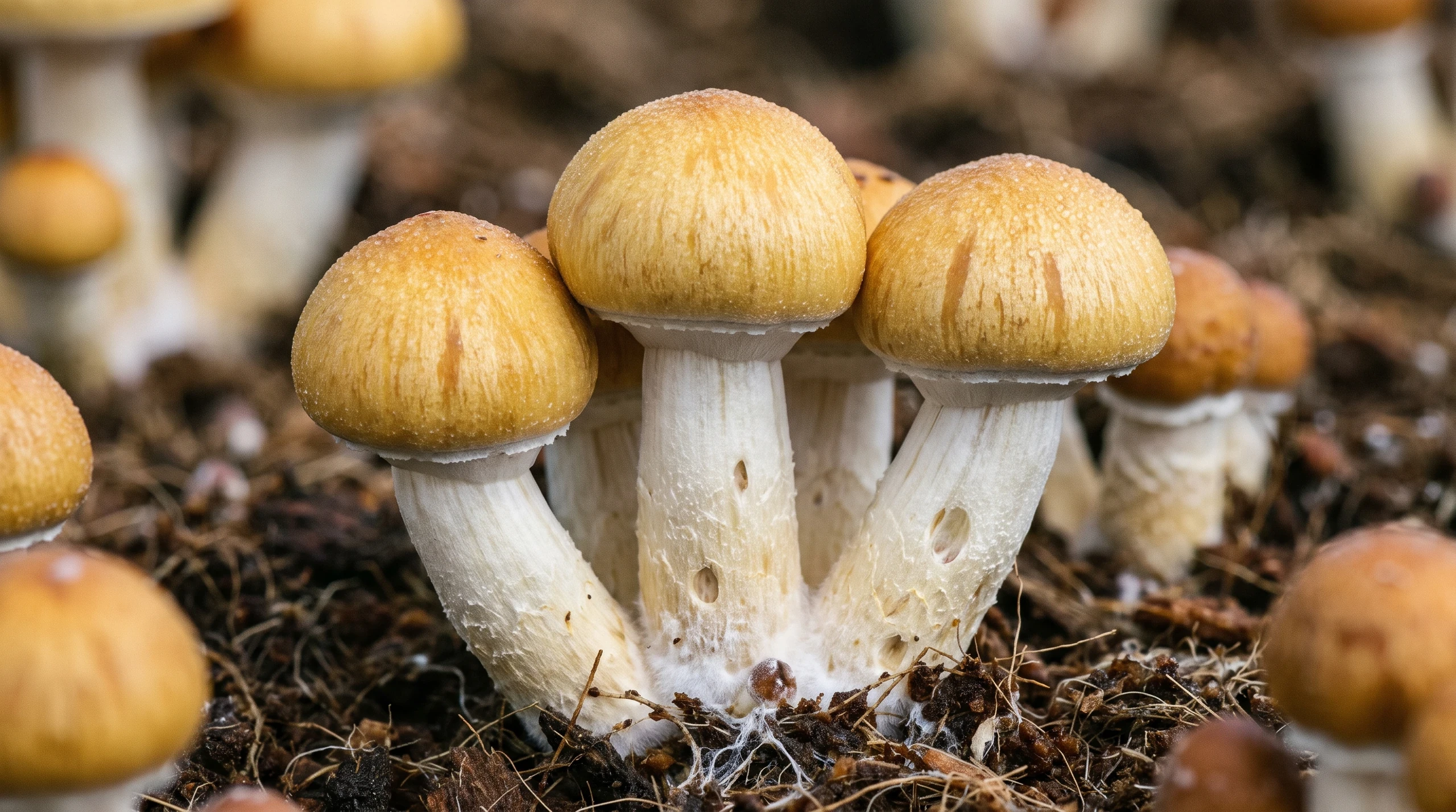
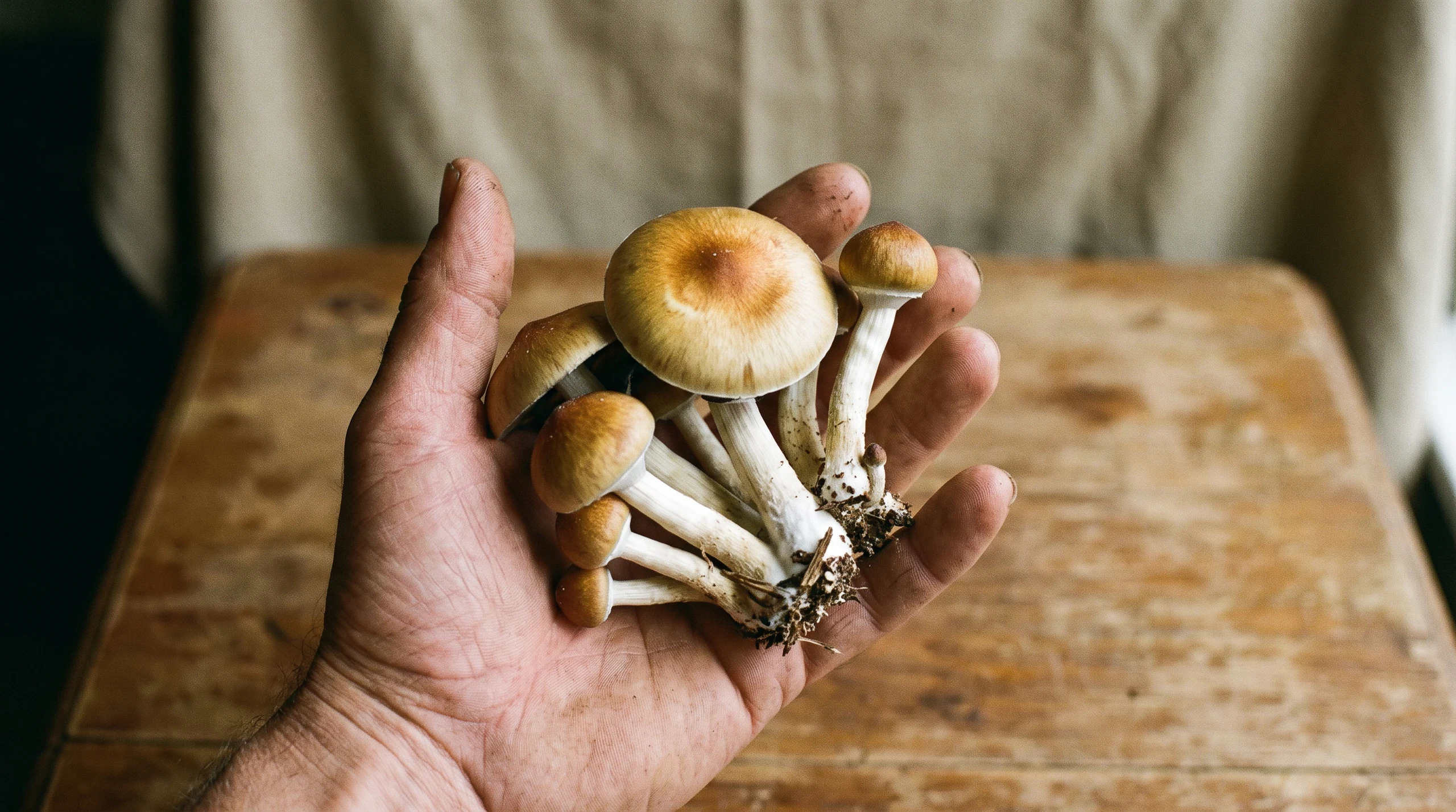
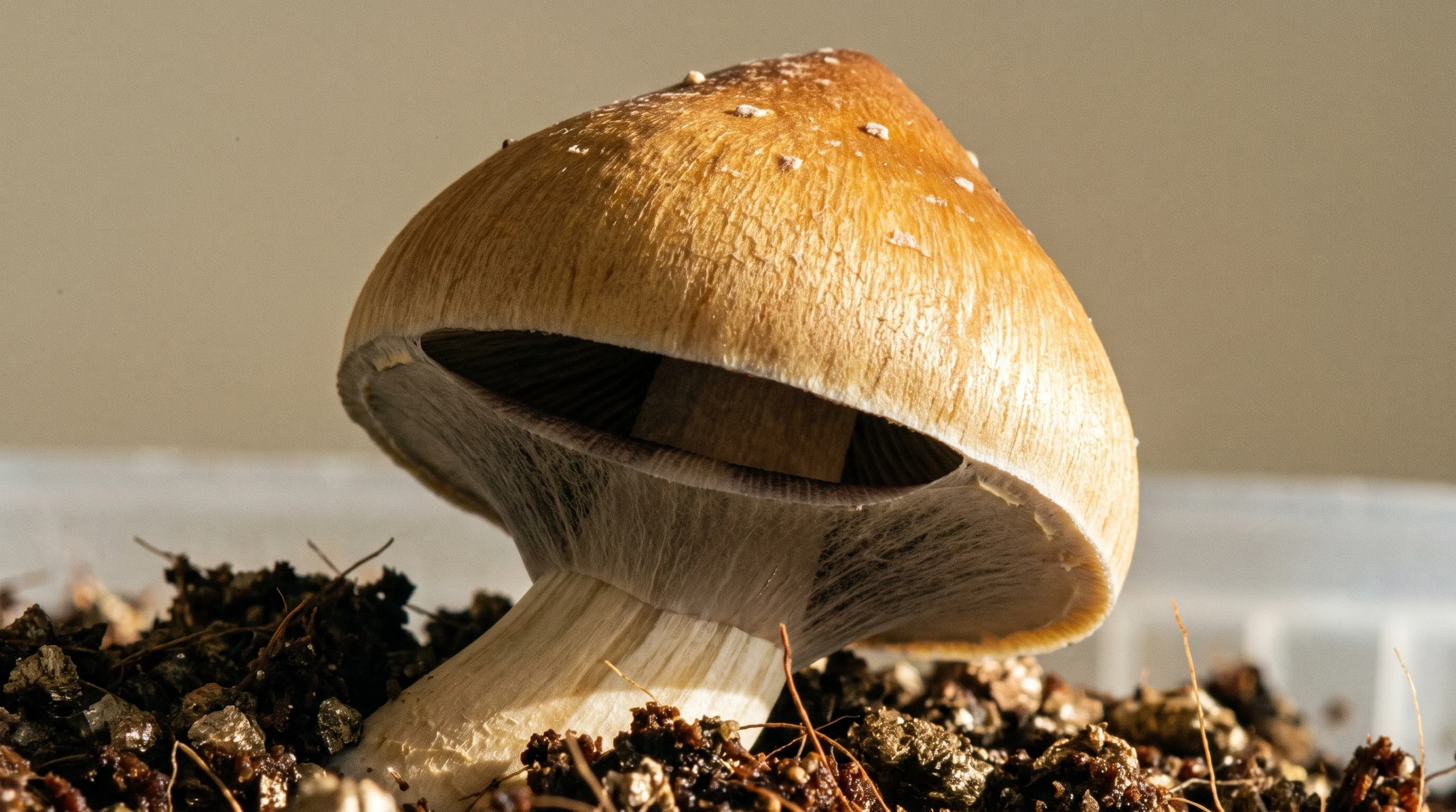
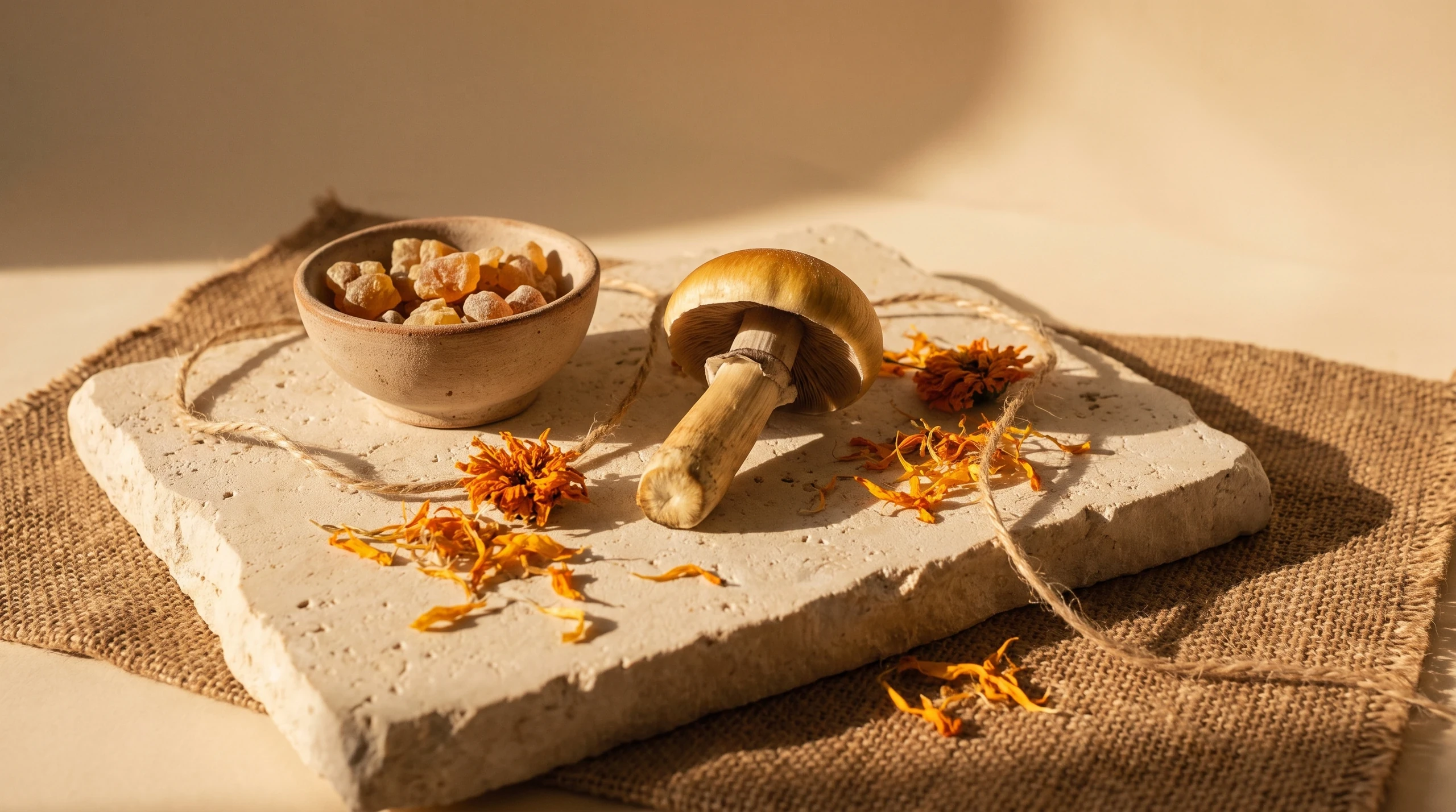
The "golden" in Golden Teacher refers to the color of the caps, though anyone who has grown a flush knows the shade is unreliable. A young pin shows pale, almost white. A mature cap in ideal humidity might hit that burnished yellow-gold the name promises, particularly at the center where the cuticle is thickest. Let it go another day and the color fades to tan, then ochre, a duller finish as the spores darken underneath. The most photogenic specimens that dominate online galleries are harvested at a narrow window, just before the veil breaks, when the color and the form align with the branding.
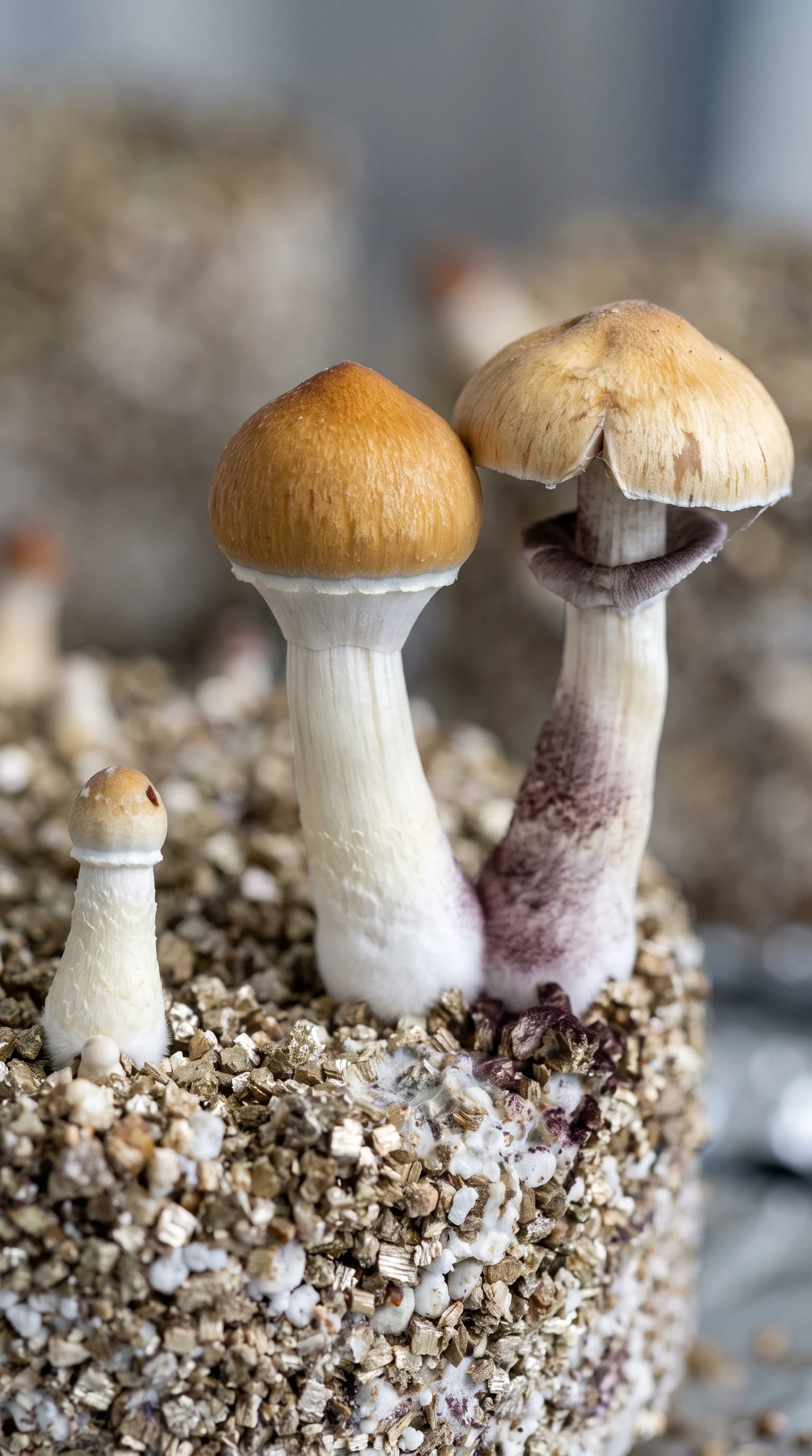
Still, that flash of gold is real enough to anchor the name. Psilocybe cubensis as a species spans a wide color palette, from the near-albino leucistic strains to the deep caramel of certain wild specimens. Within that range, Golden Teacher skews warm. The phenotype is consistent enough that experienced growers can spot it in a lineup, though not consistent enough to make identification foolproof. The golden caps are a signature, not a guarantee. In a field setting, where wild cubensis grow alongside deadly Galerina or other lookalikes that novices mistake for the strain, color alone will get you killed. The name does not come with a field guide.
The aesthetic appeal is not incidental. The golden caps photograph well, reproduce well in illustrations, and carry symbolic weight. Gold suggests value, purity, something refined rather than dug from manure. It elevates the mushroom from a barnyard fungus to an object of contemplation. The fact that the color is natural, not a result of selective breeding for anything but appearance, makes the name feel less like branding and more like observation. The mushroom was golden before someone called it that. Naming it just made the observation official.
The Teacher Metaphor
The "teacher" half of the name taps into a much older tradition. Indigenous Mazatec communities in Oaxaca referred to psilocybin mushrooms as "little saints" or "children," terms that frame the fungi as sentient guides rather than inert compounds. Across the Amazon, ayahuasca is frequently called "la maestra," the teacher, a being capable of revealing knowledge that intellectual study cannot access. The metaphor is common enough in ethnobotany that academic research has cataloged it as a cross-cultural pattern, a way of describing an experience that feels less like intoxication and more like pedagogy. You do not get high on a teacher. You sit with it. You listen. You take notes, or at least you try to before the geometry eats the page.
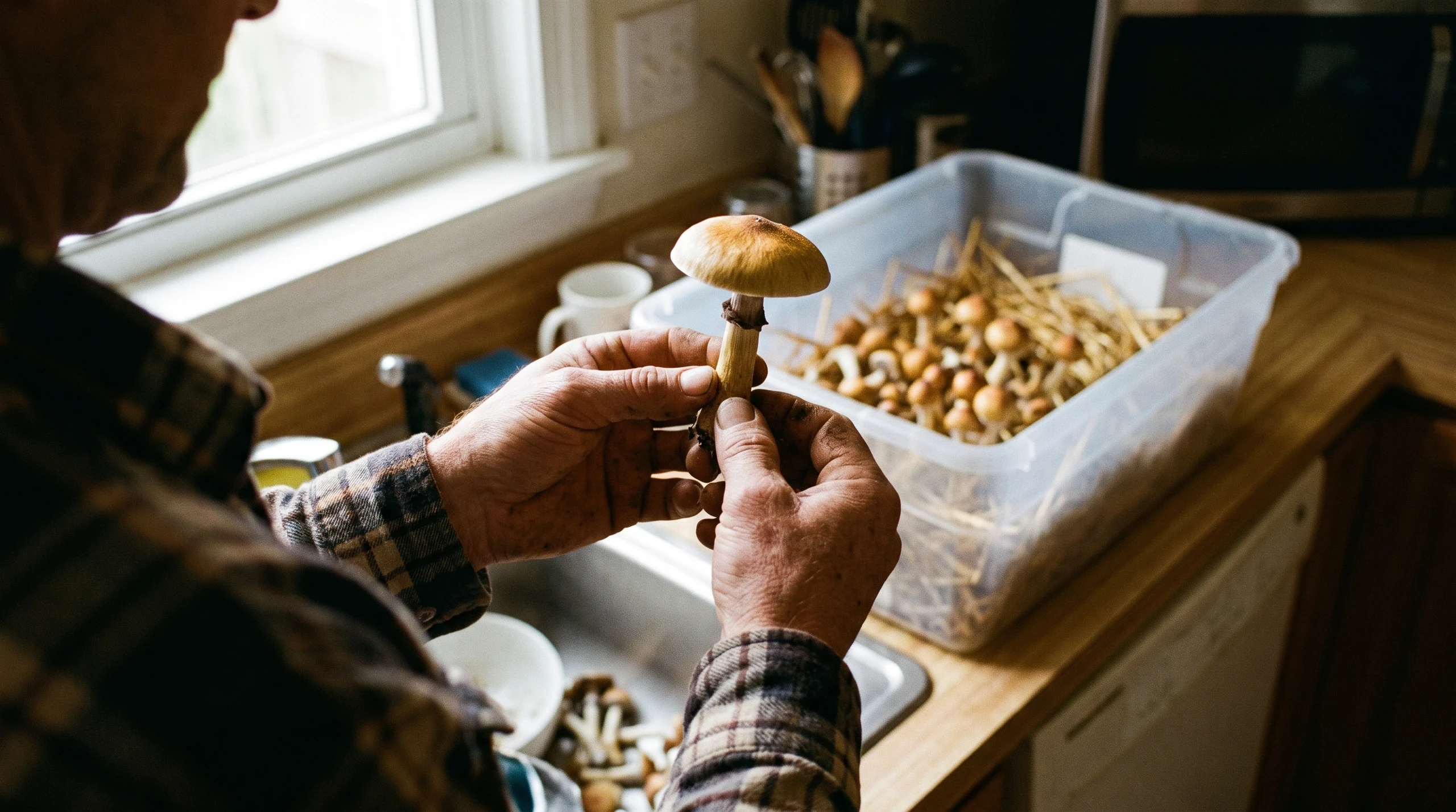
Terence McKenna popularized the frame in the West, talking about psilocybin mushrooms as "nature's own cognitive tool," a biological technology for rethinking assumptions you did not know you held. The idea resonated in the 1980s and 1990s as the first wave of home cultivators, many of them autodidacts with countercultural leanings, approached the mushroom not as a party drug but as a sacrament, a method for exploring consciousness without the institutional baggage of psychiatry or religion. The mushroom became a teacher by default, because the people growing it wanted something to teach them. The name Golden Teacher literalizes that desire. It tells you what the experience is supposed to be before you have it.
The claim has academic backing, to a point. Research from UC Berkeley's Center for the Science of Psychedelics describes entheogens as cognitive tools, substances that enhance pattern recognition, disrupt habitual thought, and produce insights that subjects describe as "revelatory." Whether those insights are true in any external sense is another question. The mushroom teaches, but it does not fact-check. The lessons stick, but they might be wrong. The teacher metaphor does work as phenomenology, as a description of what the experience feels like, but it comes with no warranty. What controlled studies can measure and what the name promises are not the same thing.
Still, the metaphor persists because it is useful. It reframes consumption as practice. It discourages recklessness. It imports the vocabulary of set and setting, the recognition that your mental and physical environment shape the experience as much as the compound does. A teacher demands preparation. You do not walk into a classroom drunk or hostile or underprepared, at least not if you want to learn. The name trains users to approach the mushroom with seriousness, which may or may not make the trip safer, but certainly makes the folklore around it more coherent. Golden Teacher is a strain that sounds like it will not hurt you. That is a marketing advantage no lab result can provide.

Where the Name Came From
The actual origin of the name Golden Teacher is contested, which is typical for Psilocybe cubensis cultivars. Most of them emerged in the 1980s from informal networks of growers who shared prints via mail order, Usenet, and later, web forums like The Shroomery. These were not formal taxonomic acts. No type specimen was deposited. No Latin binomial was proposed. Someone grew a mushroom, noticed something distinctive, gave it a name, and distributed the spores. If the name stuck, it became a "strain." If it did not, it vanished.
The earliest verifiable mention of Golden Teacher in print appears in a classified ad in the July 1991 issue of High Times magazine, which places the name in circulation by the early 1990s at the latest. Before that, the timeline is folklore. One story places the original isolation in Florida, possibly in the mid-1980s, a subtropical pasture find that someone cultivated and found reliable enough to share. Another version claims the strain came from a Hawaiian collection, a Pacific Exotica Spora specimen that a Dutch grower renamed and rebranded. Neither story has documentation. The people who would know are either dead, offline, or uninterested in setting the record straight. The name traveled faster than the facts.
The lack of a clear origin story has not hurt the strain's reputation. If anything, the mystery enhances it. A mushroom with a creation myth is a curiosity. A mushroom that simply appears, already named, already trusted, feels more like a discovery than an invention. The name Golden Teacher carries no surname, no founder, no patent. It belongs to the commons. That democratic quality, the sense that the mushroom is no one's property, has made it the default recommendation for beginners. You are not buying into someone's brand. You are accessing a shared resource. The vagueness of the origin is part of the appeal.
The Florida hypothesis is compelling because wild Psilocybe cubensis are common across the Gulf Coast, fruiting in cattle pastures from late spring through fall. A farmer or a curious teenager could have collected a specimen, noticed the golden caps, grown it out, and shared it with a small circle of cultivators. From there, the name spread through print catalogs and early internet forums, accreting reputation as it moved. By the late 1990s, Golden Teacher was ubiquitous. By the 2000s, it was the most Googled cubensis strain. The origin story no longer mattered because the name had already won.

The Gap Between Name and Organism
The name Golden Teacher makes a promise the organism cannot always keep. The caps are golden, sometimes. The experience is instructive, maybe. The consistency everyone talks about is more variable than the marketing suggests. Potency fluctuates cap to cap, flush to flush, depending on substrate, genetics, and environmental factors no home grower can perfectly control. One person's gentle, contemplative journey is another person's white-knuckle spiral. The mushroom does not know it is supposed to be a teacher. It is just expressing psilocybin, psilocin, baeocystin, and a handful of other tryptamines in ratios that shift with every fruiting body.
The idea that Golden Teacher is "milder" than other cubensis strains is widespread and unverified. Anecdotal reports are split. Some users describe it as forgiving, clear-headed, less prone to anxiety than Penis Envy or other high-potency isolates. Others report no subjective difference at all. Controlled testing of alkaloid content shows overlap between most cubensis strains, with variance within a strain often exceeding variance between strains. Formal research on psilocybin mushrooms rarely distinguishes by cultivar, because from a pharmacological standpoint, the molecule is the molecule. The strain name is a cultivator's concern, not a chemist's.

What the name does, reliably, is set expectations. If you consume Golden Teacher expecting a gentle, wise experience, you are more likely to interpret ambiguous sensations through that frame. Anxiety becomes boundary-testing. Confusion becomes a koan. The teacher metaphor gives you a narrative structure to process the experience, which can be stabilizing. The problem is when the narrative fails, when the trip turns harsh or nonsensical, and the user feels betrayed by the promise the name implied. The mushroom did not lie. The name did, a little, by suggesting control where none exists.
The golden caps, at least, are straightforward. They are a phenotype, not a personality. They appear under the right conditions and fade under others. The color is pretty. It has no moral content. The "teacher" metaphor is the heavier lift, because it imports expectations about what psilocybin does, how it should be used, and what kind of person uses it correctly. A teacher has students. Students want instruction, not chaos. The name filters the user base, self-selecting for people who approach the mushroom with seriousness, or at least the performance of seriousness. Whether that improves outcomes is unclear. What is clear is that the name works as a cultural signal. It tells you what kind of trip you are supposed to have.
Why This Name Stuck
Golden Teacher succeeded where dozens of other cultivar names failed because it did two things well: it described the mushroom accurately enough to avoid disappointment, and it promised something immaterial, a vibe, that no lab test could falsify. The golden caps are real. The teaching is subjective. The combination lands in a sweet spot where the name feels earned without being disprovable. B+ sounds like a grade. Amazonian sounds like a place. Golden Teacher sounds like an entity, something you could meet, which is closer to how users describe the experience. The anthropomorphism works.

The name also benefits from timing. It entered circulation just as home cultivation was transitioning from fringe hobby to semi-mainstream practice, the moment when online forums made it possible to compare notes across geographies and consolidate reputations. Golden Teacher was one of the first strains to achieve consensus as "beginner-friendly," which became a self-reinforcing loop. Beginners grew it, had good experiences, or at least manageable ones, and recommended it to other beginners. The name became a proxy for reliability. Whether the mushroom itself was easier to grow or more forgiving to consume is secondary to the fact that everyone said it was. The folklore created the reality.
The elegance of the name cannot be overstated. Two words, both positive, neither clinical. It evokes mysticism without requiring belief. A skeptic can grow Golden Teacher and call it a strain. A believer can consume it and call it a sacrament. The name accommodates both, which is rare. Most cultivar names skew either too technical (PF Classic, Malabar Coast) or too absurd (Penis Envy, Albino Penis Envy, Trans Envy), names that announce their subculture affiliation. Golden Teacher passes in polite company. You could say it in a research setting without embarrassment, which matters as psilocybin inches toward medical legitimacy. The name has a future. Most cultivar names do not.
The fact that it refers to a real aesthetic and a real tradition makes it defensible. The golden caps are not a fantasy. The teacher metaphor has ethnobotanical precedent, documented in academic literature on entheogens and existential intelligence. The name is not arbitrary. It is a compression of two observations, one visual, one phenomenological, into a label that works as taxonomy and as poetry. That dual function is why it survives. A name that only described appearance would be boring. A name that only made metaphysical claims would be pretentious. Golden Teacher does both and gets away with it because the mushroom, more often than not, looks the part.

Frequently asked questions
Is Golden Teacher actually golden, or is that just marketing?
Does Golden Teacher really teach you anything, or is it just a nice name?
Who actually named Golden Teacher, and when?
Is Golden Teacher easier for beginners than other Psilocybe cubensis strains?
Why is Golden Teacher more popular than other strains with similar effects?
Ready to apply what you've learned?
Browse lab-tested magic mushrooms, edibles, microdose capsules and teas — shipped discreetly across the United States.