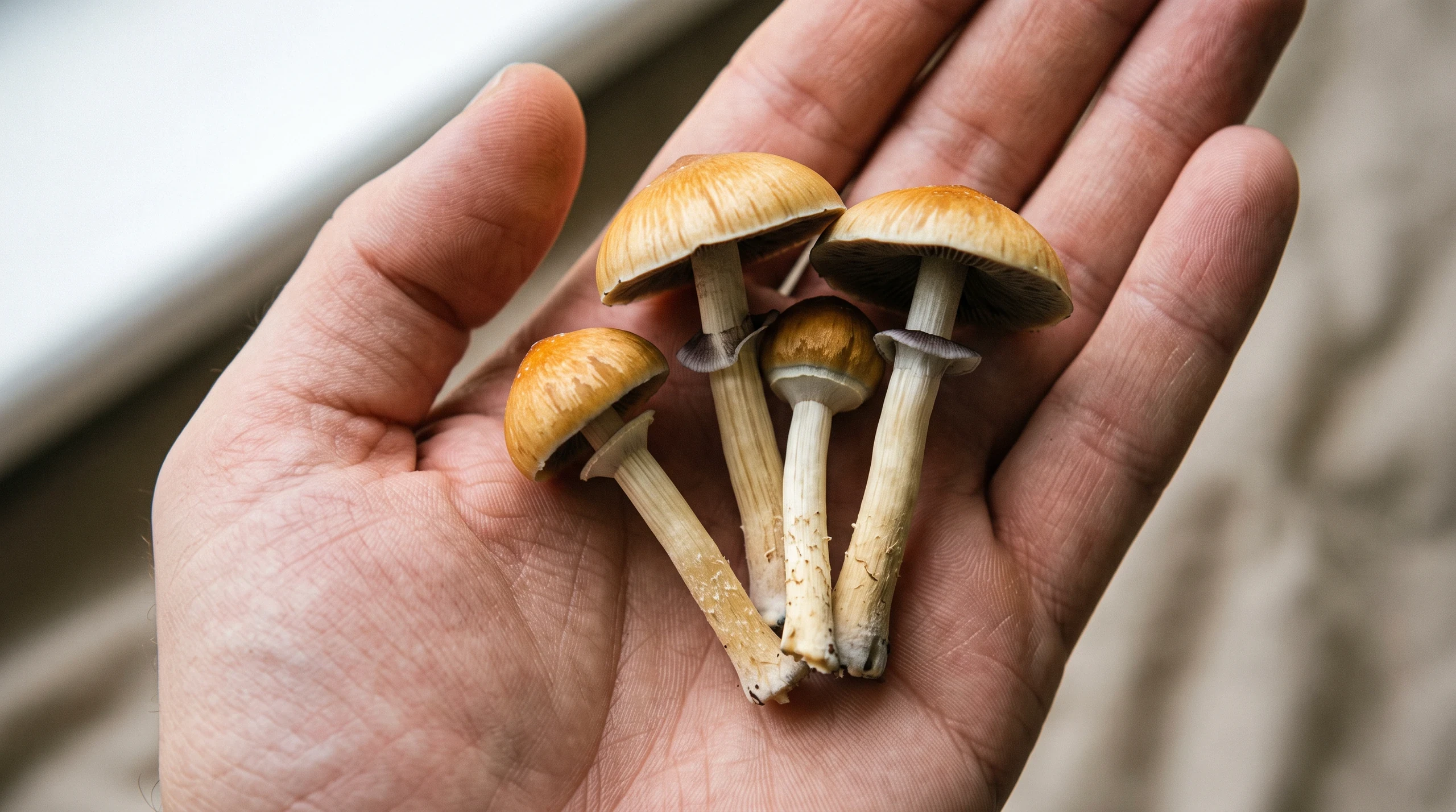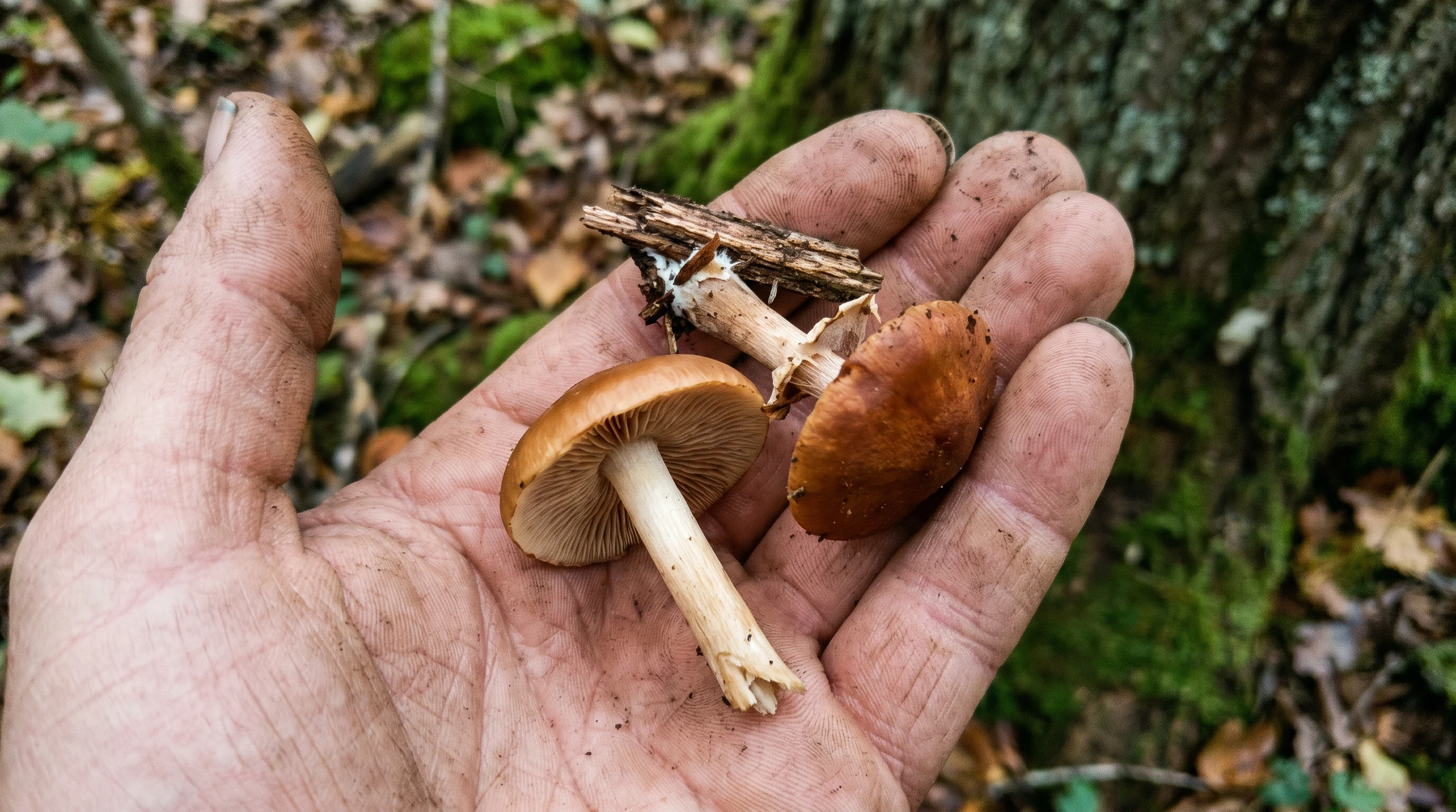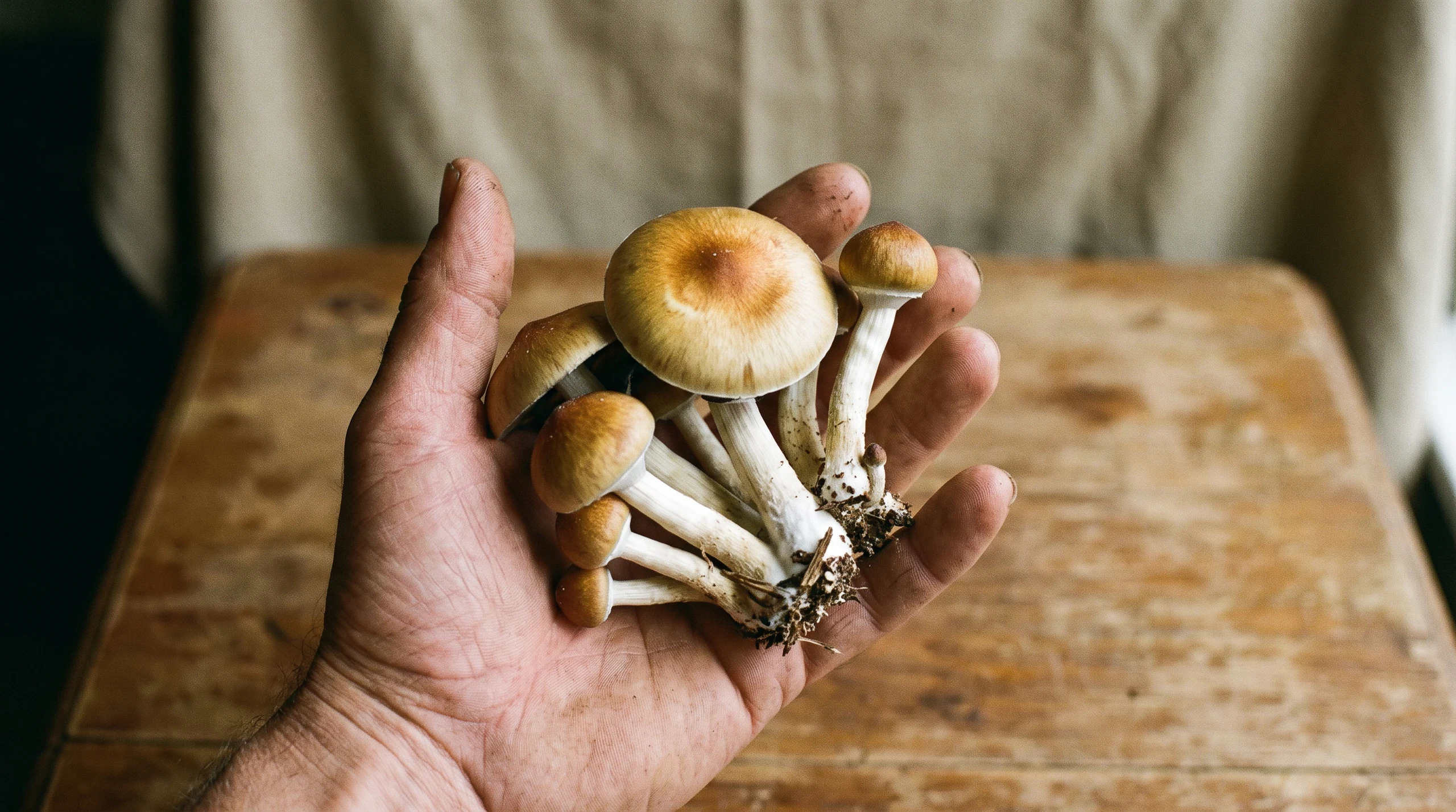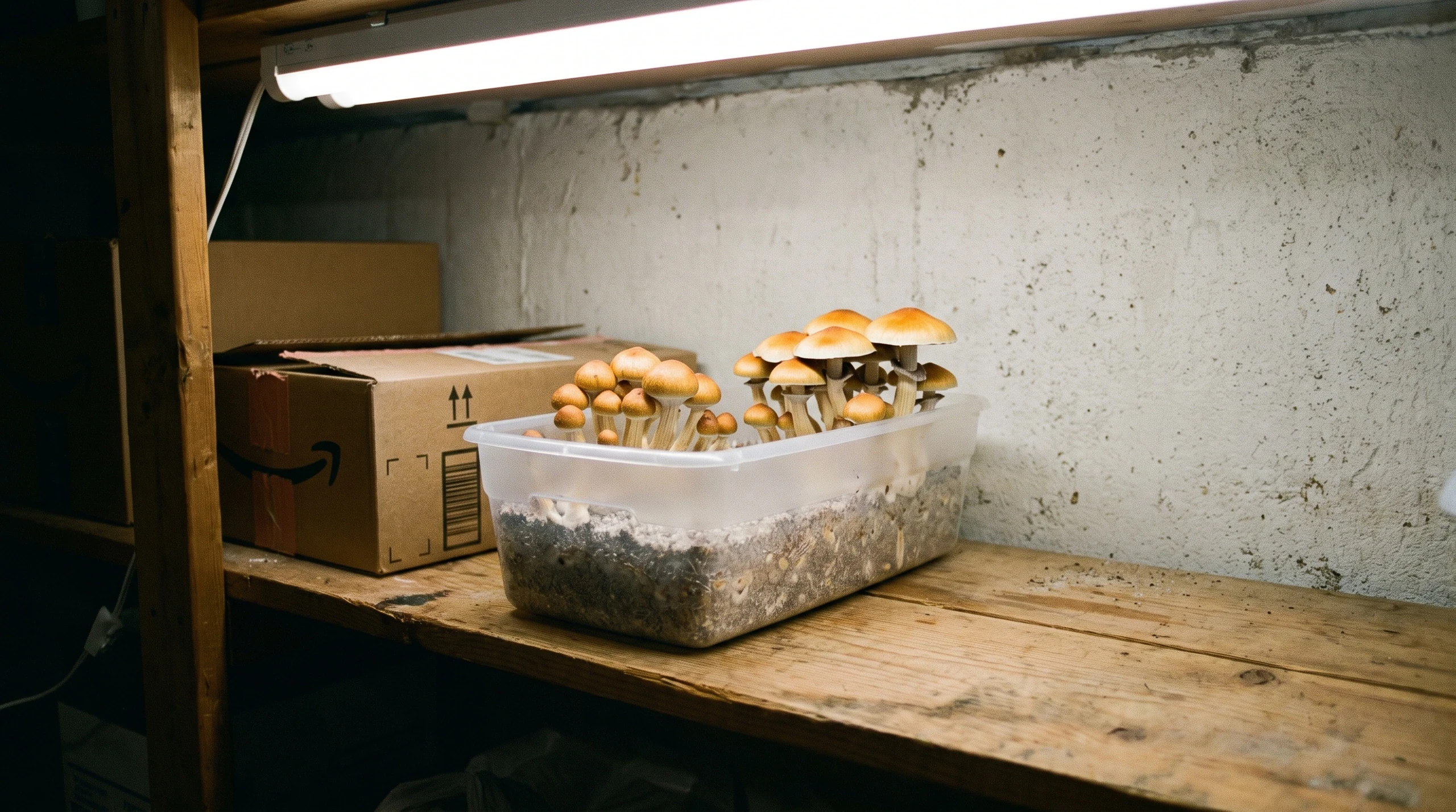
Growing Golden Teacher mushrooms in your closet, basement, or backyard is manufacturing a Schedule I controlled substance under federal law. The maximum penalty is twenty years in federal prison and a million-dollar fine. That is not a scare tactic or an exaggeration of risk for people moving weight. That is the statutory ceiling for any cultivation, including a single monotub grown with no intent to sell. The law does not distinguish between personal use and commercial production when the crop contains psilocybin.
This is an article about what the law actually says, what prosecutors actually charge, and what the penalties actually are. It is not an argument about whether the law is just, whether enforcement is consistent, or whether reform is likely. Those are separate questions. The subject here is narrow: if you grow Golden Teacher mushrooms, you are committing a federal felony, and the consequences are real.
The Controlled Substances Act and Psilocybin
Psilocybin and psilocin, the psychoactive compounds in Golden Teacher and other Psilocybe cubensis strains, have been Schedule I controlled substances since 1970, when Congress passed the Controlled Substances Act. Schedule I is the most restrictive category. The federal government's position is that psilocybin has a high potential for abuse, no currently accepted medical use in treatment, and a lack of accepted safety for use under medical supervision.
That classification makes psilocybin illegal to manufacture, distribute, or possess under 21 U.S.C. § 841, the federal statute that governs controlled substance offenses. Cultivation falls under the "manufacture" category. The statute does not carve out exceptions for personal use, small-scale grows, or therapeutic intent. If the mushrooms you are growing contain psilocybin, you are manufacturing a Schedule I substance.
The fact that some states have decriminalized possession or created regulated access programs does not change federal law. Psilocybin remains Schedule I at the federal level. State reforms, including Oregon's Measure 109 therapy program and Colorado's broader decriminalization under Proposition 122, only affect state-level enforcement. Federal agents can still prosecute cultivation in those states, and federal penalties still apply.
What Cultivation Actually Means
In legal terms, "cultivation" or "manufacture" of psilocybin mushrooms begins the moment spores germinate and mycelium starts producing psilocybin. It does not require a finished harvest, dried mushrooms, or any intent to distribute. A half-colonized grain jar sitting in your closet is manufacturing. A fruiting block with pins is manufacturing. The question is not whether you completed the grow, sold any mushrooms, or consumed the product yourself. The question is whether you knowingly caused psilocybin-containing organisms to exist.
Federal prosecutors have discretion in what they charge, and most small-scale personal grows never result in federal cases. But that discretion is not a legal protection. It is prosecutorial choice, which can shift based on jurisdiction, political climate, or the specifics of your case. If you get caught growing Golden Teacher, even a small amount for personal use, the statutory framework allows federal charges.
Sentencing is another matter. The federal sentencing guidelines for psilocybin use a conversion factor where one gram of psilocybin equals 500 grams of marijuana for calculating offense levels. That conversion is not based on the weight of the mushrooms themselves but on the extracted psilocybin content. In practice, this means even modest grows can trigger significant sentencing enhancements if the case reaches federal court. The statutory maximum for manufacturing a Schedule I substance is twenty years and a one-million-dollar fine for a first offense. A second felony drug conviction raises the maximum to thirty years.
The Real Penalties
Most people arrested for growing Golden Teacher face state charges, not federal ones. State penalties vary widely. Some states treat cultivation as a low-level felony with probation as a realistic outcome for first offenders. Others classify it as manufacturing a controlled substance with mandatory minimum sentences. A few states have decriminalized possession of small amounts, though cultivation usually remains illegal even where possession is tolerated.

Federal prosecutions for psilocybin cultivation are less common than state cases, but they happen. Federal agents get involved when grows are large, when distribution is suspected, or when the case intersects with other federal interests, like interstate commerce or firearms. Once a case goes federal, the penalties escalate quickly. The twenty-year maximum is real. So is the million-dollar fine. Judges have some discretion under the sentencing guidelines, but the offense level calculation and prior criminal history can push sentences into the double digits even for non-violent first-time offenders.
The law also provides sentence enhancements for certain aggravating factors. Growing near a school, park, or youth center can double the penalties. Involving minors in the cultivation process, even indirectly, triggers additional sentencing bumps. If firearms are present in the home where cultivation occurs, prosecutors can pursue separate weapons charges that carry their own mandatory minimums. None of these enhancements require you to have distributed mushrooms or endangered anyone. Proximity and possession are enough.
State Law Does Not Trump Federal Law
Oregon and Colorado have both created legal frameworks for psilocybin access. Oregon licenses service centers where adults can consume psilocybin under supervision. Colorado allows personal use and home cultivation of certain natural psychedelics, including psilocybin mushrooms, within defined limits. A handful of cities, including Denver, Oakland, and Washington D.C., have decriminalized possession.
None of that changes the federal calculus. The Controlled Substances Act is federal law. It applies in every state. The Supremacy Clause means that where state and federal law conflict, federal law prevails. State decriminalization does not prevent federal prosecution. It just means that state police will not arrest you for conduct the state has deprioritized. Federal agents still can.

In practice, the Department of Justice has historically exercised restraint in prosecuting personal-use cannabis cases in states that have legalized it, following guidance memos that deprioritized enforcement where state programs were robust. But those memos were not binding statutes, and they were rescinded and reinstated depending on the administration. No equivalent federal enforcement policy exists for psilocybin. Even if one did, prosecutorial discretion is not immunity. Federal prosecutors can change their priorities.
The Golden Teacher Paradox
Golden Teacher became an icon in psychedelic culture partly because of prohibition, not despite it. When the strain appeared on the Shroomery forums in the early 2000s, it arrived in an underground cultivation scene that existed entirely because legal access to psilocybin had been eliminated. The strain's reputation, its mythology, and its place in the broader psychedelic counterculture were all shaped by its illegal status.
That paradox persists. Golden Teacher is among the most sought-after Psilocybe cubensis strains precisely because it has to be cultivated in secret. It is not available through legal markets, except in Oregon and Colorado under narrow conditions that do not allow retail sale of whole mushrooms. The only way most people can obtain it is by growing it themselves or obtaining it from someone who did, and both acts are federal felonies in most of the United States.
The irony is that Golden Teacher is also one of the most forgiving strains for novice cultivators. It colonizes reliably, resists contamination better than many other cubensis strains, and fruits in a wide range of conditions. Those traits make it an accessible entry point for people interested in personal cultivation, which in turn means more people risk federal prosecution attempting grows they believe are low-risk because the mushrooms themselves are relatively easy.
Golden Teacher's potency varies significantly from flush to flush and even cap to cap within a single grow, which creates additional legal exposure. People cultivating for personal use often grow more than they need in a single cycle because they cannot predict yield or potency in advance. That surplus, even if never distributed, can become evidence of intent to distribute if law enforcement gets involved.

What About Spores?
Psilocybin spores occupy a legal gray area, but one that does not protect cultivators. The DEA confirmed in 2024 that spores lacking psilocybin or psilocin are not controlled substances under the Controlled Substances Act. Spores themselves do not contain psilocybin. They are reproductive cells. The psilocybin only develops after germination, once the mycelium begins producing the compound.
That means selling, buying, and possessing spores is legal under federal law in most circumstances. The catch is intent. If you possess spores with the intent to cultivate psilocybin mushrooms, that intent can form the basis for conspiracy or attempt charges. In practice, spore vendors market their products for microscopy and taxonomy research, and buyers claim the same. But the moment you inoculate a grain jar, you cross the line from legal possession of spores to illegal manufacture of psilocybin.

Three states, California, Georgia, and Idaho, prohibit possession of psilocybin spores outright, regardless of intent. Florida joined them in 2025. In those states, even owning spores for microscopy is illegal. Everywhere else, spores are legal until you use them for cultivation.
The practical takeaway is that spore legality does not create a defense for cultivation. You can legally buy Golden Teacher spores in most states. You cannot legally grow them. The fact that the spores were obtained lawfully does not mitigate the felony you commit when you germinate them.
Ignorance Is Not a Defense
Some people assume that because psilocybin is a naturally occurring compound, or because mushrooms grow wild in many states, cultivation carries less legal risk than synthesizing or manufacturing a drug in a lab. The law does not make that distinction. Growing mushrooms that produce psilocybin is manufacturing a controlled substance under federal statute, the same category as synthesizing methamphetamine or pressing fentanyl pills.

Similarly, therapeutic intent is not a defense. The fact that you grew Golden Teacher for personal healing, trauma processing, or end-of-life anxiety does not change the legal classification. Federal law does not recognize a medical-necessity exception for Schedule I substances. Some states allow medical marijuana defenses where state law permits cannabis use. No state allows a medical-necessity defense for unauthorized psilocybin cultivation.
The research showing psilocybin's therapeutic promise is real, and some of it involves Golden Teacher or closely related cubensis strains. But clinical trials are conducted under DEA Schedule I research registrations with institutional oversight and federal approval. Growing mushrooms at home, even with therapeutic intent, does not fall under those protections.
The Bottom Line
If you cultivate Golden Teacher mushrooms anywhere in the United States, you are committing a federal felony. The statutory maximum penalty is twenty years in prison and a million-dollar fine. Most cases do not result in federal prosecution, and most sentences do not approach the statutory maximum, but the legal exposure is real.
State decriminalization provides some protection from local arrest but does not prevent federal prosecution. Spore legality does not protect you once germination begins. Therapeutic intent, small scale, and personal use are not defenses. The law is clear, even if enforcement is inconsistent.
This is not an argument about whether cultivation should be legal or whether psilocybin should remain Schedule I. It is a factual summary of the current legal landscape. The risk is not theoretical. People are arrested, charged, and sentenced for cultivating psilocybin mushrooms every year. If you choose to grow Golden Teacher, you should do so with full knowledge of the legal consequences, not with the assumption that small-scale personal grows are somehow exempt from federal drug manufacturing statutes.
Identification risks and legal risks are separate problems, and both are real. One can poison you. The other can send you to federal prison. Neither should be taken lightly.
Frequently asked questions
Is it legal to grow Golden Teacher mushrooms in states that have decriminalized psilocybin?
Are psilocybin spores legal to buy and own?
What counts as cultivation under federal law?
Can I argue medical necessity if I grew mushrooms for therapeutic use?
What penalties do people actually face for small personal grows?
Ready to apply what you've learned?
Browse lab-tested magic mushrooms, edibles, microdose capsules and teas — shipped discreetly across the United States.